

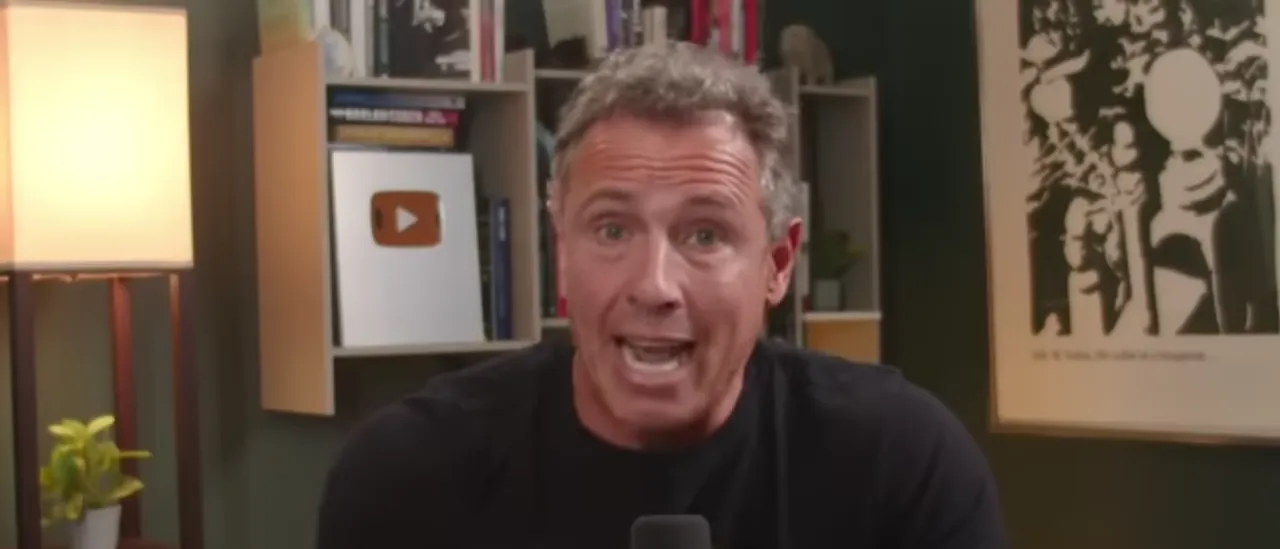
‘You’re So Desperate’: Chris Cuomo Blasts Left for Claiming They’re Less Violent ‘Right After’ Kirk Assassination
Chris Cuomo slammed the modern left on his show after they argued the left is less violent than the right in the wake of the Charlie Kirk shooting. He called out what he labeled a cynical race to control the narrative and said the timing of their argument made it look like clickbait. The exchange exposes a sharp divide over how leaders and media assign blame after political violence.
The discussion started after the September attack on Turning Point USA founder Charlie Kirk, an event that shocked many conservatives and independents. Cuomo pushed back hard at left-leaning commentators who sought to argue the left is not to blame for a spike in political violence. His tone was blunt and meant to highlight what he sees as a rush to absolve ideological allies even when evidence points elsewhere.
On his podcast, Cuomo accused some on the left of leaning on tidy statistics and institutional authority to frame a complex story in a way that absolves their side. He ridiculed the notion that the left is categorically less violent simply because certain datasets have been emphasized. That critique landed as both a media critique and a political prod aimed at accountability.
Cuomo said the timing made the argument absurd. He referenced the fact that Kirk had been shot in the neck and framed the left’s response as tone-deaf and opportunistic. For critics on the right, the reaction felt like an attempt to steer public outrage away from certain violent acts tied to progressive circles.
“This game of the battle to the bottom of which side is worse — you guys are literally debating who’s more violent, the right or the left. ‘There is no statistical evidence that the left is anywhere near as violent in politics. The ADL [Anti-Defamation League], everybody’ — that’s your argument?” Cuomo said. “Right after Charlie Kirk was shot in the neck by a guy who thought he was standing up for his trans lover? He just shot him in the neck.”
“You’re going to make the case that it’s all about the right? How stupid do you have to be? It’s not about stupidity. It’s about convenience,” he continued. “You’re so desperate for clickbait. You’re so desperate to be relevant, to be in the mix that you say whatever is going to get you the clicks. Change the game. Change the game.”
Those comments tapped into an already raw national conversation about political violence, media bias, and the incentives that shape headlines. Conservative readers saw Cuomo’s blast as validation that the left often protects its own narrative. Many on the right argue mainstream outlets and progressive activists rush to generalize based on selective data, ignoring individual facts that contradict their preferred storyline.
Authorities arrested a suspect, and prosecutors said the attacker targeted Kirk because of his political views. Officials have charged the suspect with aggravated murder and multiple other felonies, noting that the attack appeared motivated by political expression. That characterization matters, because it moves the incident from a private crime to an act tied to political ideology in the eyes of the law.
Reporting shows the alleged attacker had close ties to a trans-identifying partner and reportedly texted about Kirk’s supposed hatred. Those personal dynamics complicate the picture, but they also push the debate into clear territory: was the shooting political? Prosecutors say yes, and they’ve cited political expression as an aggravating factor.
Cuomo singled out institutions like the ADL as touchpoints in the broader argument about which side bears greater responsibility for violence. He argued people cite such sources selectively when it helps a narrative and ignore them when it does not. Republicans and conservatives see that as a pattern: institutions get trotted out as authoritative shields, then quietly dropped when inconvenient facts emerge.
Independent data outlets have begun to track violence trends across the political spectrum, and some datasets show shifts in recent years. One major outlet compiled incidents across decades and found a surprising uptick in left-wing attacks in recent stretches, a fact that surprised many observers on both sides. Conservatives use that evidence to argue that focusing blame exclusively on the right is politically motivated, not purely factual.
For Republican readers, Cuomo’s rebuke was a welcome break from the typical cable chorus that too often reflexively blames one side. It was blunt, unapologetic, and aligned with a larger Republican point: political violence should be condemned wherever it comes from, and narratives should follow facts, not agendas. That lesson resonates across the base, from grassroots activists to elected officials.
At the same time, some on the right worry that media moments like this are exceptions rather than the rule. They see Cuomo’s words as useful but rare mainstream pushback, not a broad recalibration in how partisan violence is covered. Republicans are pressing for consistent standards: equal scrutiny, equal condemnation, and no special pleading based on ideology.
Public debate over political violence is likely to stay heated as legal cases proceed and as data flows in. The Kirk shooting has become a flashpoint for arguments about bias, culpability, and the incentives that push outlets to chase headlines. Republicans will keep using such moments to argue for principled, even-handed reporting and for accountability across the political spectrum.
WATCH:
News organizations and opinion hosts will keep clashing over how to narrate politically charged crimes, and each high-profile incident tests those instincts. For many conservatives, Cuomo’s attack on left-wing reflexes felt like overdue honesty from someone inside the media debate. The larger fight now is to make that honesty stick and to demand fair treatment of evidence, whatever side it points toward.

