

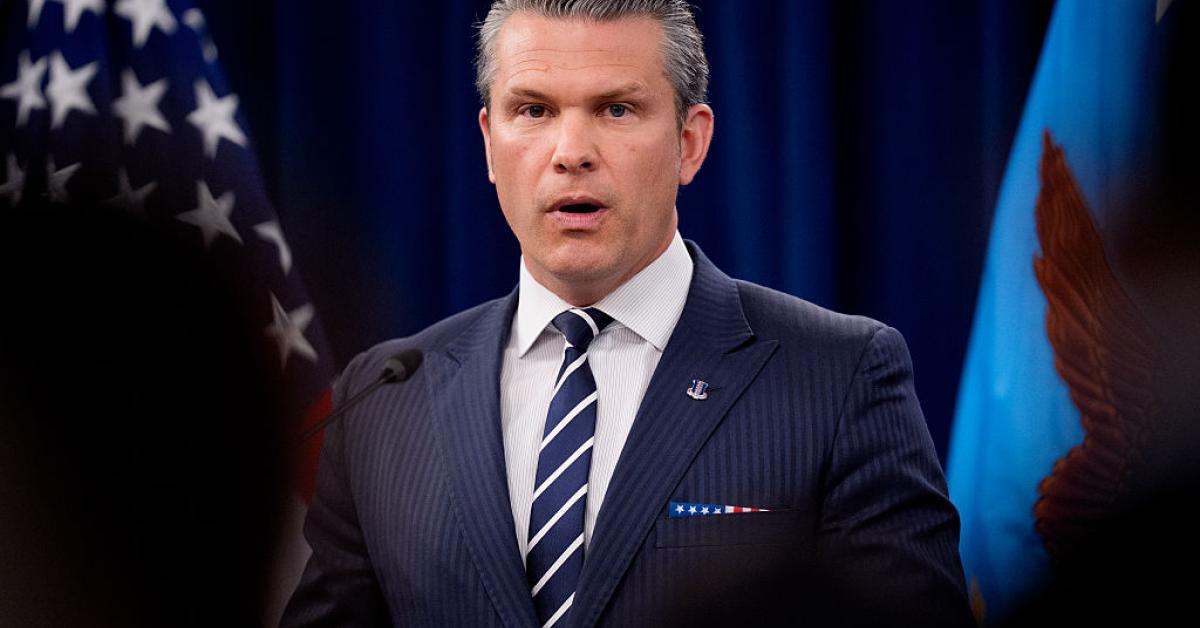
Pentagon: Hegseth to address ‘senior military leaders’ next week
The Pentagon confirmed that Defense Secretary Pete Hegseth will speak to senior military leaders next week, setting up one of the most significant gatherings of the modern era. The announcement landed fast and blunt, and it’s clear the department is trying to get ahead of swirling questions about purpose and scope. Washington is watching to see whether this meeting is the start of responsible reform or another bureaucratic moment.
“The Secretary of War will be addressing his senior military leaders early next week,” chief Pentagon spokesman Sean Parnell said. Those words cut through the noise because they signal a direct, public step from a cabinet official toward the rank and file at the top of the military. The phrasing also reflects a command voice that some in and out of uniform say has been missing from the civilian leadership of recent years.
Reports say Hegseth initially ordered hundreds of generals and admirals to gather on short notice at the Marine Corps base in Quantico, Virginia. If true, that is an extraordinary call to attention for any defense secretary and for a force used to decentralized command. Critics have tried to paint the move as chaotic, but many conservatives see it as overdue accountability and clarity from civilian leadership.
The assembled ranks would include brigadier generals and above, their Navy equivalents, and top enlisted advisers—roughly 800 flag officers or near that number. That scale is almost unprecedented and raises obvious questions about logistics and messaging. It also raises the question of whether such a sweep is simply an administrative reset or a realignment of priorities under a leadership committed to results.
Why this matters
This matters because a leaner, more focused officer corps is both a fiscal necessity and a combat advantage. The directive to cut general officer billets by 20 percent, announced earlier in the year, was framed as a move to remove bloat and reward performance over rank. Hegseth’s gathering could be the follow-through, turning abstract goals into a concrete accountability process.
Few Americans realize how top-heavy modern militaries can become, and that top-heaviness has consequences for readiness and spending. When too many resources go into administrative rank rather than warfighting capacity, units down at the tactical level feel the squeeze. The public rightly expects leaders who will prioritize mission, service members, and taxpayers over insider careerism.
From a Republican angle, firm civilian oversight is not hostility to the military, it is respect for it. Generals do not serve themselves, they serve the nation under civilian leaders chosen by voters. When a defense secretary uses his authority to gather leaders and set new expectations, that is governance in action, not grandstanding.
There is also a political undertone to all this that needs naming. The recent turnover among senior leaders and the push to reshape the upper ranks reflect a broader effort to ensure loyalty to mission and to elected authority. Opponents will call it purge; supporters call it necessary correction to a culture that drifted away from strategic purpose.
Public transparency about the meeting’s aims will be critical to temper rumors and prevent unnecessary panic inside the ranks. The Pentagon’s official line was short and precise, but the whisper network in D.C. is already spinning scenarios. Honest explanations, not managed leaks, will calm troops and reassure allies who value a well-led American military.
Operational questions also matter. If leaders are being gathered to discuss cuts, assignments, or doctrine, the impact will ripple through units, budgets, and international planning. Commanders at combatant commands and within service branches will need clear timelines and criteria to make personnel and force structure decisions. Uncertainty alone damages morale and mission effectiveness.
There are legitimate concerns about disrupting command continuity, especially if moves happen on a short timeline. A responsible plan would stagger transitions, protect critical institutional knowledge, and ensure readiness is never compromised. That balance is exactly the kind of decisive yet careful leadership Republicans say this administration should provide.
Critics who panic at any shakeup forget that militaries must evolve to face new challenges, from pacing competitors to irregular threats. A top-heavy bureaucracy resists change, drains resources, and blunts innovation. A secretary willing to challenge the status quo can free up capability for the things that actually keep Americans safe.
For service members watching from the line units, the message that matters is simple: mission first, clear guidance, and fair treatment. The optics of a mass meeting matter less than the outcomes that follow—better readiness, clearer priorities, and leaders who can deliver results. Hegseth’s critics should be judged not by alarmist headlines but by whether the process strengthens the force.
One final point: democratic control of the military requires civilian leaders who are accountable to voters and unafraid to make tough calls. When political leaders defer endlessly to careerism, the force drifts. When they act with clarity and purpose, they honor the oath of service and the taxpayers who fund the defense.
The coming week will be telling. If Hegseth uses the gathering to articulate a coherent plan that protects readiness while trimming excess, this could be a turning point for reform. If it devolves into theater, critics on both sides will have cause to complain, but the chance for meaningful change will be lost.

