

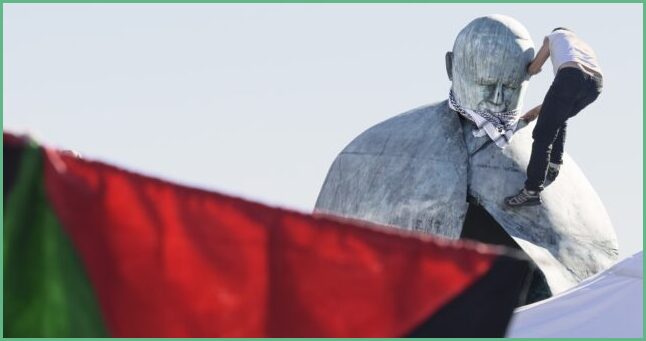
Vandalism in Rome: Statue of Pope John Paul II Defaced
News broke that a statue of the late Pope John Paul II in Rome was defaced during a pro-Palestine protest, and the word “fascist” was painted on it. The image of graffiti on a religious figure hits differently for many Americans who value faith and tradition. That single act turned a political protest into a cultural affront that can’t be ignored.
Let’s be clear: peaceful protest is a constitutional right and a cornerstone of a free society. But spray painting a statue crosses a line from speech into criminal damage against shared heritage. Conservatives defend both free expression and the rule of law, and this incident violates both principles at once.
Pope John Paul II mattered to millions beyond Catholics because he stood against totalitarianism and championed human dignity. Attacking his memory with slurs insults that legacy and alienates people who remember his moral leadership. Republicans see that as an attack on the moral fabric that binds communities.
Rome is not just another canvas for political theater; it is a living museum and a spiritual capital for billions. When mobs decide they can vandalize public symbols they disagree with, the next step is eroding the standards that keep civic life civil. Law enforcement must enforce laws consistently to prevent chaos.
There is also a messaging problem on the left when protests devolve into property damage and disrespect for religion. Mainstream conservatives are asking why organizers don’t rein in fringe elements who resort to criminal antics. Accountability means organizers and participants should answer for their role in enabling violence and vandalism.
This incident will be spun many ways by a partisan press eager to shape narratives. Some outlets will call attention to grievances without condemning tactics, while others will use the event to stoke outrage. Voters are savvy enough to tell the difference between justified protest and gratuitous destruction.
Republicans should respond firmly but without reflexive escalation, calling for swift investigation and fair prosecution. Demand for justice doesn’t mean stifling dissent; it means preserving the right to protest while protecting the rule of law. Officials should pursue culprits and ensure restitution for damaged property.
Cultural respect matters in politics because symbols carry meaning across generations. Pope John Paul II represents resistance to oppression and a defense of faith-based values that many conservatives hold dear. Defacing his image is not a neutral act; it’s a deliberate provocation toward a broad community of believers.
At the same time, conservatives should avoid giving the vandals more attention than they deserve by escalating rhetoric into hyperbole. Keep the focus on practical remedies: arrests, charges, and repairs. Redirect public energy toward restoring the site and reinforcing protections for public monuments.
It’s also a reminder that political disputes that become personal attacks rarely resolve policy differences. Painting insults on statues substitutes grandstanding for argument and weakens the case for any underlying cause. Those who genuinely care about their cause should denounce vandalism and return to substantive debate.
Local authorities in Rome need to act quickly and transparently to identify perpetrators and prosecute them under the law. Quick action reinforces that civic spaces will not be ceded to lawlessness. Fast, fair justice also helps calm tensions and prevent copycat incidents.
Religious leaders and community voices have a role too, calling for calm and clarity about acceptable forms of protest. The Vatican and local bishops can remind people that faith deserves respect even amid political disputes. That moral leadership helps heal wounds more effectively than partisan finger-pointing.
This episode underscores a broader cultural clash in the West over boundaries of protest, faith, and respect. Conservatives argue that preserving institutions and traditions is part of preserving liberty itself. Allowing vandalism in the name of protest undermines that principle and weakens social cohesion.
The political fallout should be measured but decisive: voters expect their leaders to protect public spaces and uphold law and order. Republicans can use this moment to articulate a vision of responsible dissent that combines passion with respect. That vision appeals to voters tired of chaos and hungry for stability.
On the international stage, Italy has to decide how it balances protest rights with the duty to protect religious and cultural heritage. A tolerant society does not mean tolerating vandalism. Rome’s response will be watched by many who care about the integrity of civic life everywhere.
For conservatives, preserving the memory of figures like Pope John Paul II means defending the values they stood for: human dignity, religious freedom, and opposition to tyranny. These values are not optional when political debate heats up. They provide a foundation for principled disagreement without destruction.
Part of the solution is practical: better coordination between police and event organizers, clear protest routes, and prompt clean-up plans. Municipalities should also enforce penalties that deter future vandalism without turning every protest into a confrontation. Good governance reduces the chance of escalation.
Civic education matters too, teaching future generations why monuments exist and why respect for shared symbols supports pluralism. When people understand the historical and moral significance of public art, they are less likely to see it as a removable target. That cultural literacy strengthens community bonds.
In the end, the image of graffiti reading “fascist” on a statue of a pope is more than a headline. It is a symptom of cultural breakdown that demands a clear response from leaders who care about law, faith, and tradition. Republicans should lead the charge to protect public life, call out criminality, and reaffirm the dignity of shared institutions.

