

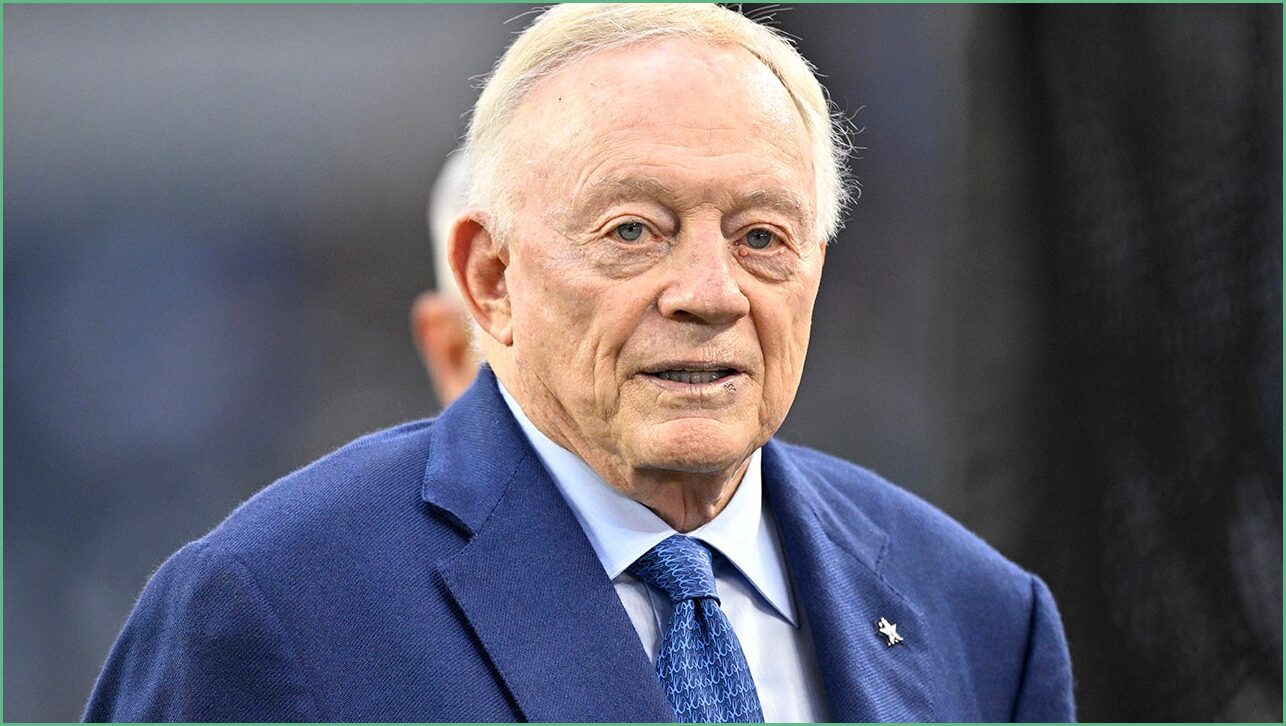
Jerry Jones Admits He Made a Mistake After Flipping Off Fans During Cowboys Win
Dallas Cowboys owner Jerry Jones acknowledged Tuesday that he made a mistake after being photographed flipping the middle finger to fans during his team’s win over the New York Jets. The image spread quickly on social media and became the dominant image from the game for many viewers. That reaction turned a celebratory night into a talking point about behavior, leadership, and the relationship between owners and the public.
The incident happened in the stands as Jones watched the game and interacted with his surrounding crowd. Cameras picked up the gesture and clips circulated almost immediately, framing the moment as more than a private frustration. Once it reached the wider audience, questions about professionalism and tone followed.
Jones’ quick admission that he “made a mistake” was meant to close the chapter and move the focus back to the field. He offered the statement publicly, signaling he recognized the optics and wanted to contain the fallout. For many fans and observers, that took the edge off but did not erase the image.
The flip itself became a flashpoint because of who Jerry Jones is and what he represents for the Cowboys brand. As owner, Jones is more than a spectator; he is the face of an organization that carries emotional weight for millions. That level of visibility means every action is amplified and judged through a broader lens.
Reactions ran from swift condemnation to defense by people who saw it as a human slip in a high-pressure environment. Some critics called for higher standards from team leadership because owners are expected to model conduct. Supporters argued that heated moments happen in sports and that a short-lived mistake should not define someone’s career.
Players and staff typically stay out of public debates about ownership conduct, and this case was no exception. Team spokespeople did not escalate the story, instead emphasizing the game and players’ performances. The Cowboys organization preferred to focus on the win and the team’s goals for the season.
Social media amplified the incident with memes, hot takes, and replay clips that stretched the attention span far beyond the stadium. Public figures saw an easy headline and used it to score points, while fans debated whether the gesture was intentional or misinterpreted. The clip’s virality underscores how a single moment can define a narrative in modern sports coverage.
Context matters when judging moments like this, and Jones’ long history in football and business gives the episode more texture. He has been outspoken and hands-on for decades, and his strong personality is part of the Cowboys’ identity. That history led some people to shrug it off as inconsistent with his overall contributions to the sport.
Still, the optics of an owner flipping off fans touches on trust and respect between a franchise and its community. Fans buy tickets, merchandise, and season tickets because they feel invested in the team’s values. When leadership stumbles publicly, it can briefly erode that connection and raise questions about accountability.
Media coverage took two predictable paths: dissect the moment and move on, or use it as a reason to relitigate broader issues. Pundits who make careers on controversy leaned into the story, while local coverage prioritized the team’s play and future schedule. In the end, most outlets returned to analyzing the game where the Cowboys walked away with the win.
There are lessons for owners, executives, and public figures from this episode that apply beyond sports. First, visibility means behavior matters at all times, and second, swift acknowledgment can blunt a much worse fallout. Jones’ apology demonstrated that immediate ownership of a mistake can be an effective public relations move.
From a team perspective, keeping the spotlight on players and coaches is the priority after any distraction. The Cowboys’ locker room and coaching staff had to navigate questions while preparing for the next challenge. Their response and focus will determine whether the incident has any staying power inside the organization.
Fans will remember the win and the moment differently based on personal loyalties and tolerance for mistakes. Die-hard supporters are quick to forgive if the team performs well, while casual observers may attach more weight to the incident. That variability is part of the unpredictable relationship between sports fans and franchise leadership.
Ethics and public conduct training for high-profile figures is a topic that resurfaces whenever an owner or celebrity missteps. Organizations increasingly recognize the value of coaching for people who occupy visible roles. The goal is to prevent avoidable moments that distract from bigger priorities.
Jerry Jones’ acknowledgement closes the immediate chapter, but the image will remain part of the season’s lore. Sports history is full of brief infractions that become cultural footnotes for fans and media. Whether this becomes a lasting stain or a forgotten blip depends on how Jones and the Cowboys move forward.
For now, the narrative pivots back to football and the Cowboys’ next game, where performance will be the best response to critics. Owners can apologize and learn, but the ultimate judgment from many fans will come on Sundays. If the team keeps winning, the photo will likely fade into the background.
What remains clear is that in an era of instant replay and nonstop coverage, even a small action by a powerful figure can become a big story. Leaders with public faces have to manage both results and image, and this episode is a reminder of that balancing act. Fans, media, and the franchise will watch how lessons are applied as the season unfolds.

