

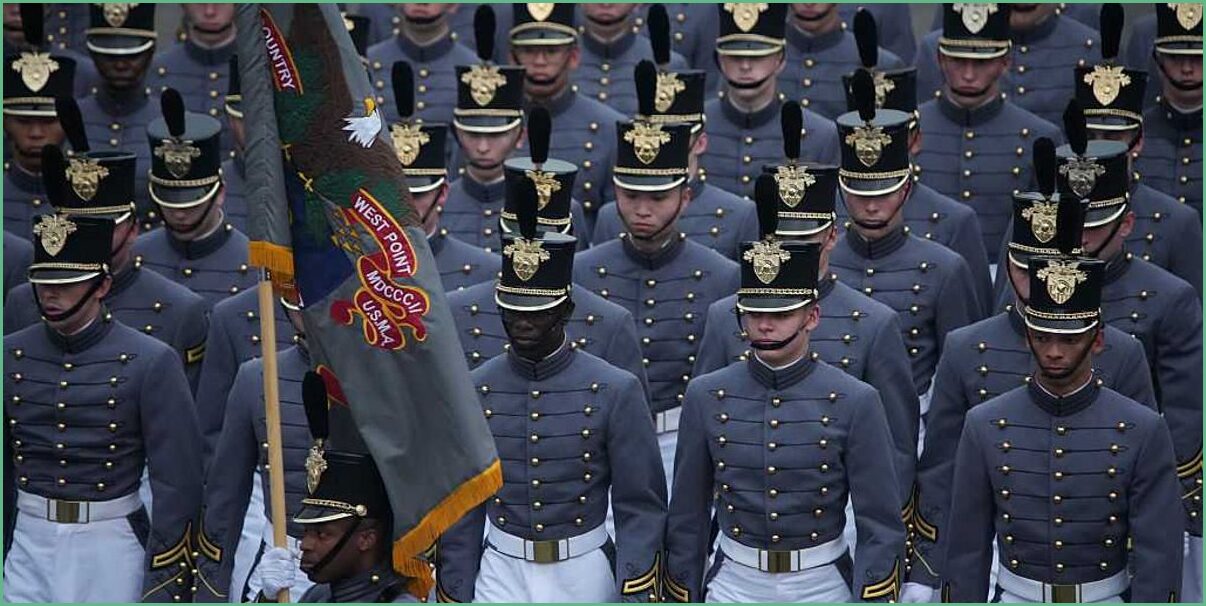
Reclaiming the Warrior: Why Male-Only Military Academies Matter
The Supreme Court’s decision in United States v. Virginia reshaped VMI and, by extension, the idea of military academies built for combat leadership. That ruling pushed sex integration into institutions that once prioritized a singular martial purpose. If we care about battlefield performance, we have to reckon with how those changes altered officer formation.
Red-state governors can act. They can build new, accredited academies with ROTC links that preserve an uncompromised warrior ethos. This isn’t nostalgia; it’s a practical move to restore disciplined officer pipelines.
A properly designed school would offer a four-year degree to attract talent while keeping military formation primary. The academy should fold academics into a coherent martial program so cadets live under a clear chain of command. That hierarchy must be the daily reality, not just ceremonial tradition.
Course offerings would be narrower, athletics scaled to mission needs rather than marquee Division I showpieces, and civilian faculty without service experience would play a reduced role. Training, leadership labs, and field hardship would drive the curriculum. The goal is elite warrior leaders, not a civilianized college experience with camouflage.
The modern obsession with sex equality may be the clearest example of how civilian ideology corrupts military formation.
Research from the 1990s first flagged how gender integration can erode cohesion in combat formations, and later physiological studies found higher injury rates and greater attrition for women in intense training. Those patterns matter because early training shapes what soldiers will become. Effective academies must be honest about those facts.
Operational assessments back that up. The U.S. Army Special Operations Command’s “Women in ARSOF” report recorded significant operator dissatisfaction, and a 2015 Marine Corps study found all-male units outperformed mixed units in speed, lethality, and cohesion. These are not abstract arguments; they speak to the realities of combat performance.
Academies are where habits are forged, and a training model that blurs the line between fight and campus risks teaching the wrong habits. If integration introduces chronic performance gaps, the institutions that created those leaders will have helped create weaker units. That’s a national security problem, not a cultural preference.
Legal hurdles loom. Under the heightened “exceedingly persuasive justification” standard applied in U.S. v. Virginia, courts demanded tight factual grounds for sex-based exclusions and Justice Ginsburg found Virginia’s claims speculative because women were already serving in federal academies. That case shows the constitutional work required to defend new male-only schools.
Sec. Pete Hegseth could direct a Department of War regulation that bars women from certain ground combat roles, because past service restrictions were often administrative rather than statutory. Congress could codify or block such a rule, but executive action would give states room to build alternative academies. That is the pragmatic path to make male-only formation legally sustainable.
Without decisive national direction, any new academy would stand vulnerable to the same scrutiny that undid VMI’s traditions.
State leaders who genuinely value readiness should act now to build institutions that refuse to confuse campus social fashions with combat training. These academies would not be gestures; they would be instruments to produce leaders ready for hardship and command. The debate over structure is political, and Republicans have to lead it with clarity and muscle.

