

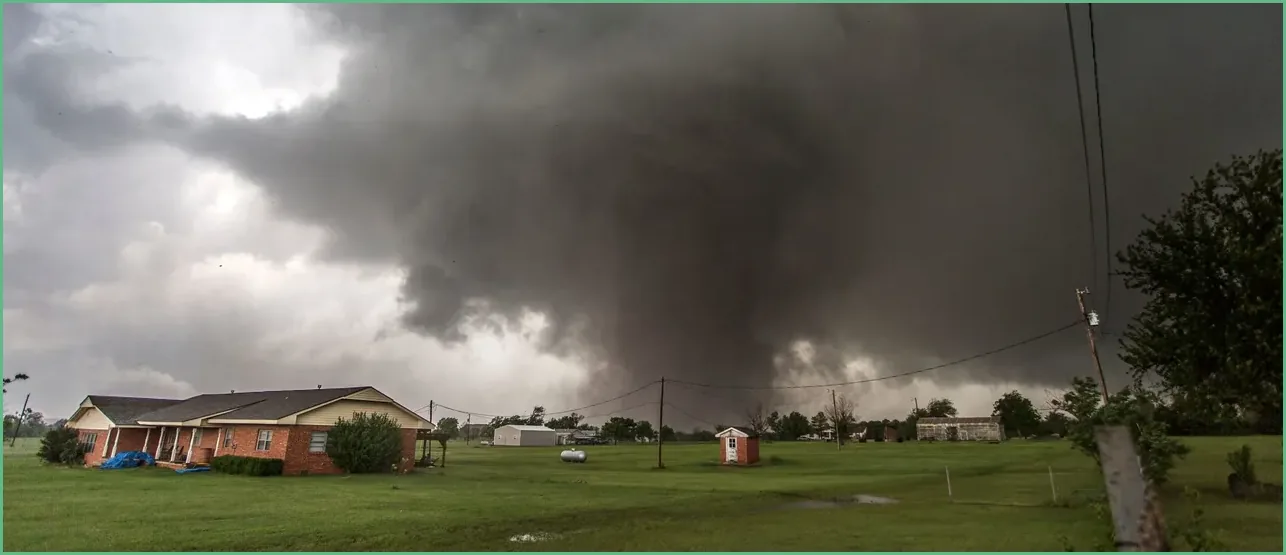
A broad storm system moving across the country is forecast to strengthen as it pushes into the Plains and the Mississippi Valley, putting millions at risk this weekend. That setup could produce tornadoes, large hail, and damaging winds across parts of the central United States.
Storms developing off the West Coast will cross the Rockies and then reorganize as they enter the central states, with initial activity confined to higher terrain before the main threat shifts east. Meteorologists note that the mountain threat is limited compared with what could unfold farther east where moisture and instability are greater. Forecast models show the system gaining energy as it taps warm, humid air flowing north from the Gulf.
From Oklahoma into Missouri, scattered showers and thunderstorms are likely and a portion of those cells could become severe, producing large hail and strong wind gusts that can damage structures and trees. Some storms may be intense enough to produce localized destructive hail and powerful straight-line winds. If wind shear and instability align, a few storms could rotate into supercells and raise the tornado risk.
Forecast models still differ on exact track and timing, which means the threat corridor could shift meaningfully with minor changes in the storm pattern. Emergency managers and forecasters will be watching how the low-level jet and low clouds evolve, since those details control how much instability builds. For now, awareness is the practical approach because conditions are expected to change quickly.
Warm, humid Gulf air will surge north Friday night into Saturday, feeding moisture into the Ark-La-Tex region, the Missouri Ozarks and through the Mississippi Valley. That influx of heat and humidity will set the stage for a broader swath of severe storms by Saturday afternoon and evening. Timing will be key, and pockets of higher moisture could make storms more explosive where it arrives first.
By Saturday afternoon the atmosphere should become progressively more unstable, and if strong wind shear is in place, supercell thunderstorms could form and persist into the night. Supercells are the storms most likely to produce dangerous tornadoes and very large hail. Even storms that do not rotate could still pack damaging winds that topple trees and cut power.
Outlooks currently place parts of the Mississippi Valley under a Level 2 threat on the five-step severe risk scale, signaling a modest but consequential risk for the region. Major cities such as St. Louis, Memphis and Little Rock sit within or near that corridor and could experience hazardous conditions. Residents in those areas should monitor local forecasts and be prepared to respond if warnings are issued.
Officials advise having a simple plan: know where to shelter, keep a charged phone, and have emergency supplies accessible. Secure loose outdoor items and follow local watches and warnings instead of waiting for last-minute alerts. This is a fast-moving situation, and small shifts in timing or moisture could change the severe weather footprint quickly.

