

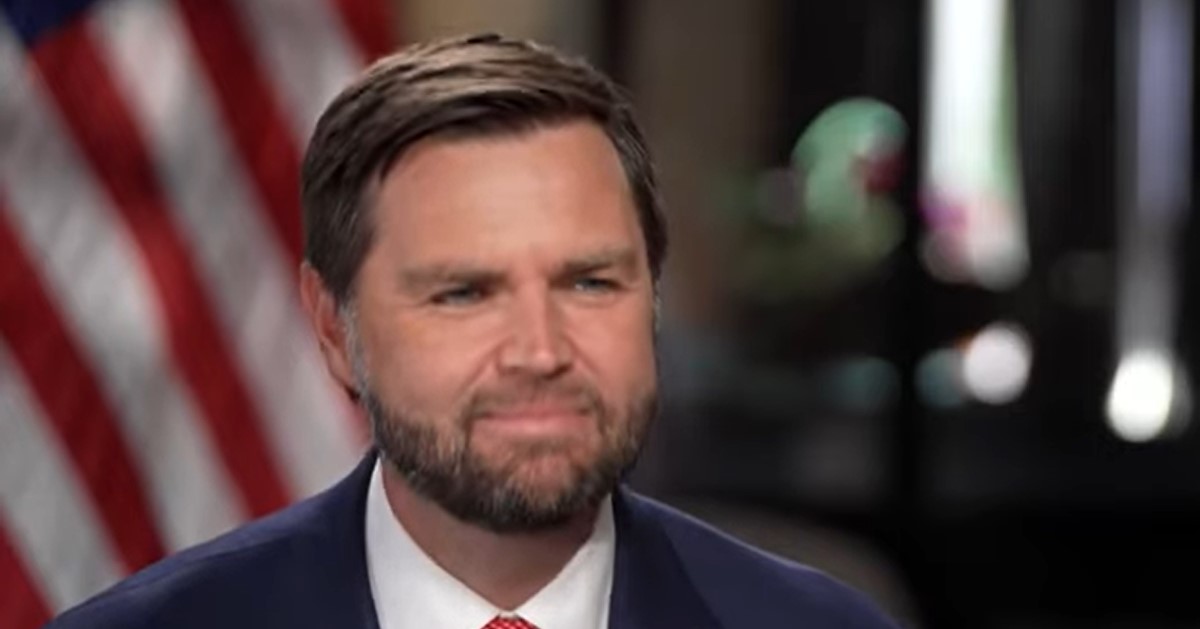
Vice President JD Vance, who converted to Catholicism while his wife Usha was raised Hindu and is largely non-religious, recently addressed criticism over comments about hoping she might one day embrace Christianity. He spoke about their interfaith marriage at a Turning Point USA event and later defended himself on social media after a critic accused him of airing his wife’s religion for political gain. Vance insisted he loves and supports his wife regardless of her faith and pushed back against what he called anti-Christian bias.
Vance has been open about marrying into a different faith background and how their household navigates religion. He says his conversion and faith life are personal but also public because of his role, and questions about how that intersects with family life are going to come up. He frames his faith not as a demand but as a truth he believes is good for people and something he hopes others might see.
At the TPUSA event in Oxford, he explained how church fits into their weekly routine and what he hopes for the future. “For us, it works out now most Sundays, Usha will come with me to church,” Vance said, “And as I’ve told her, and I’ve said publicly, and I’ll say now in front of 10,000 of my closest friends, do I hope eventually that she is somehow moved by the same thing that I was moved in by church.”
“Yeah, I honestly, I do wish that, because I believe in the Christian Gospel, and I hope eventually my wife comes to see it the same way,” he added. “But if she doesn’t, then God says everybody has free will, and so that doesn’t cause a problem for me.” He made clear that hope does not equal coercion, and he repeated that free will is a core part of his faith outlook.
The next day a right-wing Canadian journalist criticized his remarks on social media, prompting a direct reply from Vance that included an embedded post. In response to the complaint, to which Vance , “What a disgusting comment, and it’s hardly been the only one along these lines.” He did not shy away from the exchange and used it to explain his motives.
“First off, the question was from a person seemingly to my left, about my interfaith marriage. I’m a public figure, and people are curious, and I wasn’t going to avoid the question,” he explained, emphasizing transparency over silence. He wanted voters to understand how his faith shapes family life without pretending the topic isn’t sensitive.
“Second, my Christian faith tells me the Gospel is true and is good for human beings. My wife — as I said at the TPUSA — is the most amazing blessing I have in my life. She herself encouraged me to reengage with my faith many years ago,” Vance wrote, pointing out that his wife played a supportive role in his spiritual journey. That detail undercuts any suggestion that his marriage is hostile to his faith.
“She is not a Christian and has no plans to convert, but like many people in an interfaith marriage — or any interfaith relationship — I hope she may one day see things as I do,” he continued. “Regardless, I’ll continue to love and support her and talk to her about faith and life and everything else, because she’s my wife.” He repeated that the relationship is built on mutual respect, conversation, and care.
https://x.com/JDVance/status/1984274352112599123
“Third, posts like this wreak of anti-Christian bigotry,” he added. “Yes, Christians have beliefs. And yes, those beliefs have many consequences, one of which is that we want to share them with other people. That is a completely normal thing, and anyone who’s telling you otherwise has an agenda.” Vance framed the backlash as part of a broader pattern of hostility toward public expressions of faith.
He has made similar comments in previous interviews about how he and Usha manage faith in a household with kids and different backgrounds. “That’s why I feel bad about it,” Vance said. “She’s got three kids. Obviously, I help with the kids, but because I’m kind of the one going to church, she feels more responsibility to keep the kids quiet in the church.” He acknowledged the small burdens that can fall on a partner in an interfaith marriage.
“And I just felt kind of bad. Like, oh, you didn’t sign up to marry a weekly churchgoer. Are you OK with this?” he added. “And she was more than OK with it, and that was a big part of the confirmation that this was the right thing for me.” That personal detail underscores his point that this marriage is a mutual partnership, not a one-sided attempt to convert or coerce.

