

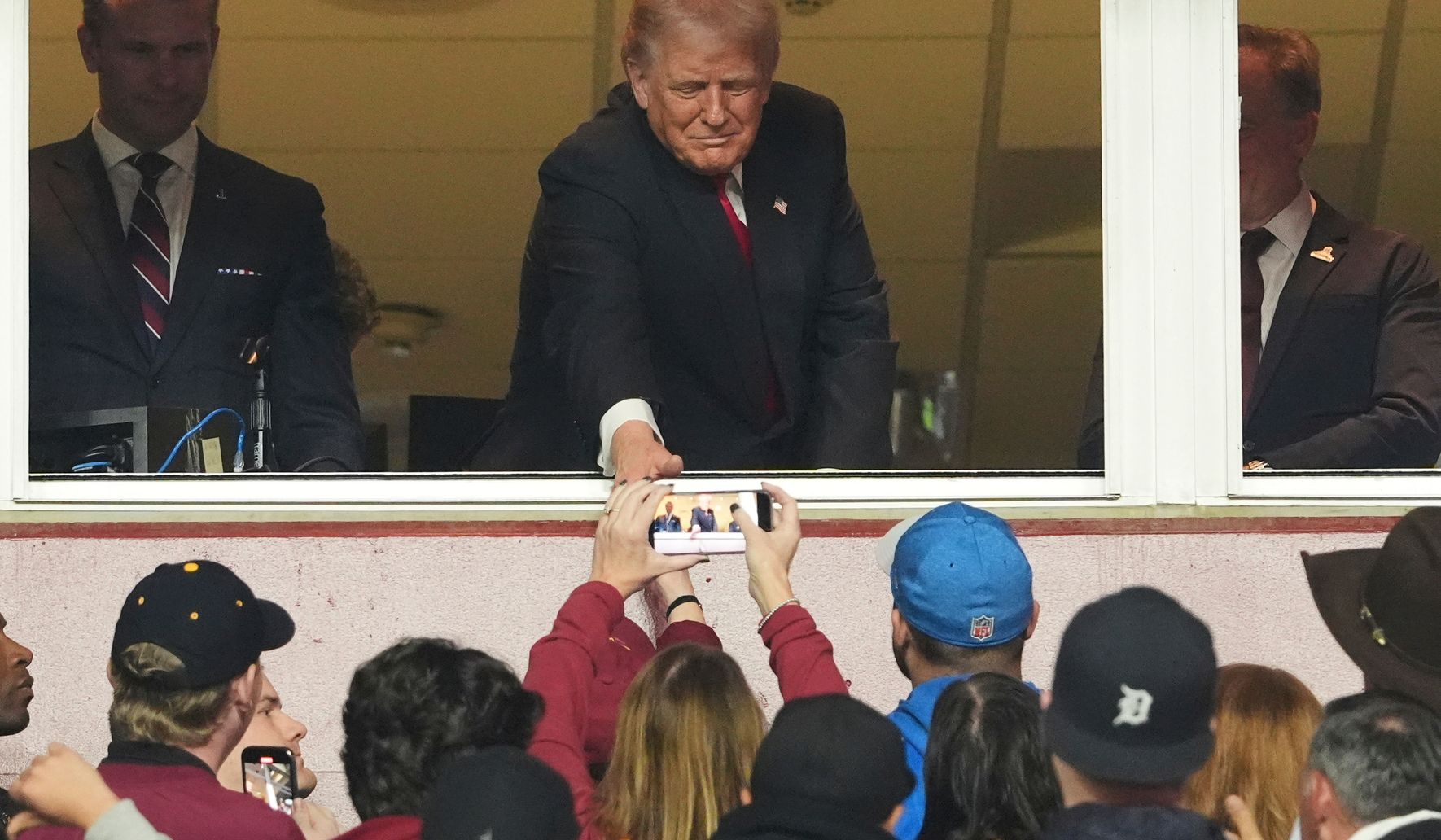
President Trump drew a mixed reception at the Detroit Lions vs Washington Commanders game in Landover, Maryland, showing up in public a day after reports surfaced.
President Trump attended the Sunday matchup between the Detroit Lions and the Washington Commanders in Landover, Maryland, and the crowd reaction was clearly split. He faced both applause and audible pushback as fans registered their views in real time. The scene underscored how polarized public spaces have become during his ongoing public life.
The appearance came just a day after reports surfaced, and that timing framed much of the chatter among spectators and pundits. Supporters treated the outing as a normal part of public life for a former president, while critics used it to voice lingering frustrations. Either way, the visit drew attention beyond the usual game-day coverage.
Security was visibly tight, with Secret Service and local law enforcement coordinating to keep the area orderly. That presence is standard for high-profile figures, but it also signaled that organizers expected a charged atmosphere. Fans around the stadium adjusted their behavior, some leaning into chants and others holding up signs or turning away.
For many Trump backers in the stands, the visit felt familiar and energizing, a reminder that he remains a central figure for a serious segment of the electorate. They cheered his name and applauded when he acknowledged the crowd, treating the moment like a political rally squeezed into a sports outing. That kind of unwavering support can change the tone of a public event quickly.
On the other side, opponents were equally visible. Their boos and counterchatter made it clear that a large portion of the crowd wanted to make its disagreement known. Those reactions were not subtle, and they reflected a deeper national divide that follows Trump into any setting. The two reactions together produced a mixed, combustible atmosphere that dominated the night.
Commentators noted how stadium visits have become another front in the ongoing public debate over Trump. A presence at a major league game is more than a casual appearance; it sends a signal and draws cameras, commentators, and social media scrutiny. That attention magnifies both the support and the opposition, turning a simple trip to a game into a national talking point.
Republican supporters argue that attending public events is part of staying connected with voters and normalizing the role of a former president. They see critics who try to drown out applause as proof that the cultural fight is still active and worth fighting. From that perspective, showing up in a high-profile setting is smart, direct politics in action.
Critics counter that such public outings can be provocative and that coming so soon after news about other matters only fuels conflict. They portray the mixed reception as reflective of unresolved issues and a populace split over direction and leadership. Both sides used the event as material for their narratives, which only deepened the divide.
For the Washington Commanders and the Lions, the visit presented logistical and public relations challenges that teams rarely face with regular spectators. Game organizers had to balance fan safety with media obligations and the unpredictable flow of reactions. The teams’ staff and stadium officials worked behind the scenes to manage entrances, sightlines, and crowd movement.
Media coverage of the appearance focused less on the game itself and more on the political theater unfolding in the stands and concourses. Cameras captured chants, applause, and the looks on the faces of people nearby, turning a sporting event into a microcosm of national debate. That shift in coverage reflects how political figures shape the news cycle whenever they appear in public.
Looking ahead, such outings will likely continue to be scripted and scrutinized, especially when they follow developing stories in the news. For Republicans, the willingness to show up and engage publicly is framed as resilience and connection to everyday Americans. For opponents, the same actions are framed as provocative and polarizing, ensuring that no public appearance will be neutral.
Whatever the motive or meaning, the Landover appearance made one thing clear: public spaces are battlegrounds for influence now as much as they are places for leisure. The mixed greeting at the stadium was not an isolated moment but part of a continuing pattern that keeps Mr. Trump at the center of national attention. That dynamic is likely to repeat whenever and wherever he appears in public.

