

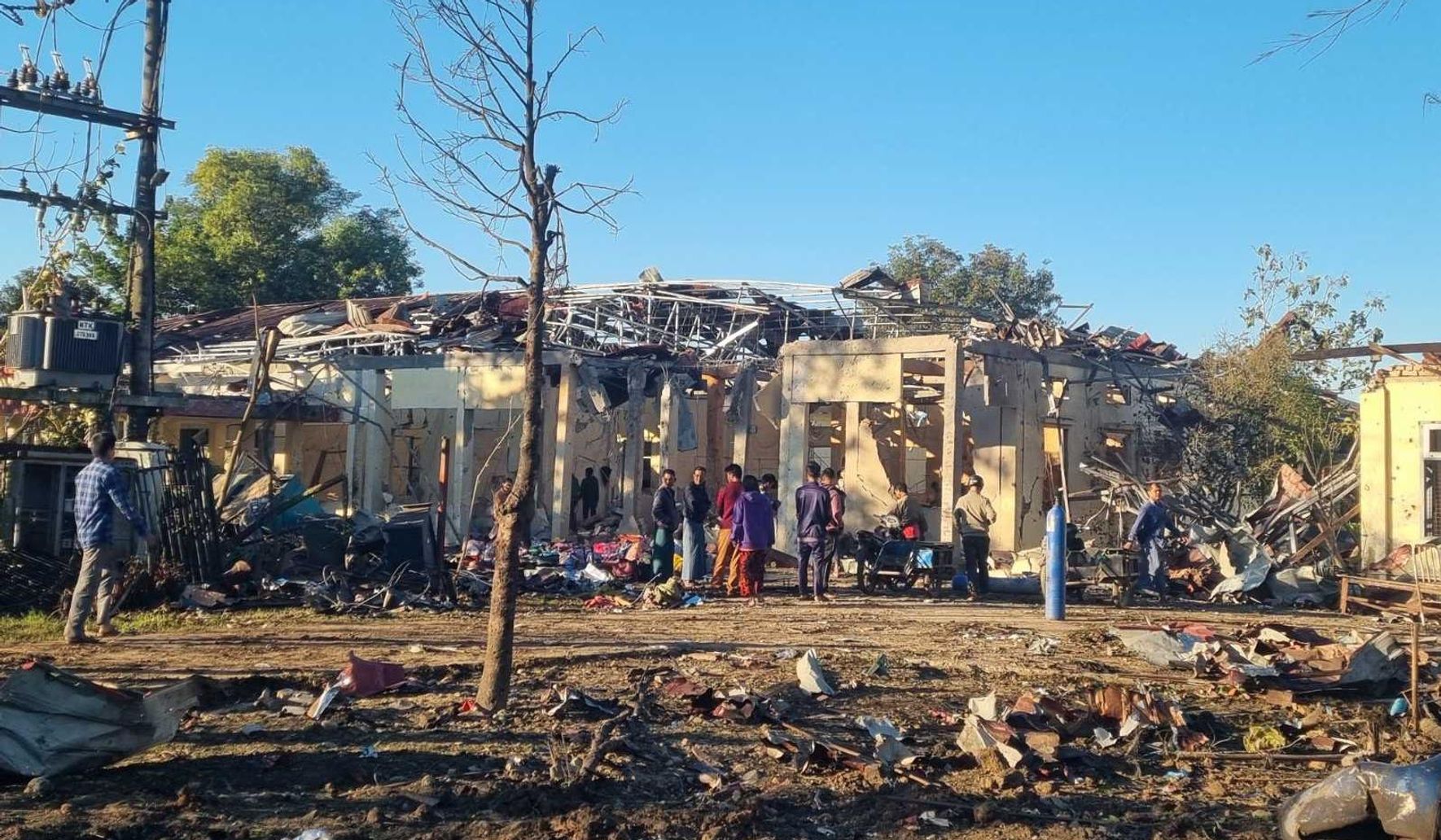
Myanmar’s military has acknowledged an airstrike on a hospital in Rakhine state that local rescuers and media say killed more than 30 people, a grim confirmation of violence striking a medical facility in a volatile region.
The junta’s admission of an airstrike on a hospital in western Rakhine marks a disturbing escalation in a conflict already marked by hits on civilian areas. Local rescuers and independent media reported the death toll as more than 30 people, and the acknowledgement removes doubt about who carried out the attack. Hospitals are supposed to be safe havens, and this report undermines any claim that civilians are being spared in the fighting.
The context matters: Rakhine has been a hotspot of sectarian and political violence for years, and clashes between the military and various armed groups have displaced thousands. The junta took power in a coup and has shown a willingness to use overwhelming force against perceived opponents. That pattern of behavior makes an admission of an airstrike on a hospital both credible and alarming to observers watching for abuses.
International law is clear that medical facilities and personnel must be protected in conflict, and attacks on them can amount to war crimes. The Geneva Conventions and customary international humanitarian law place strict limits on targeting and require care for the wounded and sick. When a government force targets a hospital, it raises serious questions about intent and accountability that demand investigation.
From a policy standpoint, the response should be strong and calibrated to deny impunity to those who ordered or carried out such strikes. A Republican viewpoint emphasizes firm action against regimes that flout international rules and trample human rights. That can include targeted sanctions, restrictions on military assistance, and tightening export controls on equipment that enables air operations against civilians.
Humanitarian consequences are immediate and severe: patients and medical staff are killed or wounded, services are disrupted, and nearby communities lose access to care. In Rakhine, where health infrastructure was already thin, the loss of a hospital reverberates through surrounding towns and refugee sites. Aid delivery becomes riskier, and civilians caught between armed actors pay the highest price.
Accountability cannot rely on hope alone. Independent investigations, preserved evidence, and the cooperation of impartial monitors are essential to determine who authorized the strike and who executed it. Democracies should support transparent fact-finding and documentation so perpetrators cannot escape scrutiny. The goal is not revenge but preventing repetition and protecting innocent lives.
Regional neighbors and multilateral institutions will be watching how the world responds to this admission. Some governments will offer condemnation, others may call for restraint, and a few might look the other way for geopolitical reasons. A consistent policy of principled pressure is necessary so type of attack does not become normalized in conflicts where civilians are already vulnerable.
The American interest goes beyond moral outrage. Instability in Myanmar feeds refugee flows, fuels organized crime, and creates openings for adversaries to expand influence in Southeast Asia. A foreign policy that mixes moral clarity with concrete measures serves both values and interests. That means using diplomacy, sanctions, and partnerships to increase the cost to those who target civilians and to protect humanitarian operations.
Civilians in Rakhine deserve uninterrupted medical care and the security that comes with the protection of hospitals. The reported death toll and the military’s own admission should prompt immediate independent inquiries and sensible pressure from international actors. Swift, clear consequences will signal that attacks on hospitals are unacceptable and will not be tolerated by responsible governments.
Long-term stability will require more than punitive measures; it will take political solutions that address grievances, protect minorities, and build institutions that respect rights. But those long-term goals do not excuse ignoring atrocities when they happen. A firm, measured response today helps create the conditions for peaceful resolution down the line and prevents further erosion of norms that keep civilians safe in war.

