

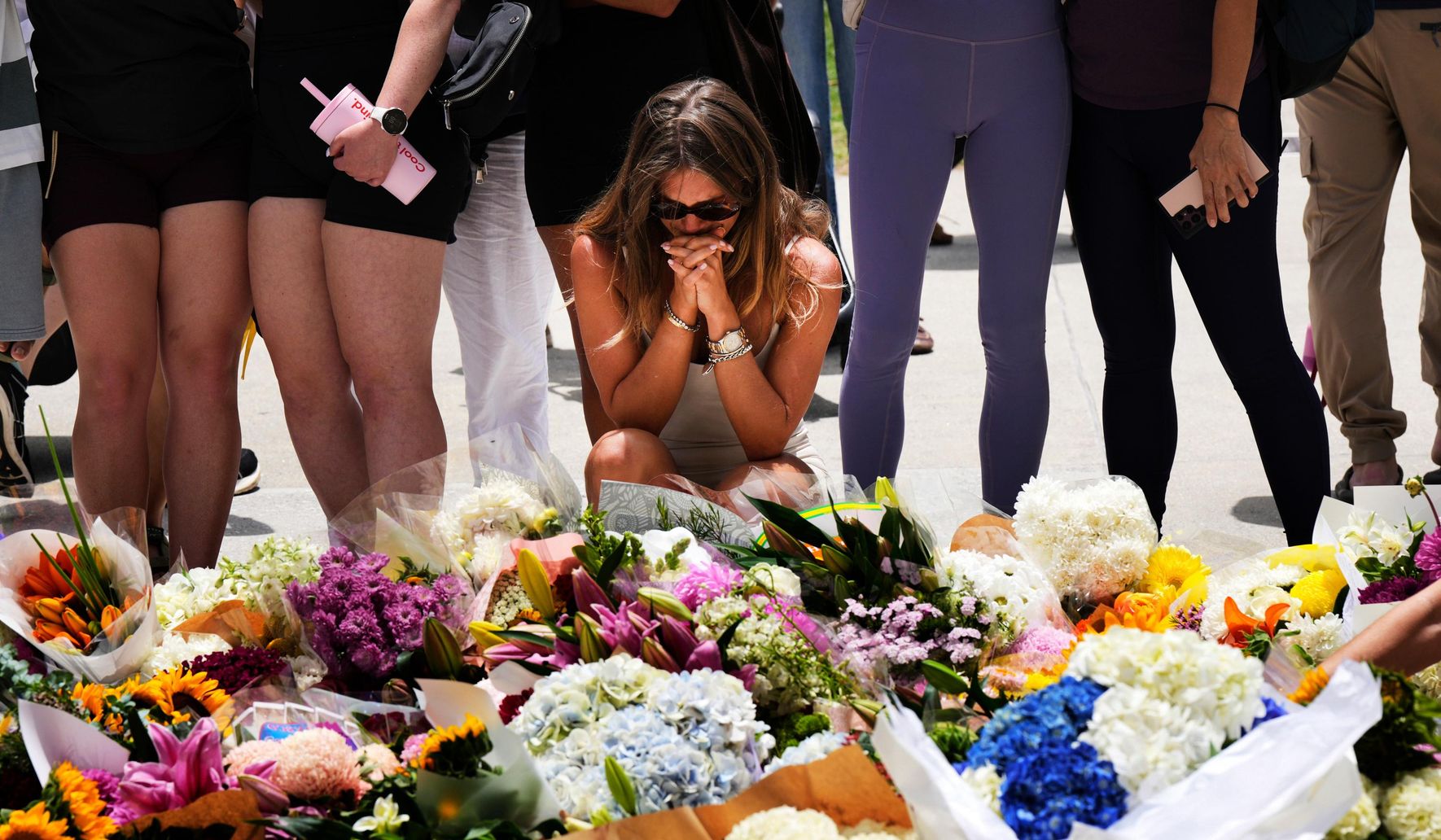
Fifteen people were killed at a Hanukkah celebration near Bondi Beach in Sydney in what authorities described as “a terrorist attack inspired by Islamic State,” Australia’s federal police said, and the city is grappling with grief, security questions, and a national debate about how to protect communities from ideologically driven violence.
The attack left a tight-knit community shaken and raised urgent questions about public safety at religious and cultural gatherings. Leaders on all sides have offered condolences, and businesses and faith groups near Bondi Beach have been helping people process the shock. Law enforcement has taken the lead, promising a detailed investigation while moving to secure the area and support survivors.
Australian federal police used precise, pointed language when they labeled the shooting “a terrorist attack inspired by Islamic State,” and that phrasing frames both the criminal and national-security responses. That description makes clear this is not just an act of random violence but a politically motivated strike meant to terrorize a community. The legal and intelligence systems will treat the incident with the full weight of counterterrorism tools available to the state.
Families of the victims and people who were at the Hanukkah event are now confronting loss and trauma in public. Community centers and synagogues near the scene have increased security and offered counseling, and local volunteers are organizing support for those affected. Healing will take time, and the early hours after such an attack are full of raw emotion and urgent, practical challenges.
Authorities are likely to examine whether any warning signs were missed, how the attacker obtained weapons, and whether online radicalization played a role. These are standard lines of inquiry after attacks that authorities classify as inspired by extremist movements. A thorough, transparent investigation is critical to restore confidence and prevent future tragedies.
Political leaders are responding quickly, and the discussion has already moved to prevention and deterrence. From a Republican viewpoint, the conversation typically centers on stronger law enforcement powers, better intelligence sharing, and tougher measures to disrupt extremist networks before they strike. This perspective emphasizes that protecting places of worship and communal gatherings requires robust security combined with swift prosecution of those who plot violence.
Public safety measures could include anything from targeted policing in high-risk areas to improved surveillance of known extremist channels. Critics will worry about civil liberties, but supporters argue that targeted, intelligence-led policing can be effective without becoming a blanket intrusion on everyday life. The balance between liberty and security will be argued loudly in the coming weeks.
There will also be calls for more cooperation between federal and state agencies, and that coordination matters when threats move across borders or when online radicalization spills into real-world violence. Australia’s agencies have experience with terrorism investigations, but every attack tests the system and reveals where improvements are needed. Officials will want to show they are learning and adapting quickly.
The symbolic nature of an attack at a religious celebration amplifies its impact beyond the immediate victims. Hanukkah is a holiday of light and resilience, and an attack on that gathering carries a message meant to intimidate an entire faith community. That tactic aims to fracture the social fabric, which is why leaders from many backgrounds are speaking in solidarity with the Jewish community.
Longer-term policy debates will likely touch on immigration, border security, online extremism, and community-based prevention programs. Republicans tend to favor firm border controls and stronger penalties for material support to extremist causes, arguing these steps reduce the tools available to would-be attackers. Opponents will push back on measures they see as blunt or counterproductive, setting up a contentious policy battle.
For now, the immediate priorities are clear: secure the scene, support survivors and families, and let investigators follow the facts where they lead. Public officials will need to communicate clearly and act decisively to protect other communities at risk. The nation will be watching how authorities, communities, and leaders come together to respond to this violent breach of peace.


1 Comment
LOL! At this point even our pet dogs know that this was yet another Joo orchestrated HOAX! THIS, is how the synagogue of satan operates.
The hate is earned, stop trafficking our children, stop poisoning our food and water, stop the genocide of the Palestinian nation. Stop calling for the death of all the White people. Strop using our tax money to ship all the low life scumbags into our country. There is no such thing as antisemitism, it’s called self-defense. Time for the Jews to be called out, they are the root cause of ALL our problems.