

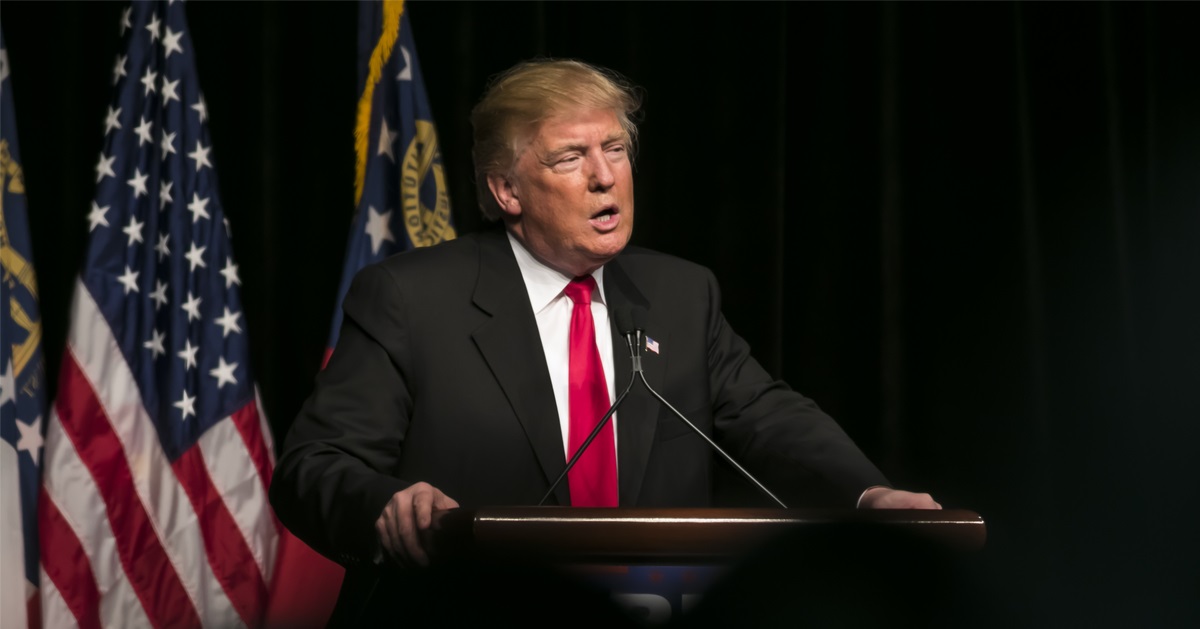
President Trump is set to pick the next Federal Reserve chair with Jerome Powell’s term ending in May 2026, and a decision is expected by January 2026; this choice matters to mortgage holders, retirees, and anyone worried about inflation, rate policy, and the Fed’s priorities.
Donald Trump has made it clear he will name a new Fed leader by January 2026 as Jerome Powell’s term runs out in May 2026, putting the central bank’s direction squarely on the presidential agenda. The selection will shape interest-rate policy that touches borrowing costs, savings, and the broader economy. For voters, this is a rare chance to demand a Fed that answers to everyday Americans, not just financial elites.
The stakes are practical and immediate: interest-rate decisions can raise mortgage payments, cut into homebuying plans, and erode retirement balances when returns don’t keep up with inflation. Families and retirees feel these moves in their monthly budgets, not in academic debates. That real-world impact fuels the political heat around who runs the Fed.
The administration and many conservatives fault Powell for being slow to act on rate cuts and for letting inflation strain household budgets. Criticism has also centered on a Washington, D.C., headquarters overhaul that progressed well beyond its original cost estimates while ordinary Americans cope with rising everyday costs. That combination of perceived policy drift and expensive projects outside core monetary responsibilities has hardened calls for fresh leadership.
Retirees and wage earners worry that future Fed chairs might prioritize institutional projects over protecting nest eggs and paychecks. When labor markets cool and prices stay sticky, older Americans feel squeezed by lower yields and higher living costs. For many conservatives, the right Fed leader should prioritize price stability and workers’ purchasing power above trendy policy experiments.
Treasury Secretary Scott Bessent says the pool has been narrowed to four finalists, a group described as blending Washington experience with private-sector resumes. One name drawing attention is Kevin Hassett, who highlights domestic growth as evidence of successful policies and points to a 4.3% expansion in the third quarter. “Trump policies are working, and they are very visibly working because we have seen the data,” Hassett declared on FOX Business Network’s “Kudlow,” a direct claim aimed at bolstering the case for a nominee aligned with the administration’s economic approach.
Another potential pick, Kevin Warsh, brings a former Fed governor’s critique of past Fed guidance on inflation and growth, signaling a hard look at accountability inside the central bank. Rick Rieder, BlackRock’s chief investment officer overseeing $3.2 trillion in assets, has also been floated and spoke about the honor public service represents. “When I first heard it, I thought it’d be the greatest honor of my life,” Rieder said during an August interview with FOX Business, comments that underline the prestige of the role while prompting debate about whether a Wall Street chief can put Main Street first.
There are signs of strain within the Fed itself, where voices like Christopher Waller and Michelle Bowman have shown disagreements over timing and magnitude of easing. Those internal splits played out as they pushed for cuts earlier and then backed a modest 0.25-point reduction in December, the third cut this year. The Fed’s minutes, released just before the new year, reveal uncertainty about how many more cuts might arrive in 2026, leaving households and markets uncertain about future borrowing costs.
With inflation still a concern and the labor market cooling, critics on the right argue the Fed’s response has been uneven and too slow to protect everyday Americans. Conservative commentators insist it is time for leadership that puts workers and savers first instead of indulgent projects or cautious half-measures. That debate over priorities will shape the confirmation fights and the expectations set for whoever takes the chair.

