

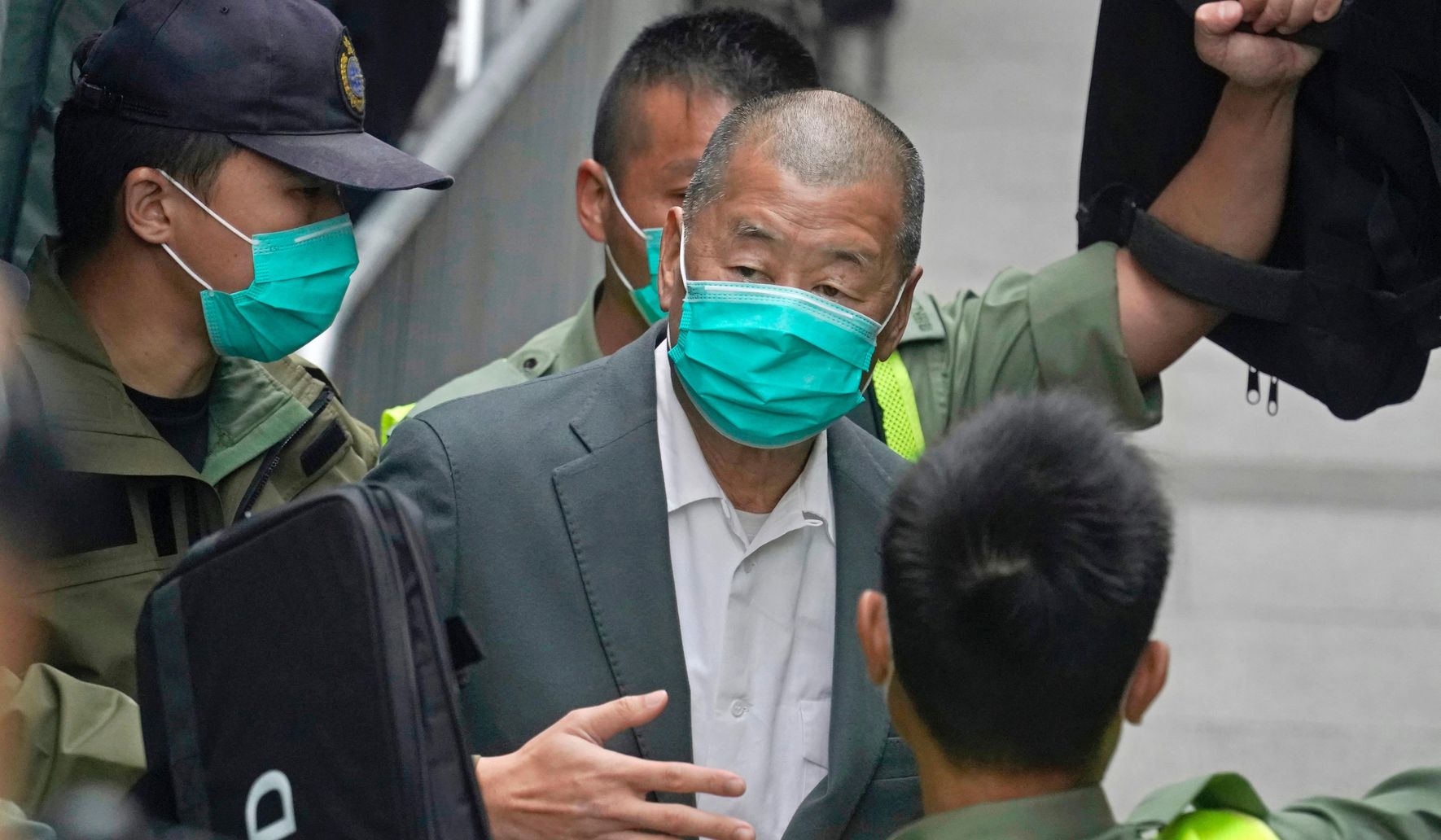
Jimmy Lai, the pro-democracy former Hong Kong media tycoon and a fierce critic of Beijing, was sentenced to 20 years in prison under the China-imposed national security law, marking one of the most prominent prosecutions tied to the crackdown on dissent.
Jimmy Lai built a reputation as a loud, uncompromising voice for Hong Kong’s democracy movement and a thorn in Beijing’s side. His media outlets became synonymous with pro-democracy coverage and investigative reporting that challenged mainland control. That public profile put him squarely in the crosshairs once the national security law arrived.
The sentence — 20 years behind bars — came in a high-profile trial brought under the China-imposed national security law. The case is being watched as a bellwether for how far Beijing will go to silence critics in Hong Kong. Observers say the scale of the punishment sends a stark message to activists, journalists, and business leaders alike.
The consequences for Hong Kong’s press environment have been immediate and severe. Outlets that once pushed the boundaries of reporting face closure, asset freezes, and the constant threat of prosecution. The business community now weighs risks in a city that once prided itself on the rule of law and relative openness.
From a Republican viewpoint, this is an assault on a core Western value: the free press. The sentencing is not just about one man; it reflects a pattern of Beijing consolidating control by criminalizing dissent and shrinking civic space. That trend undermines confidence in Hong Kong as a reliable place for investment and safe harbor for ideas.
Questions about the legal process have multiplied alongside the headlines. Trials under the national security law often occur with limits on public access and restrictions that critics say damage basic due process protections. When legal norms erode, businesses and individuals face added uncertainty that ripples through markets and alliances.
There are broader implications beyond Hong Kong’s skyline. A heavy-handed approach to political dissent chills not only journalists but also students, lawyers, and ordinary citizens who might otherwise speak up. That chilling effect reshapes civic life and signals to the world that speaking truth to power carries grave risks.
Western governments and policymakers now face decisions about how to respond while protecting strategic interests. From a conservative perspective, responses should be clear-eyed: defend core freedoms, hold bad actors accountable, and preserve avenues for asylum and support for those targeted. The aim is to raise costs for repression without destabilizing vital economic ties.
The Lai case will likely linger as a reference point in debates over China’s global behavior and how democracies should react. It crystallizes a hard truth about how quickly legal systems can be repurposed to enforce political aims. As observers and policymakers track what comes next, the effects of this sentence will extend beyond one courtroom and into the future of Hong Kong’s civic and commercial life.

