

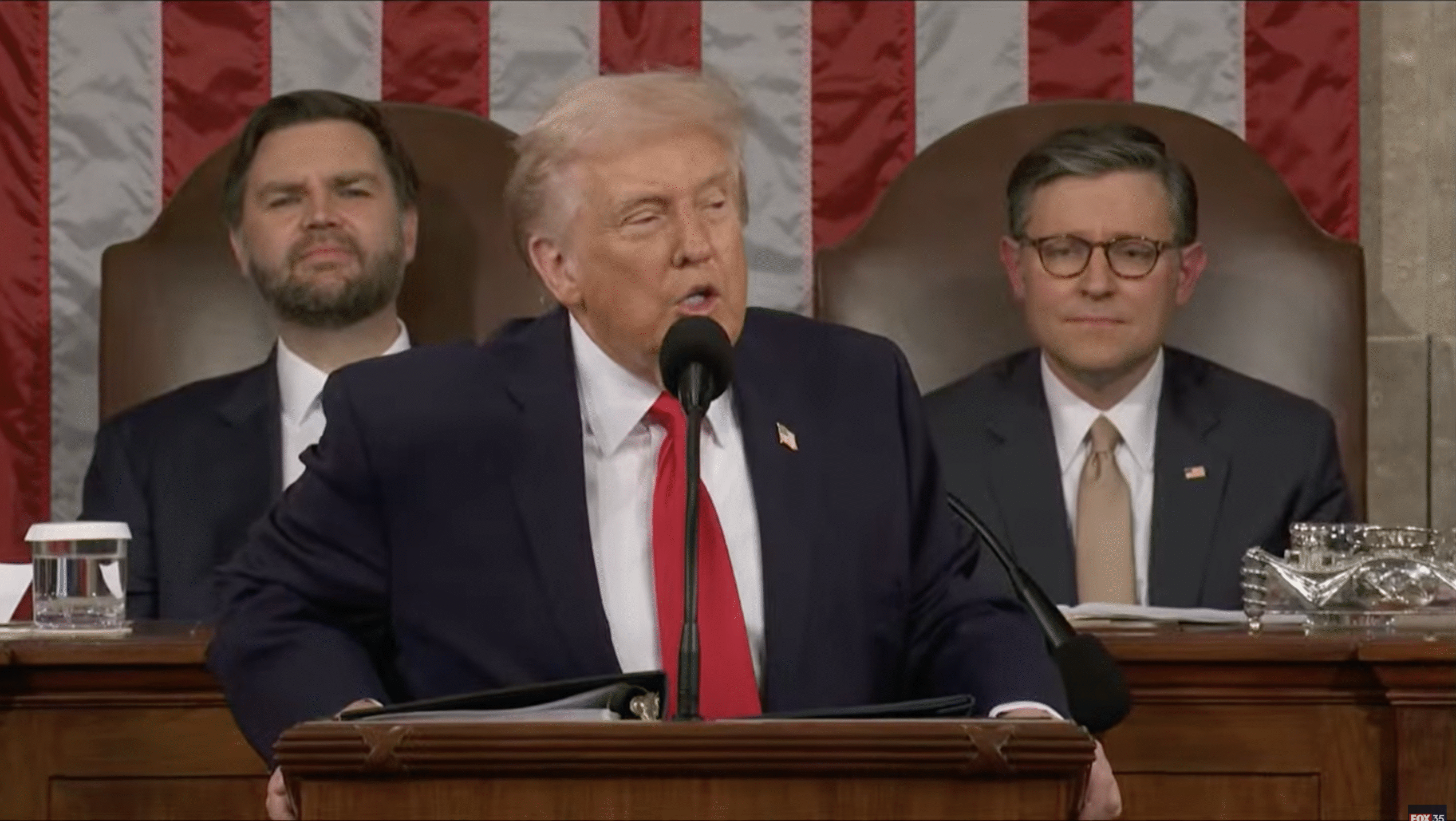
A sharp moment in the State of the Union left the room divided: a report said President Donald Trump’s speech took a “darker” turn when he asked lawmakers to affirm that the federal government’s primary responsibility is to protect Americans rather than illegal aliens, and he invited members of Congress to stand if they agreed.
The president framed the moment plainly and without apology, pushing back against years of policy drift that put open borders and catch-and-release ahead of citizens’ safety. He spoke directly to representatives and senators and made a clear demand about priorities: the federal government’s primary responsibility is to protect Americans rather than illegal aliens. That line landed like a statement of principle, not a policy footnote, and it forced elected officials to choose a public posture on border enforcement and national security.
Political theater met real policy consequences in that instant. For years, many voters have grown tired of Washington’s vague commitments and shifting priorities, and this was an unmistakable effort to make protection of citizens the default. The exchange made the stakes obvious: it’s not just about immigration enforcement in isolation, it is about whether government puts citizens first in law and practice. The simple request to stand if lawmakers agreed turned an abstract debate into a visible test of conviction.
Critics called the moment “darker” and tried to paint it as fear-mongering, but supporters saw a leader resetting the conversation back to fundamentals. Political opponents often prefer nuanced phrasing and guarded language, yet this was an unapologetic appeal to security, sovereignty, and the rule of law. Voters who want clear borders and orderly immigration will see this as an overdue correction to policies that have tolerated chaos. The administration’s message was concise: public safety belongs to the people we serve first.
Beyond the optics, the speech nudged lawmakers toward concrete decisions about funding, enforcement, and legal priorities. Debates over wall funding, asylum rules, and interior enforcement hinge on whether Congress will adopt a citizen-first posture behind its votes. That posture changes the lens through which bills get judged, from narrow technicalities to a question of who benefits from federal policy. Members of Congress could no longer hide behind procedural euphemisms without revealing where they stand.
The moment also sharpened the contrast between messaging and results. Saying you support Americans comes with expectations about enforcement, deportation priorities, and border security investments. For many conservatives, the point isn’t cruelty; it’s competence: a functioning immigration system that defends citizens, respects the rule of law, and treats migrants humanely within a predictable legal framework. The push for clarity forces lawmakers and agencies to align policies with those practical goals instead of muddled rhetoric.
Expect the fallout to be less about the staged standing and more about follow-through in legislation and oversight. The scene created a public record of positions that journalists, activists, and voters can reference when assessing votes and hearings going forward. Lawmakers who stood will be judged on whether they translate that posture into action, and those who didn’t will have to explain why protecting citizens wasn’t a top priority. The debate ahead will be procedural, legal, and political, but it began with a plain question about who the federal government exists to protect.

