

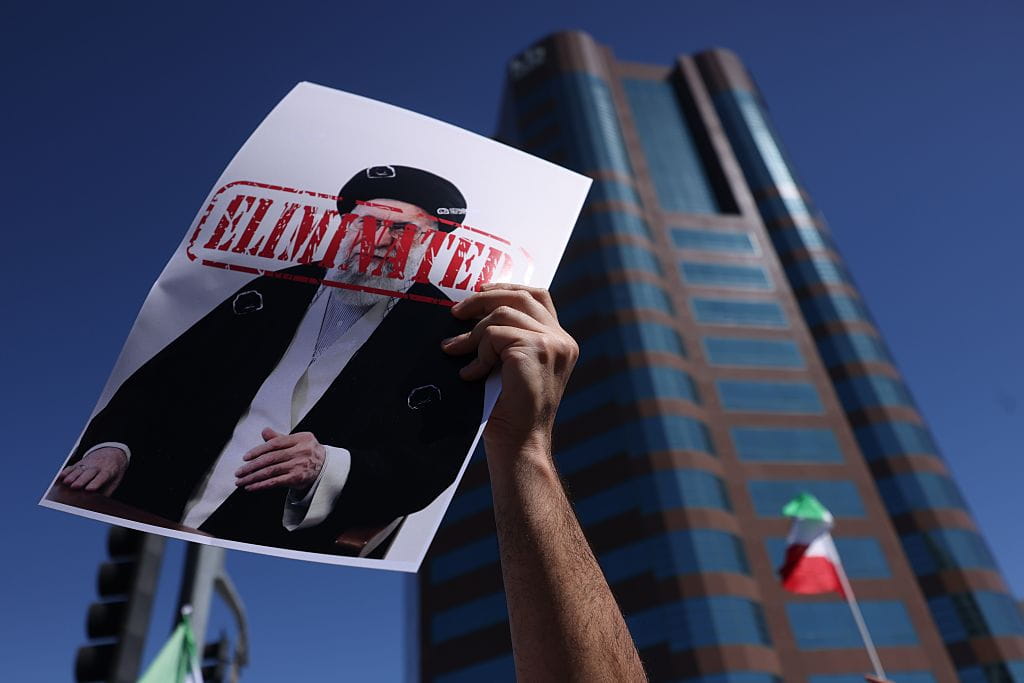
President Trump ordered “major combat operations” in Iran under Operation Epic Fury, making clear the mission aims at regime change and putting U.S. forces on a decisive path in the region.
The administration announced on Saturday that the United States had launched what it called “major combat operations” named Operation Epic Fury in Iran, signaling a dramatic escalation in Washington’s posture. The move was framed as a targeted effort to remove an adversarial regime rather than a narrow counterterrorism action. From a Republican perspective, this is the kind of clear-eyed pressure needed to protect American interests and deter future aggression.
President Donald Trump stated the objective plainly, telling Iranian forces directly, “To the members of the Islamic Revolutionary Guard, the armed forces and all of the police, I say tonight that you must lay […]” and leaving no doubt about the administration’s demands. That direct address is a departure from the coded warnings and diplomatic hedging we have seen in past years. Republicans will argue that bluntness can prevent further miscalculation and restore deterrence after long stretches of strategic drift.
Operation Epic Fury is being presented as a coordinated, multi-domain campaign relying on precision strikes, intelligence assets, and forward-deployed forces. The operation’s name and scope suggest planners intend pressure that is sustained and adaptable, not a one-off punitive strike. Supporters believe this gives the United States leverage to negotiate from strength or to compel the collapse of a hostile leadership that threatens regional stability.
Critics warn of escalation and regional chaos, and those concerns deserve a sober hearing. Even so, wavering in the face of threats has cost American lives and credibility in the past, and Republicans often point to that track record when defending bolder measures. The question for voters and lawmakers now is whether America will follow through until national objectives are achieved or retreat at the first sign of blowback.
On the ground, commanders face a complex environment that mixes conventional forces, proxy militias, and asymmetric threats. That complexity is exactly why a clear political objective matters; troops should not be left fighting missionless wars. Lawmakers should insist on robust oversight and the tools necessary to win without becoming the permanent occupier that creates future problems.
Domestically, the decision will sharpen partisan lines. Republicans tend to frame decisive military action as responsible leadership and a necessary defense of American interests, while opponents will emphasize diplomatic alternatives and the human cost of war. Those debates are legitimate, but they should not be used to paralyze commanders in the field or to punish policymakers for acting on credible threats.
Allies in the region and beyond will now be watching for signs of American stamina and strategic clarity. If the United States can demonstrate resolve, partners are more likely to align and contribute to burden-sharing. A convincing campaign can also fracture Tehran’s international support and accelerate internal pressures on an oppressive regime.
For U.S. forces, rules of engagement and force protection measures will be critical to avoid unnecessary escalation. Precision, intelligence fusion, and restraint must guide operations even when the political aim is bold. Republicans argue that strength and disciplined execution are not contradictory but complementary; force used wisely can limit casualties and shorten conflicts.
Congressional involvement will be a flashpoint as lawmakers assert their authority while commanders execute the mission. Republicans who back the operation will press for clear objectives and adequate resources, insisting Congress enable mission success rather than hobble it with restrictions that only embolden adversaries. The balance between oversight and operational freedom is a test of governance under pressure.
Long-term strategy is still the unresolved piece of this puzzle, and it should include plans for stabilizing the region once military objectives are achieved. Leaving a power vacuum would invite worse outcomes, so any regime-change policy must be paired with a realistic plan for what follows. From a conservative standpoint, that plan should prioritize regional partners, deter malign nonstate actors, and minimize long-term American entanglement.
Public opinion will matter and should be informed by clear, factual briefings rather than fear-based rhetoric. Republicans will argue that voters deserve straight talk about risks and objectives so they can weigh the necessity of action against the costs. The coming weeks will reveal whether Operation Epic Fury can be executed with the discipline and clarity required to defend U.S. interests without becoming a quagmire.

