

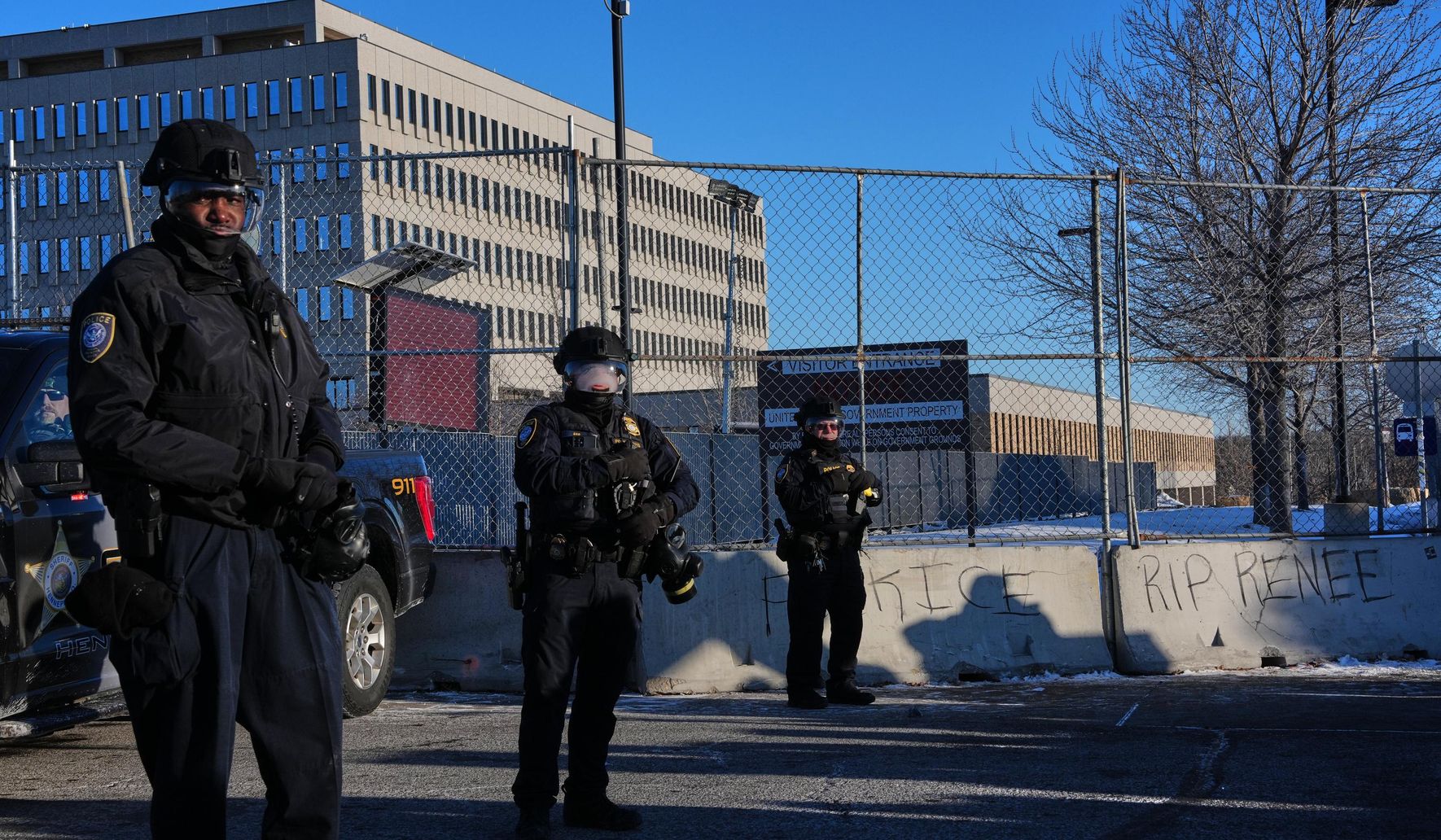
U.S. Immigration and Customs Enforcement now operates in Minnesota with just 47 deportation officers, concentrating their work on arrests inside prisons and jails while broader interior enforcement has been scaled back.
U.S. Immigration and Customs Enforcement has trimmed its deployment in Minnesota to 47 deportation officers, and those officers are primarily making arrests of deportation targets inside correctional facilities. That narrower focus means agents are spending most of their time handling cases tied to jails and prisons rather than conducting broader community enforcement. For residents and local officials, the change is noticeable and raises questions about priorities and public safety.
On the ground, fewer deportation officers translates into less proactive field work on nonincarcerated individuals with removal orders. ICE appears to be prioritizing targets who are already in custody where custody reduces public safety risks during transfer. The operational logic makes sense from a risk-management view, but it shifts the balance away from street-level enforcement that some conservatives argue deters repeated illegal entry and criminal activity.
From a Republican perspective, interior enforcement is part of a two-pronged approach that includes securing the border and enforcing immigration laws once people are in the country. Reducing boots-on-the-ground enforcement in communities undermines that approach by limiting follow-through on removal orders. When federal presence is thin, local governments are left to handle fallout or alter policing priorities to fill gaps.
Local law enforcement alliances matter when federal resources tighten. Sheriffs and county jails often coordinate with ICE to identify individuals with detainers or removal orders, and a smaller ICE footprint can strain those arrangements. Counties may face hard choices about detention and public safety budgets if federal involvement drops or becomes narrowly focused on incarcerated targets.
ICE officials explain this kind of redeployment as prioritization driven by resources, legal constraints, and policy direction. When staffing levels fall, the agency typically concentrates on the highest-risk populations: people convicted of serious crimes or those already in custody. That approach minimizes the chance of public encounters during enforcement actions, but it also reduces the deterrent effect of visible interior enforcement.
There is a policy tension between targeted enforcement and broad deterrence. Concentrating on incarcerated targets can prevent immediate threats from returning to the streets, which is a clear public safety benefit. However, a narrow strategy misses opportunities to remove others who are evading justice or repeating illegal crossings, which critics say weakens the rule of law and incentives for compliance.
Practical changes would include restoring personnel levels or reallocating resources so field teams can work alongside custody-focused efforts. Better coordination with state and local partners can also expand reach without increasing federal headcount dramatically. Republicans typically favor restoring enforcement capacity and ensuring accountability so that removal orders are enforced consistently across jurisdictions.
Transparency on who is being removed and why helps the public judge whether enforcement choices match community safety needs. Clear reporting on convictions, recidivism, and immigration histories of those detained or removed would inform debate and policy. Data allows taxpayers and elected officials to weigh the tradeoffs between concentrating on incarcerated targets and pursuing broader interior enforcement.
Politically, changes in enforcement posture have tangible consequences for elections and state-federal relationships. Voters notice when law enforcement priorities shift, and local leaders adjust their messaging and budgets accordingly. Those shifts feed into broader debates about immigration policy, public safety, and governmental responsibility at both the state and federal level.
Debate over the right mix of border and interior enforcement will continue as administrations and Congress set priorities and funding. Minnesota’s reduced ICE deployment to 47 deportation officers highlights the tradeoffs agencies make when resources are limited and political direction changes. The conversation now centers on how to restore effective channels for removal while preserving public safety and respect for the rule of law.

