

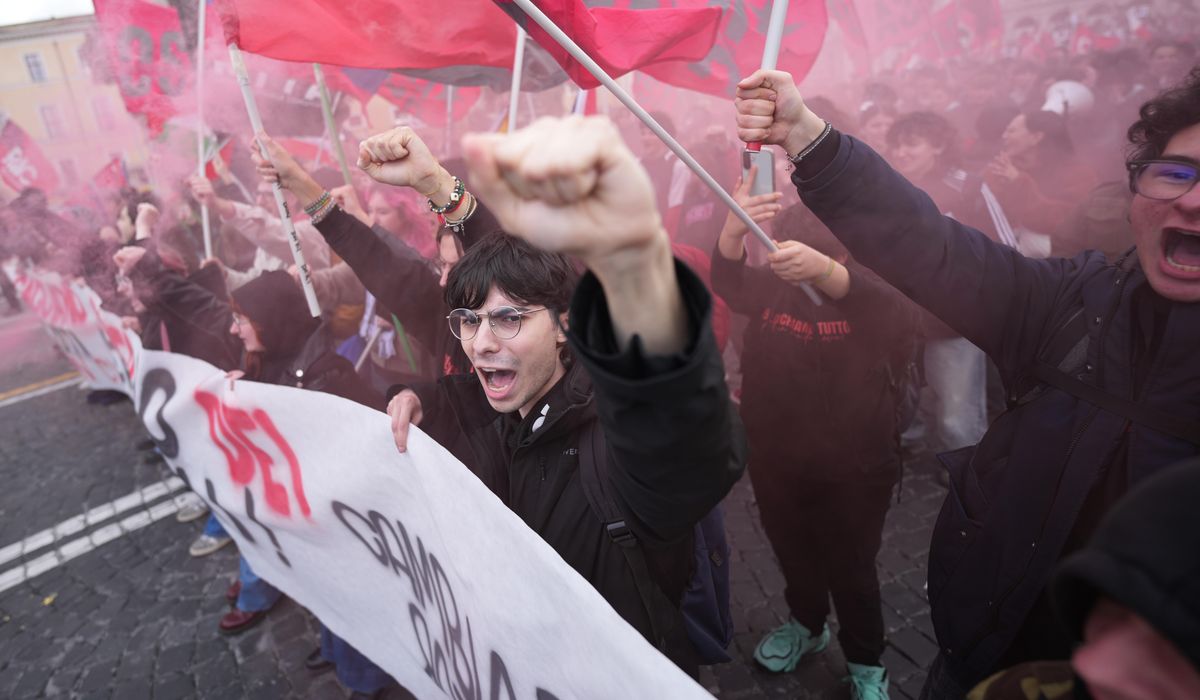
Thousands turned out Saturday to protest wars in the Middle East and proposed judicial reforms from Italy’s conservative government, merging international outrage with rising domestic political tensions.
Across several Italian cities, thousands of people marched and gathered to voice anger at ongoing conflicts in the Middle East while also opposing judicial changes advanced by the conservative government. The demonstrations linked foreign policy grievances with fears about alterations to the country’s legal framework, creating a broad and sometimes uneasy coalition of participants. The mood on the streets was both vocal and determined, reflecting real frustration among diverse groups.
Organizers framed the protests as opposition to violence abroad and to what they see as threats to democratic safeguards at home. Many participants wore symbols and signs referencing conflicts in the region, while others focused on court reform language that critics say could weaken oversight of political actors. That blending of themes made the rallies feel like a general dissatisfaction with multiple sources of uncertainty rather than a single-issue demonstration.
The government pushing the judicial reforms is conservative, and its backers argue the changes are meant to streamline justice and rein in what they call judicial overreach. From a Republican viewpoint, there is merit in asking whether courts have become politicized and whether reforms can restore clarity, efficiency, and accountability. Those are legitimate policy goals that deserve sober debate rather than reflexive condemnation.
Protesters counter that altering judicial structures risks undermining checks and balances that protect citizens from power concentrated in the hands of the state. That is a serious charge that demands clear answers from lawmakers proposing the changes, including specifics about safeguards and procedural guarantees. Voters want to know how reforms will affect impartiality, independence, and access to justice for ordinary people.
On the international front, anger over wars in the Middle East fed into the demonstrations, as many Italians worry about civilian suffering and the broader geopolitical fallout. The presence of these sentiments at rallies about domestic reform complicated messaging and made it easier for critics to paint the movement as unfocused. Still, the politicization of foreign conflicts is a reality in democratic societies, and it often shapes public responses to unrelated policy debates.
Police and local authorities reported large turnouts but also emphasized the importance of keeping order while protecting the right to protest. That balance is central: governments must permit peaceful assembly and also ensure public safety and the rule of law. When demonstrations target legal institutions themselves, the stakes rise because the institutions being debated are the very mechanisms meant to manage such conflicts.
Media coverage highlighted the range of people involved, from activists and students to trade unionists and neighborhood associations, underscoring how both international crises and national policy can draw in citizens who rarely act politically. For conservatives and reform proponents, that broad participation can look like a concerted pushback against necessary governance changes. For opponents, it signals widespread concern that should not be dismissed as partisan noise.
Italy’s political leaders face a challenge in responding in a way that respects the protests while defending their reform agenda and addressing foreign policy consequences. Clear communication about why reforms are proposed, what limits will protect judicial independence, and how foreign policy positions are being judged could calm some tensions. Republican-leaning observers often stress that reformers must show results and safeguards, not just rhetoric, to build trust.
Public opinion will likely shape the next steps as lawmakers weigh how far to push changes and how to manage international criticism and domestic unrest. Constructive debate means answering tough questions transparently and sticking to rule-of-law principles that matter to most citizens, regardless of ideological leanings. Demonstrations are a signal; how leaders translate that signal into policy will determine whether Italy moves toward stability or further polarization.

