

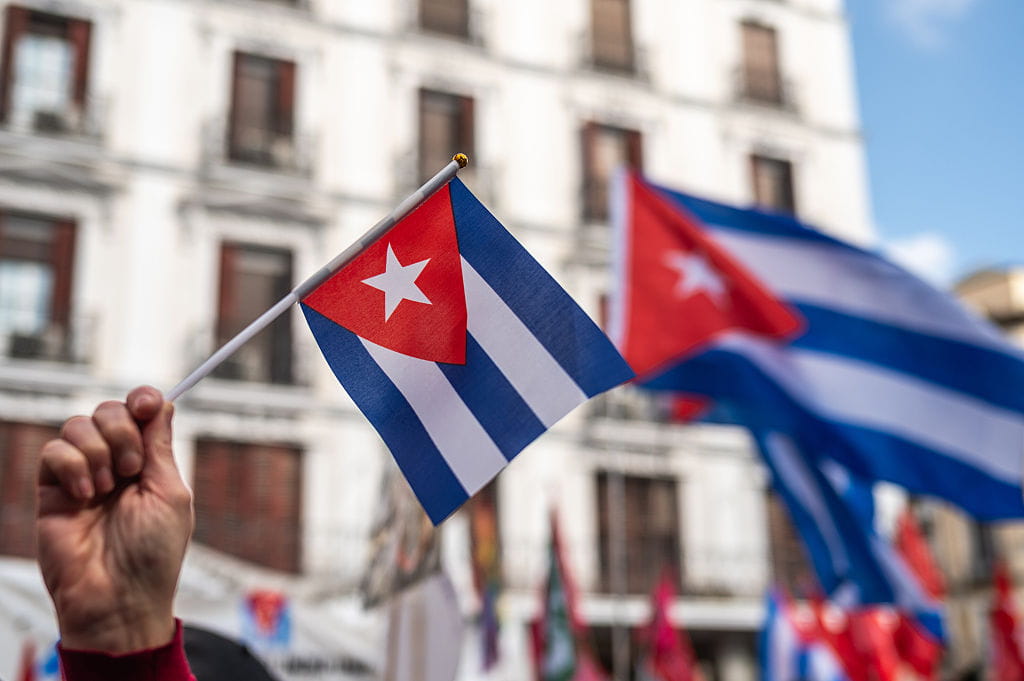
This article sketches how Cuba’s political choices since 1959 have shaped daily life on the island, tracing the human and economic consequences of seven decades under a single-party system.
“Poverty. Hunger. Disease. Darkness. Misery.” Those five words capture the blunt reality many Cubans have faced for 67 years under a regime that put ideology above incentives. The island’s beauty and proximity to the United States only make the contrast sharper for observers on both sides of the Florida Straits. The human toll shows up in empty shelves, aging infrastructure, and families stretched thin by scarcity.
Located roughly 90 miles from American shores, Cuba’s fate is not an abstract foreign problem but a close, hard-to-ignore neighbor. Since Fidel Castro seized power on New Year’s Day 1959, the country has been in a death spiral, propped up for years by external support that masked internal rot. Once the Soviet subsidies went away, the structural weaknesses of a centrally planned economy became impossible to hide. What remained were shortages, rationing, and a reliance on informal markets and remittances.
Land and industry nationalizations gutted private initiative and removed the signals that markets use to allocate resources efficiently. Central planning substituted political priorities for consumer demand, which produced chronic mismatches between supply and need. When production fell, so did the variety and quality of basic goods. Long-term investment in maintenance and innovation was neglected because the incentives for entrepreneurs and managers were absent or perverse.
The economic failure translates into daily hardships: long lines for food, unreliable electricity, and medicine shortages that make ordinary ailments dangerous. Hospitals and clinics struggle with equipment and supply gaps despite having trained medical staff, and chronic underinvestment has downgraded service capacity. Many Cubans cope by relying on family networks abroad, the black market, or a patchwork of small private ventures that operate in the gray zones of the law. Those survival strategies are fragile and only partially mitigate systemic dysfunction.
Political control and repression are part of the package that sustains the system. Dissent is risky and independent organizing is tightly constrained, which keeps alternatives from forming openly. Information flows are limited and penalties for activism include detention and job loss, which discourages public challenges to the status quo. The lack of political competition means policy mistakes are hard to correct, and accountability mechanisms are weak.
The exodus of talent has hollowed out potential engines of recovery. Professionals, skilled technicians, and entrepreneurs often look for opportunities abroad rather than bet their futures on a system that rewards conformity over creativity. That brain drain reduces the capacity for domestic innovation and prolongs dependency on external assistance and remittances. It also reshapes the demographic profile of the nation, leaving communities with fewer working-age people to sustain local economies.
Despite the hardships, Cuban society shows resilience in many small ways—family networks, informal trade, and cultural life persist even under strain. New private micro-enterprises and small markets have sprouted where gaps exist, creating pockets of dynamism that bend but do not break. Those adaptations demonstrate both the resourcefulness of ordinary people and the limits of survival strategies within an unfree economic framework. They underline how policy, not geography, largely determines living standards.
The island’s proximity to the United States heightens the political stakes and public awareness here. Americans across the political spectrum watch the flow of refugees, remittances, and stories of everyday hardship, which keeps Cuba in the national conversation. That closeness also means U.S. policy decisions and global geopolitics intersect with Cuban realities, for better or worse. The results on the ground remain shaped most of all by how the Cuban system organizes production and property.
Recent episodes of unrest and public protest reflect a growing impatience born of persistent shortages and constrained freedoms. When people are pushed to the margins by economic failure, social pressure on the regime increases and fault lines become visible. The cycle of repression and scarcity can produce sporadic eruptions that reveal the depth of dissatisfaction. How those moments resolve depends on a mix of domestic resilience and external influences.
Across generations, remittances and diaspora networks have become lifelines that keep millions afloat and patch gaps that state provision cannot fill. Money from abroad goes directly into food, medicine, and small business seed capital, and it often acts as the difference between stability and crisis for many families. Those flows highlight how much of daily life now depends on private transfers rather than state-led economic performance. They also underscore the human desire to find workarounds when formal institutions fail.

