

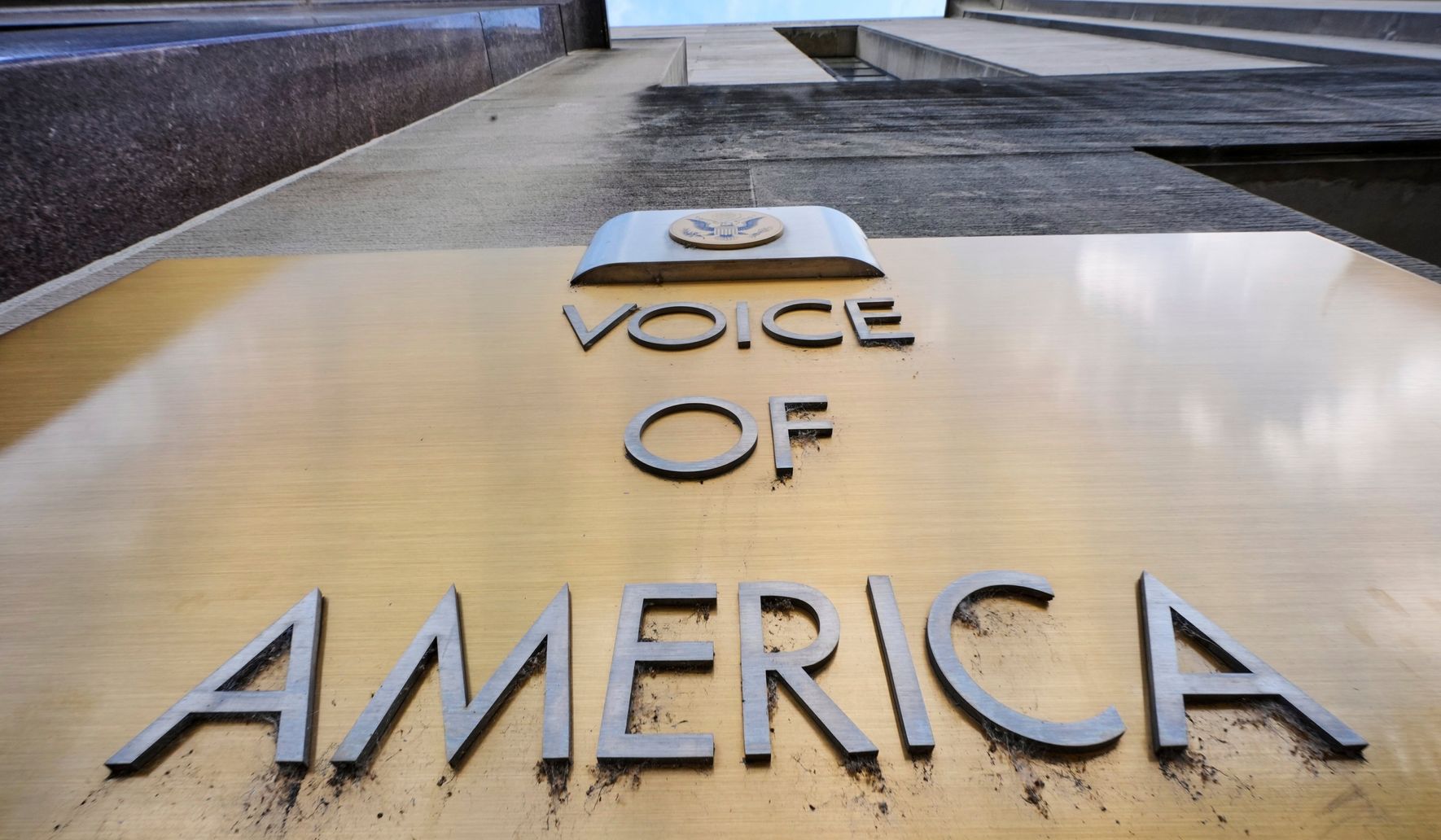
Journalists at Voice of America filed a lawsuit Monday claiming the Trump administration, while largely shutting down the government-run outlet that provides news around the world, has altered its operations in ways the reporters say undermine editorial independence and the outlet’s mission.
The lawsuit alleges that actions taken by senior officials have effectively sidelined long-standing safeguards designed to keep Voice of America independent from direct political influence. The reporters say staffing cuts, restrictions on reporting and management moves created conditions that threaten the outlet’s credibility with audiences overseas. Those who brought the case want the courts to review whether the administration overstepped legal and policy boundaries in directing VOA’s work.
Voice of America has a unique legal charter that calls for accurate, objective journalism and for reflecting American society. That mission has long been defended as a way to project U.S. values to international audiences while maintaining a firewall between government policy and newsroom decisions. The plaintiffs argue recent changes have blurred that line, creating operational pressures that make it harder for journalists to do independent reporting.
The administration counters that as a government entity, VOA must be accountable to elected leadership and that changes reflect legitimate management priorities. From a Republican viewpoint, accountability matters when taxpayer dollars fund an international broadcaster, and executives have a duty to ensure resources are used effectively. Supporters of the actions say management decisions can be justified on the basis of efficiency, national security or shifting strategic priorities.
Court challenges like this force a clash between two important principles: editorial independence and executive oversight. The judges will need to weigh whether internal policy shifts crossed a legal line or fell within normal bounds of management authority. Legal precedent often gives the executive branch latitude in overseeing agencies, but courts also protect statutory requirements and civil service protections that constrain abrupt, politicized interventions.
The reporters emphasize the practical consequences of management choices, pointing to reduced newsgathering capacity and limits on reporters’ access to sources and information. They say those practical effects injure not only careers but also U.S. credibility where VOA operates, because audiences rely on clear separation between news and government influence. For critics of the administration, those points are powerful, but they must be balanced against the need for accountability when a government entity operates overseas.
Republican voices raise a different set of concerns, focusing on whether legacy oversight structures allowed inefficiency or doctrinaire approaches that failed to adapt to new geopolitical realities. From that angle, leadership changes can be a proper response to long-standing issues and a way to modernize how America communicates abroad. The debate becomes whether the pace and method of change respected legal protections for journalistic independence and employment rights.
For the public, the dispute highlights how government-funded media sits at the intersection of policy and principle, where every administrative adjustment carries both operational and symbolic weight. The lawsuit will draw scrutiny to procedures and internal controls at VOA, and it may prompt Congress to revisit statutory language or oversight mechanisms. Those legislative steps would be the proper place to settle questions about how taxpayer-funded broadcasters should operate.
Ultimately, this case will test institutional boundaries and may set precedent for how far an administration can go in reshaping government-funded journalism without running afoul of laws meant to preserve editorial integrity. Courts will be attentive to specific actions, timing and intent, and the legal outcome will depend on evidence about how decisions were made and implemented. For Republicans, the argument centers on responsible oversight and preserving government prerogatives while ensuring transparency and due process for journalists affected by those choices.

