

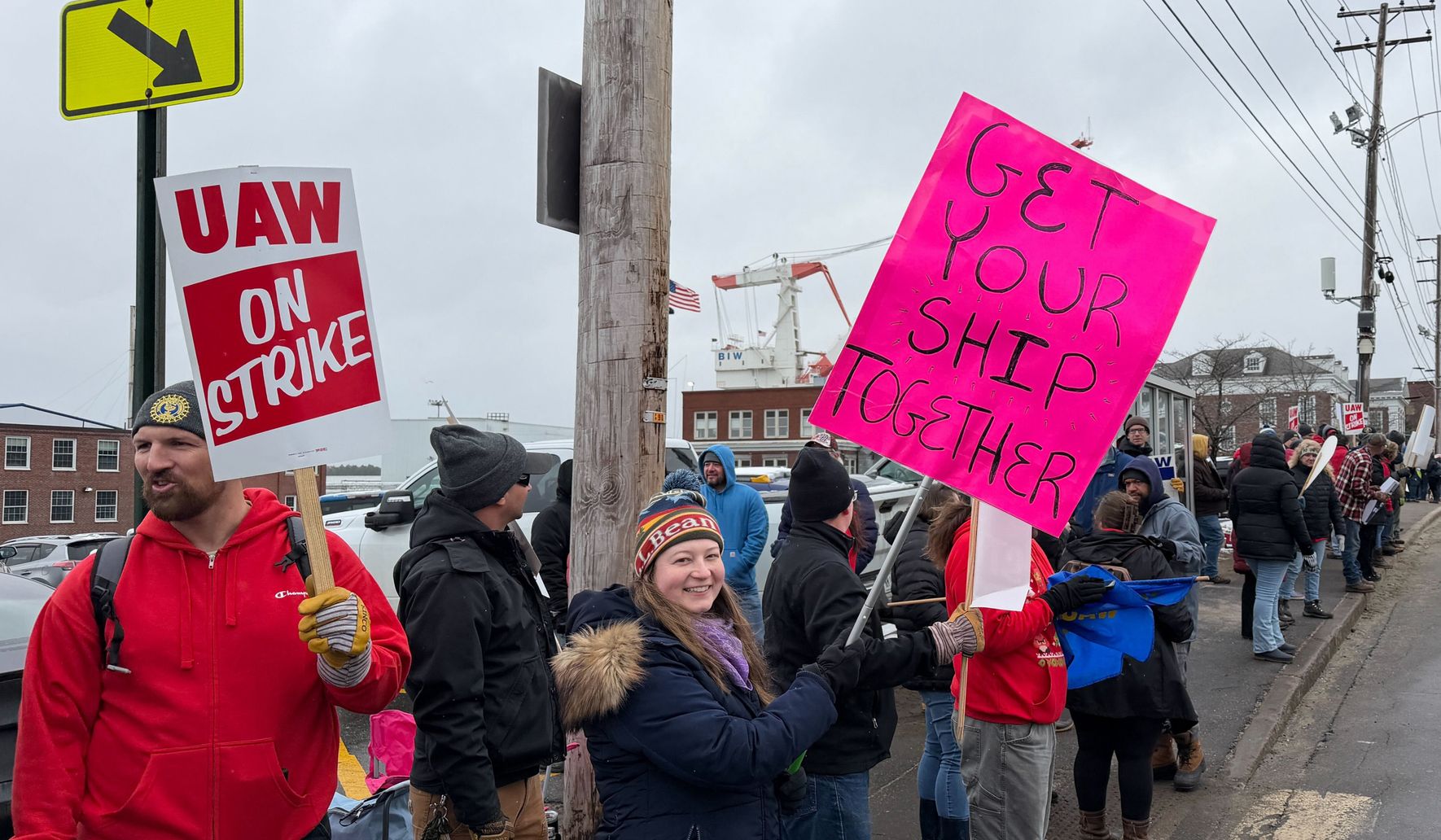
Hundreds of employees voted Saturday to approve a contract deal with Bath Iron Works, ending a weeklong strike and bringing shipyard operations back toward normal while the community absorbs the aftershocks.
Hundreds of employees at one of the U.S. Navy’s largest shipbuilding contractors approved a new contract with Bath Iron Works on Saturday, and that vote brought an end to a weeklong strike that had idled production at the yard. The decision lets workers return to the plant and management restart projects that had been paused, and it signals a return to steady work for many families who rely on the shipyard.
The shipyard plays a big role in naval construction and regional employment, so even a short labor stoppage can ripple through supply chains and local businesses. With operations resuming, vendors, subcontractors, and service providers will see work trickle back, and the rhythm of shifts and schedules at the yard will begin to normalize again.
Negotiations that led to the contract were reportedly tense at times, reflecting the high stakes for both sides. Management needed to keep Navy contracts on schedule, while the workforce pushed for terms they felt would protect pay and working conditions; the vote closed that chapter and moved the situation into implementation.
For the workers who voted, the result offers immediate practical benefits: paychecks resume on normal timelines and job security concerns ease as the yard ramps up. For employees who crossed picket lines or stayed home during the work stoppage, the return will be an adjustment period where attendance, seniority, and shift assignments get sorted out according to the new agreement.
Bath Iron Works now faces the operational task of catching up on lost time while meeting the Navy’s expectations for delivery and quality. That can mean longer hours, temporary overtime, or re-prioritizing projects to get back on the planned timeline, all while following the provisions agreed in the contract vote.
Local leaders and community businesses had been watching the strike closely, since prolonged labor actions can pressure the local economy. With the vote ending the weeklong strike, restaurants, shops, and service industries that felt the slowdown will welcome the steady flow of customers tied to the shipyard workforce returning.
Union and company relations will be tested in the weeks ahead as both sides put the contract into practice. How disputes are handled now will shape whether the agreement becomes a platform for smoother relations or a temporary pause before future friction, and both sides will be under pressure to keep communication channels open.
For the U.S. Navy, the cessation of the strike reduces immediate risk to shipbuilding schedules that affect readiness and deployments. The yard’s ability to recover lost time and maintain production standards will matter to program managers who track milestones and manage contract performance metrics.
In the end, the vote put an official end to that brief but disruptive chapter, and the yard moves from confrontation back to construction. The coming weeks will show how quickly output returns to form and whether the new contract leads to longer-term stability at the shipyard.

