

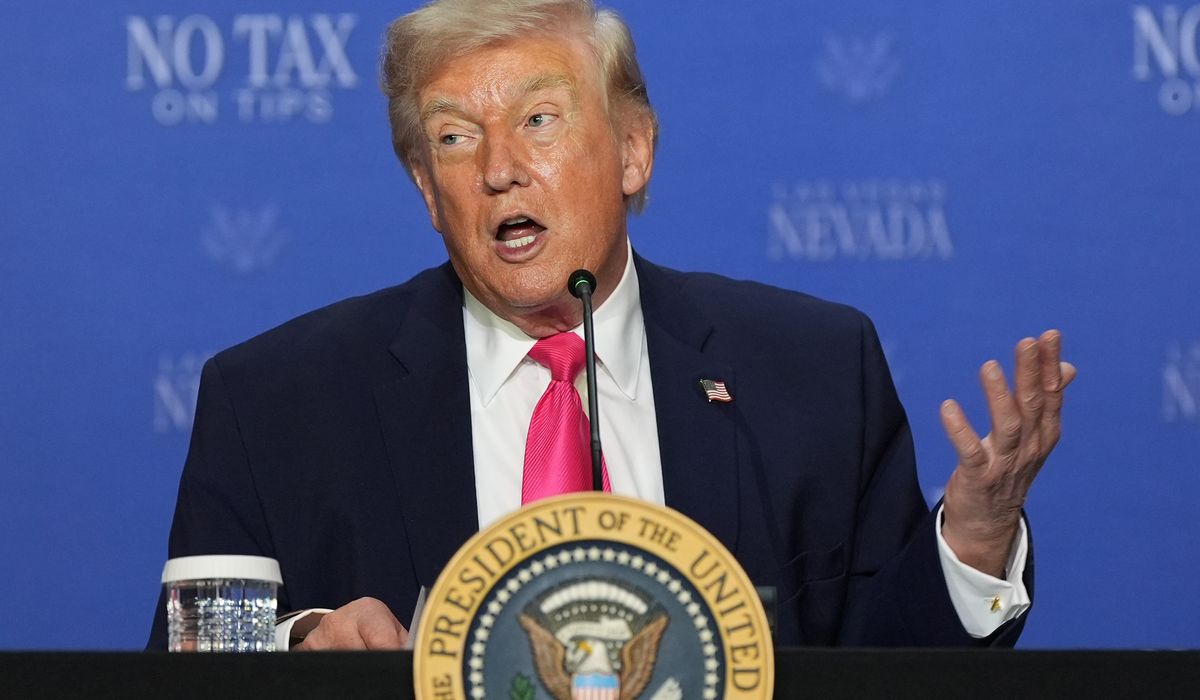
President Trump visited Las Vegas to spotlight the tax cuts he signed into law last year, with a sharp focus on the relief that reached tipped workers and hospitality employees as part of his broader economic message.
He made a point of stressing that the tax package delivered tangible results for people who earn tips for a living, arguing that lower taxes put more money directly into workers’ pockets. That message landed in a city built on hospitality, where tips are essential to household income and where voters see the daily impact of policy decisions.
The Trump approach framed the cuts as common sense tax relief aimed at middle-class earners, not just corporations or wealthy donors. Republicans argue that when small adjustments reduce the tax burden for service workers, it boosts take-home pay and sends a signal that government can work for ordinary people.
In Las Vegas, the optics matter. A policy that helps servers, bartenders and casino staff is easy to explain on the campaign trail and simple for voters to feel in their paychecks. That simplicity is part of the political playbook: make the benefits plain and let people judge results at the kitchen table.
His speech leaned on everyday consequences rather than abstract economic theory, saying the law changes translate into immediate relief and steadier budgets for families dependent on tips. Republican messaging emphasizes personal responsibility and the idea that lower taxes free workers to make their own choices with their earnings.
Critics of the tax cuts warned about deficits and distribution, but the counterargument has been that stronger paychecks and a friendlier business climate help job creation and keep workers on the floor and on the job. In a market like Las Vegas, where hours and tips can swing with tourism, any policy that stabilizes income becomes politically potent.
The visit also served as a reminder that policy and politics blend in places driven by hospitality and entertainment. By highlighting a piece of the law that affects tipped workers, the message was tailored to the crowd and aimed at translating policy into a relatable narrative. That kind of targeted messaging is standard fare for campaigns trying to bridge broad legislation and individual lives.
Voters in Nevada weigh more than slogans; they look at whether paychecks feel heavier and whether the local economy hums with steady employment. The Republican case is that trimming taxes for tipped workers was one practical way to help people keep more of what they earned. The broader strategic goal remains clear: connect policy wins to the lives of everyday voters and keep the focus on economic outcomes.

