

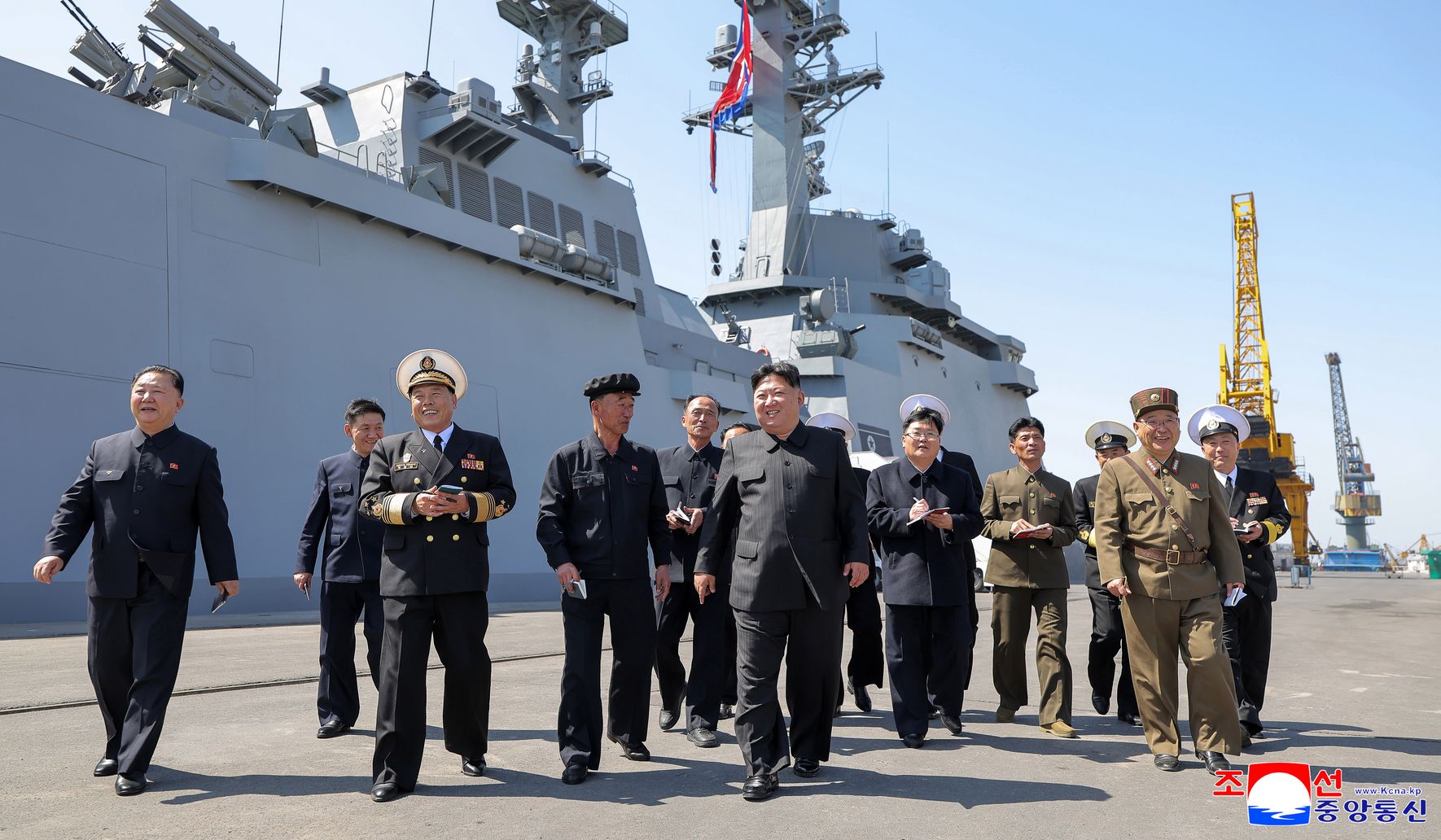
North Korea again launched multiple ballistic missiles toward the sea on Sunday, an action its neighbors reported as the latest in a steady drumbeat of weapons testing this year, and the move raises fresh questions about deterrence, alliances, and American resolve.
This latest launch — described by neighbors as multiple ballistic missiles aimed at the sea on Sunday — is not an isolated incident but part of an accelerating pattern of provocative behavior from Pyongyang. For Republicans, the core concern is clear: Congress and the administration must treat these tests as evidence that deterrence needs reinforcing, not as routine diplomatic noise. The act itself underscores how quickly regional tensions can escalate when missile tests proceed without meaningful consequences. The timing and repetition make the strategic risk to allies and U.S. forces in the region hard to ignore.
South Korea and Japan have both scrambled to track and report these launches, showing how U.S. partners remain the first line of early warning in Northeast Asia. From a Republican viewpoint, partnership credibility depends on concrete military readiness and intelligence-sharing that immediately raises the cost for any aggressor. If neighbors are doing the heavy lifting of detection, Washington must ensure it is doing the heavy lifting of deterrence. That means visible military posture, clear redlines, and rapid reinforcement capabilities.
Sanctions and diplomatic pressure are part of the toolbox but have shown limits when enforcement is inconsistent or loopholes exist. Republicans often argue that sanctions must be coupled with coalition pressure and a willingness to tighten measures when violations occur. Pyongyang’s missile tests exploit gaps and test the political will of countries that prefer the status quo to escalation. The right response should make tests more costly rather than allow them to drift into a tolerated routine.
On the military side, missile defense, forward-deployed forces, and improved readiness in the region are immediate areas to reinforce. A strong defense posture reassures allies and complicates an adversary’s calculations, and Republicans typically favor investing in these capabilities. That includes both kinetic defenses and hardened command-and-control systems to ensure response options remain available under pressure. Demonstrating capability and resolve helps deter not only North Korea but other opportunistic actors watching how Washington and its partners react.
Diplomacy still matters, but negotiations without leverage rarely produce lasting results with Pyongyang. From this perspective, talks should be structured around verifiable rollbacks and a credible enforcement mechanism, not vague pledges that allow continued weapons development. Republicans tend to prefer a negotiated freeze backed by tangible verification and linked to phased relief only after concrete steps are taken. That approach balances the desire to avoid war with the necessity of real constraints on missile and nuclear programs.
Intelligence and sanctions enforcement must also adapt to new evasion tactics, and that requires bipartisan support to fund and equip agencies and allied partners. Republicans argue for robust intelligence collection and rapid sharing to close the blind spots that missile tests exploit. Stronger customs and maritime interdiction efforts, combined with targeted sanctions on facilitators, can disrupt procurement networks feeding Pyongyang’s weapons programs. These measures are about practical pressure rather than punitive spectacle.
Finally, the domestic political dimension matters because a coherent long-term approach needs sustained commitment across administrations. Republicans emphasize that deterrence and alliance reassurance are strategic priorities that outlast any single presidency. Lawmakers should align on resources and policy clarity to prevent Pyongyang from threading the needle between tests and consequences. A consistent, credible posture raises the stakes for further provocations and protects American interests and allies in a volatile neighborhood.

