

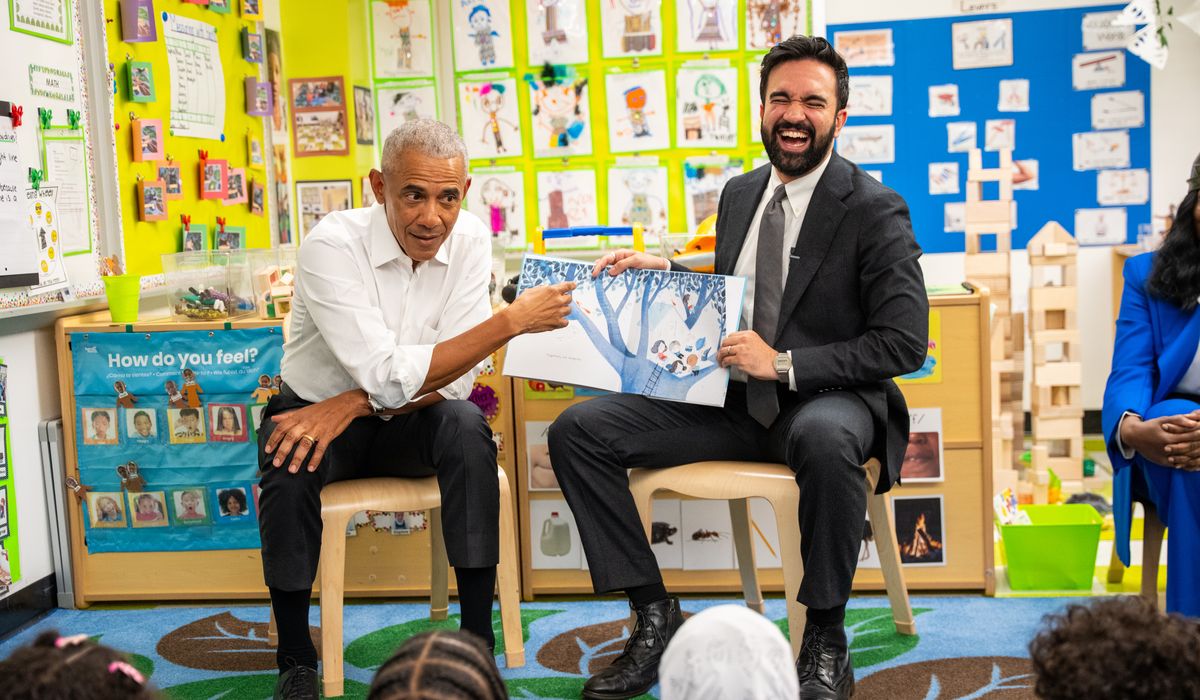
Former President Barack Obama and New York Mayor Zohran Mamdani met for the first time on Saturday at a child care center, where they spent time reading to preschoolers and leading a singalong, creating a lively, public-facing moment that blends politics and community outreach.
The two men showed up at a neighborhood child care center and engaged directly with young children during a scheduled visit. They read books aloud and led a singalong, turning the event into a hands-on appearance that drew attention from local parents and onlookers. The setting was deliberately informal, emphasizing interaction over speeches and spotlighting early childhood activity rather than policy debate.
This was their first public meeting, marking a clear visual of two political figures sharing a stage at a community institution. The presence of a former president alongside a city leader naturally shifts the focus from the classroom to the optics of alliance and recognition. For supporters, the scene underscored commitment to children’s issues; for critics, it raised familiar questions about the political theater of such visits.
The singalong and storytime played to a broad, feel-good audience, but a Republican viewpoint would push back on substance over spectacle. Visits like this often highlight programs without addressing funding sources, long-term accountability, or the tradeoffs in municipal budgets. Voters who prioritize fiscal restraint want clear plans tied to these appearances, not just friendly photos and short interactions that disappear from the news cycle.
Local context matters here: a mayoral figure participating in a high-profile visit with a national political personality can sway perception, sharpen name recognition, and shape narratives during an election year. That dynamic is as much about branding as it is about policy, and Republicans will note how such moments can be leveraged to rally volunteers or attract donors without offering immediate evidence of policy wins. Watching the choreography of public events helps explain how political capital is built and spent.
The choice of a child care center as the backdrop is strategic. Early childhood education is an area that draws bipartisan interest in theory, but the debates beneath the surface remain unresolved. Questions about curriculum control, parental rights, funding sources, and measurable outcomes follow events like this, and citizens deserve plain answers on how programs will be paid for and evaluated over time.
For many parents who watched the reading and sang along with the children, the visit was simply a bright moment in a hectic week. The informal tone—books, songs, laughter—made it easy to capture friendly coverage and social media attention. Still, behind the warmth of the photo opportunities, there’s a necessary line between advocacy and administration that needs clearer definition when politicians step into classrooms.
The optics of a former president reading at a local center are powerful and will be replayed across inboxes and feeds, which is why political observers from all sides pay attention. On one hand it humanizes national figures and casts local leaders in a community-oriented light; on the other hand it invites scrutiny about long-term commitments versus short-term impressions. The visit ended after the singalong and story time, leaving observers to weigh the moment against the larger policy questions it touches on.

