

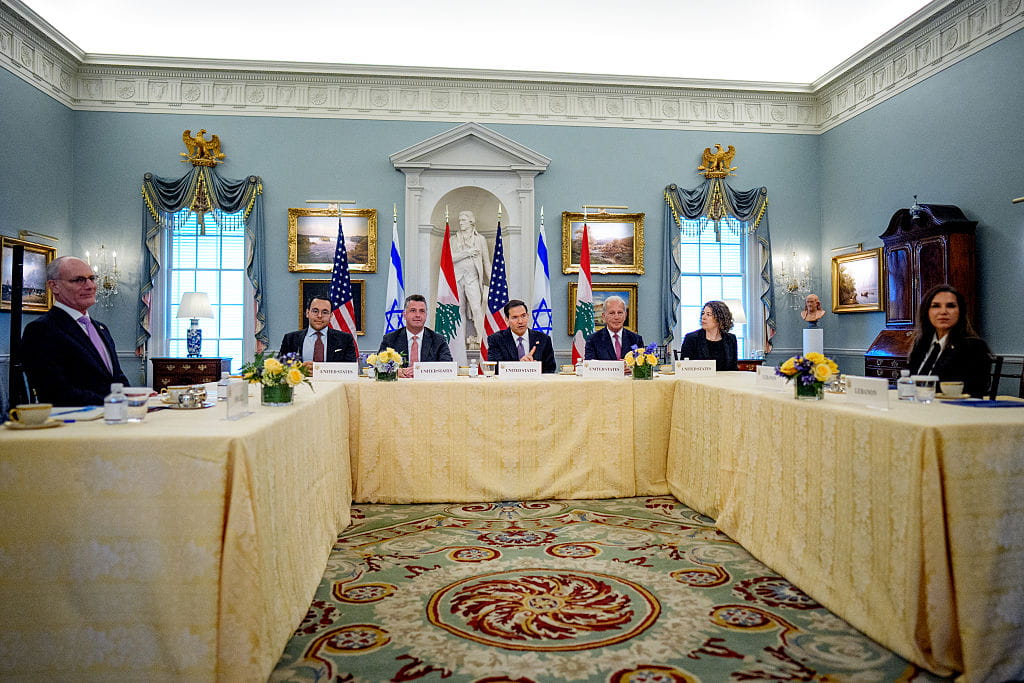
Israel and Lebanon Extend Ceasefire – But What of the US and Iran? The ceasefire between Israel and Hezbollah in Lebanon has paused open fighting, but it raises hard questions about Iran’s role and what the United States should do next. This piece looks at the military, diplomatic, and strategic angles and why American policy matters for regional stability.
The ceasefire agreement between Israel and Lebanon has bought a fragile calm along the northern border, but it did not erase the underlying threats. Hezbollah remains armed and tied to Tehran, meaning a ceasefire is a pause, not a solution. For Republicans, this moment should sharpen focus on deterrence and consequences rather than cutting diplomatic corners.
“A tale of two wars.” That phrase fits: one conflict between Israel and Hezbollah on the ground, and another in the shadows involving Iran’s regional ambitions. Tehran supplies weapons, training, and strategic direction, turning Lebanon into a proxy battlefield. The United States should treat that reality as the central fact driving policy choices.
Israel’s decision to accept a lull reflects battlefield pressures and the need to regroup after losses and gains. Its leaders will use the pause to shore up defenses and plan next moves, not to disarm their adversary. American support for Israel’s right to defend itself must remain clear and unambiguous throughout any ceasefire period.
Hezbollah’s tactics are designed to avoid a decisive defeat while inflicting pain and raising political costs for Israel. That calculus is enabled by Iran’s backing, which includes precision-guided munitions and intelligence. Weak or ambiguous U.S. responses only encourage Tehran to press its advantage across the region.
Washington’s role should be to raise the costs on Iran and its proxies, not to broker deals that paper over aggression. Diplomatic engagement can help stabilize things temporarily, but without a credible deterrent posture, Hezbollah will rebuild and rearm. Republican voices argue for stronger military and economic pressure on Tehran to deter future escalations.
On the operational side, the U.S. can strengthen deterrence through resupplies, intelligence sharing, and forward presence in the eastern Mediterranean. That posture reassures allies and complicates Iranian planning. It also sends a clear signal that attacks on partners will carry consequences that Tehran and its proxies cannot ignore.
Domestic politics shape how the administration responds, and Republicans will push for policies that prioritize national security and ally defense. That includes oversight of any negotiations and scrutiny of concessions that might empower Iran. The electorate expects a strategy that defends American interests without naive reliance on diplomatic niceties.
Regional partners like Saudi Arabia and the Gulf states watch closely, balancing concern about Iran with their own security calculations. A robust U.S. posture helps these states resist coercion and pursue normalization where it fits their interests. For Republicans, strengthening these partnerships is a practical counter to Iran’s expansionist agenda.
Humanitarian concerns matter, but aid cannot substitute for strategy. Supporting civilians harmed by conflict must go hand in hand with measures that prevent future rounds of violence. American policy should couple humanitarian relief with clear demands on Iran to halt weapons transfers and proxy attacks.
In the long term, preventing another full-scale flare-up requires dismantling the networks that enable proxy war, not just signing ceasefires under pressure. That means targeted sanctions, kinetic options where necessary, and sustained diplomatic isolation of Tehran. Republicans argue this mix gives the best chance of lasting peace by denying Iran the tools it uses to wage war by proxy.
For now, the ceasefire can be a breathing space — if it is used to prepare for the next phase rather than papering over the problem. Israel needs reliable backing, neighbors need reassurance, and America needs to show resolve. The alternative is repeated cycles of violence driven by an emboldened Iran and its regional proxies, a reality no one should accept.

