

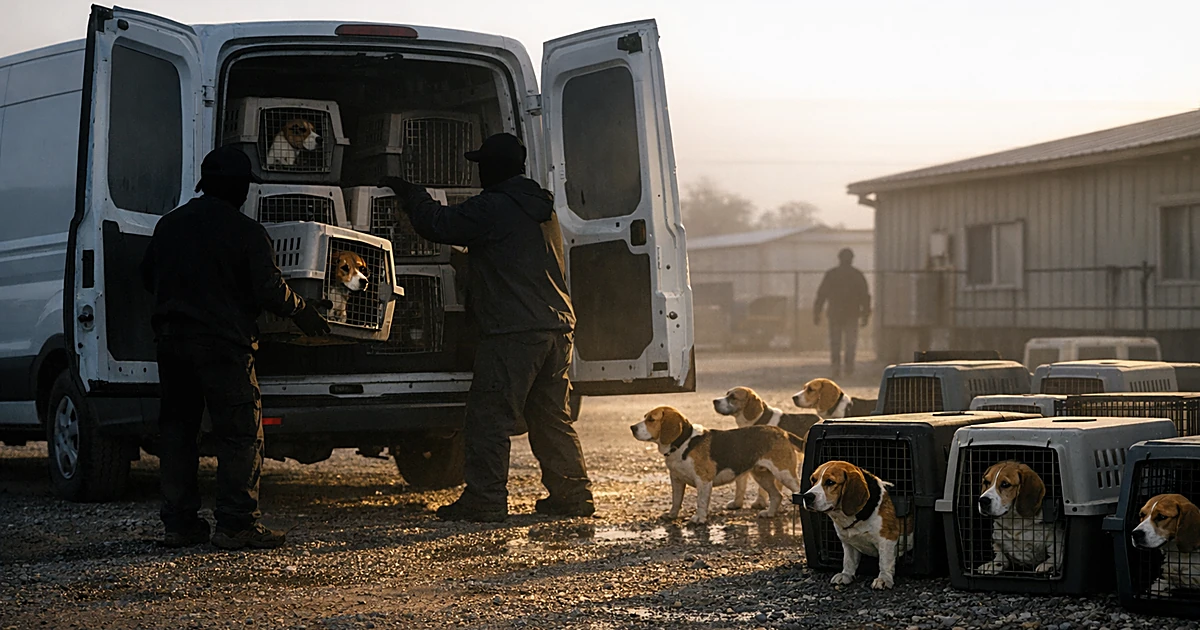
Vans began moving beagles out of Ridglan Farms in Wisconsin as part of a deal to place roughly 1,500 dogs into rescues and shelters, sparking criticism of the federal research funding system and renewed calls from Republican lawmakers for a full accounting of any ties between taxpayers and commercial breeders.
The first vans left Ridglan Farms on Friday carrying dogs that will be placed with rescues and shelters around the country, with 300 dogs moved the first day and hundreds more expected in the following days. Veterinarians screened the animals, gave vaccinations and Benadryl for transport, and the dogs will receive medical exams and microchips before adoption evaluations. The transfer follows mounting public pressure and legal scrutiny of the facility that bred beagles for research for more than sixty years.
Ridglan Farms agreed last year to surrender its state breeding license by July 1 as part of a deal to avoid prosecution tied to animal mistreatment allegations, after a special prosecutor found eye procedures violated state veterinary standards. Activists had repeatedly targeted the facility, including a March removal of 30 beagles and a large April 18 attempt to breach the property that resulted in arrests. Ridglan described that April incident as an attack by a “violent mob,” while protesters and advocates kept the pressure on until the sale moved forward.
“It’s a very big win and I am ecstatic to have these dogs out and get them into loving homes.”
The deal covers about 1,500 of roughly 2,000 dogs at the site, though the purchase price was not disclosed and about 500 dogs remain outside the arrangement. Rescue groups warn many of the animals will need to learn basic home life after years in a commercial breeding operation rather than a household. Animal lawyers and activists have pushed for the remaining dogs to be released immediately, calling the transfer a hard-won victory for determined campaigns.
“Every single one of the Ridglan dogs deserves a loving forever home just as much as those we already welcome into our families. Almost a thousand of them will now live out their lives in peace; the remaining dogs deserve nothing less and should also be released immediately.”
On the political front, Rep. Nicholas Langworthy, R-N.Y., moved quickly to press federal agencies for answers about any funding links between research projects and dogs sourced from commercial breeders. Langworthy asked Health and Human Services leadership and NIH officials to “immediately suspend funding for any projects that relies on Ridglan beagles,” to provide a list of active grants and contracts that involve dogs from Ridglan or similar breeders, and to produce a timeline for phasing out federal support for invasive research using animals bred for experimentation. His letter framed the demand as both an ethical and fiscal responsibility for taxpayers.
“This issue is not about opposing scientific progress; it is about ensuring that federally funded research reflects both ethical standards and scientific advancement.”
Langworthy also emphasized taxpayer expectations in blunt terms, noting that the public wants spending that matches humane standards. “The American people expect their tax dollars to reflect both fiscal responsibility and basic standards of humane treatment. Ending support for facilities that breed beagles for painful experimentation prior to euthanasia is consistent with those values.” That line cuts to the core Republican argument: transparency, accountability, and restraint in federal spending.
NIH responded before the congressional letter by stressing that Ridglan Farms is a commercial breeder and does not receive NIH grants “directly,” and it highlighted policies intended to protect animal welfare while touting investments in alternatives. The agency announced a $150 million effort to expand human-based methods, organoids, computational models, and other tools described as better reflecting human biology, calling the move “part of a broader shift toward more predictive, human-relevant science.” Republicans welcome the pivot but rightly demand a full accounting of indirect funding channels that can obscure where taxpayer dollars actually flow.
The Ridglan saga exposes how long-standing practices can persist when oversight is lax and public attention lags. The facility operated for decades, and reform only arrived after legal findings, protests, and sustained political pressure. Conservative concern goes beyond emotion; it asks whether federal agencies will follow through with meaningful policy change or simply rebrand existing programs while old habits continue.
Removing 300 beagles on one day and moving more in the following weeks is a tangible outcome, but important questions remain about the remaining animals and the funding pipelines that supported the research ecosystem. Langworthy’s demand for a list of grants and a phase-out timeline is a straightforward test of whether this episode will lead to durable oversight. For Republican lawmakers and concerned taxpayers, the next moves by NIH and HHS will reveal whether promises translate into policy and whether federal spending on animal-based research will finally be examined in a transparent way.

