

Republicans see a clear problem when Supreme Court justices blur the line between law and politics: public trust falls and the court’s authority weakens. This article argues that conduct which looks like partisan theater does more harm than any single ruling, and it examines how that appearance of bias plays out in behavior, public statements, and courtroom timing. It underscores why preserving impartiality matters for the institution, not for any ideology.
The Supreme Court depends on its reputation for neutrality; once people start to believe outcomes are predetermined by political identity, legitimacy evaporates fast. Over the last few years, that reputation has taken hits from actions and statements that clearly land on one side of the partisan divide. When justices appear to favor a perspective because of politics, the backlash is predictable and damaging.
Critics on the right are not just upset about decisions they dislike, they are upset about optics and norms being ignored. Courts succeed when people accept that legal reasoning, not political theater, drives results. When courtroom appearances feel scripted to serve a movement, the institution looks more like a political branch than an impartial arbiter.
Public confidence is fragile and easily shaken by avoidable missteps. A judge’s presence at partisan events, a speech before a clearly advocacy-driven group, or a pointed remark that echoes political talking points all chip away at perceived fairness. Those actions provide easy ammunition for opponents and deep skepticism from the public.
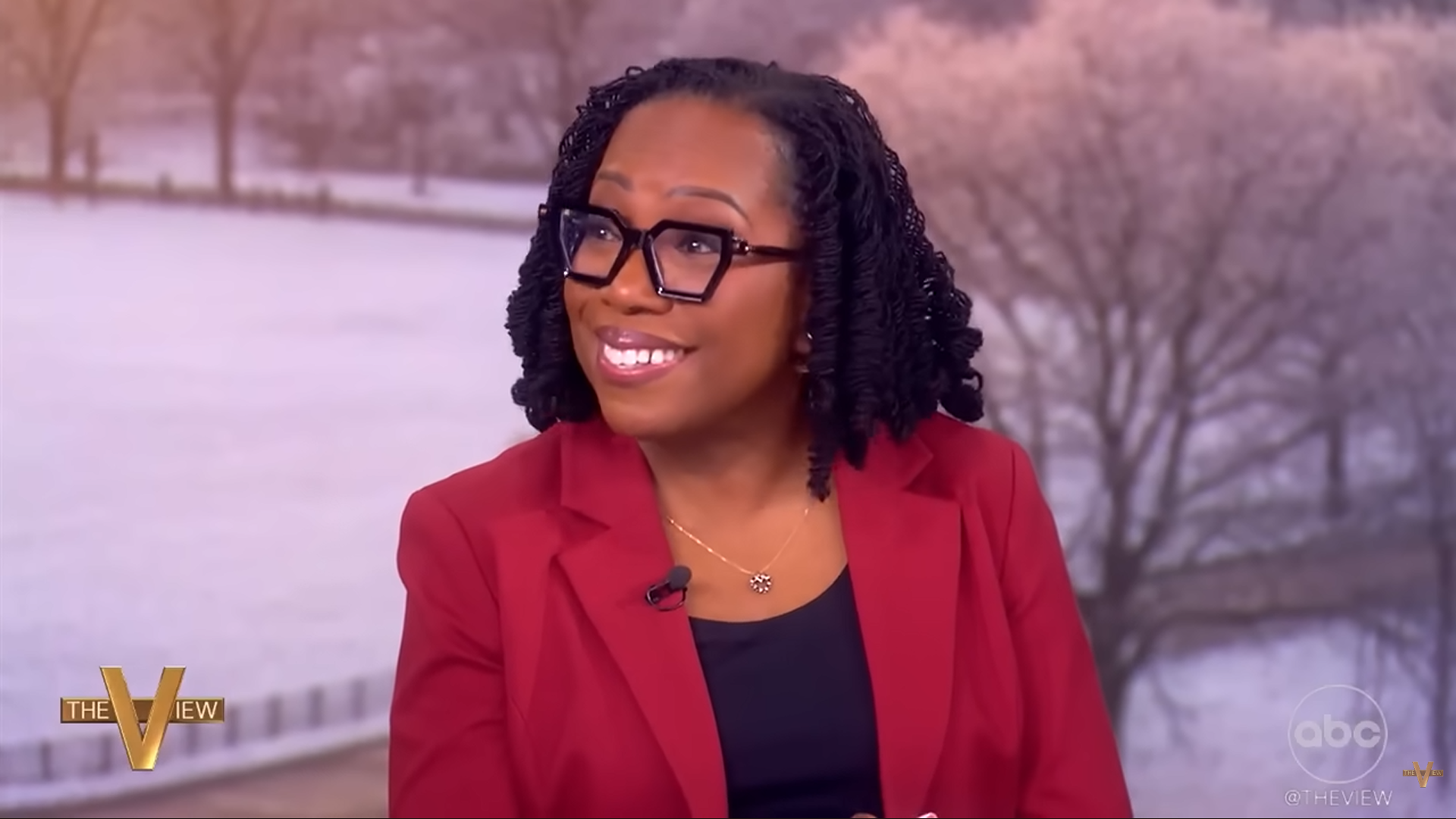
If Jackson and her liberal colleagues had any interest in the Supreme Court avoiding ‘the appearance of partiality,’ they’d cut their left-wing political theater.
Skepticism grows when timing suggests coordination with political cycles, like taking public stances shortly before or after hot-button rulings. Such timing feeds narratives that decisions are politically managed rather than legally justified. Even if motives are pure, the sequence of events matters in the court of public opinion.
Rules and traditions exist precisely because they protect institutions from fleeting partisan passions. The less a justice aligns publicly with one side, the stronger the institution stands in the long term. Respecting those traditions doesn’t mean abandoning principle; it means defending the court’s role as a neutral interpreter of law.
There is also a selective optics problem: when some justices engage in visible activism, it pressures others to respond in kind to avoid being outmatched on the public stage. That spirals into a race to the partisan megaphone, which judgeship was never meant for. The result is mutual degradation of institutional standing.
Conservative voices point out that this behavior undermines conservative interests too, because legal wins become less durable when people believe a court’s decisions rest on politics. Eroded trust invites legislative or executive attempts to curb judicial power, which is dangerous no matter who runs those branches. A weakened court cannot reliably protect individual rights or enforce limits on power.
Rebuilding trust requires clear, consistent behavior that separates legal reasoning from political appearances. That means avoiding obvious partisan events, keeping rhetoric focused on legal doctrine, and respecting long-standing norms that signal impartiality. Small acts of restraint can have outsized effects on public perceptions.
The debate over the court’s role isn’t new, but the stakes are higher when polarization is intense and media cycles amplify every misstep. Institutions survive by anchoring to principles that outlast any one moment or majority. If the court loses that anchor, it will be reshaped by politics rather than law.
At the end of the day, defenders of judicial legitimacy argue for a clear line between advocacy and adjudication. Preserving that line isn’t about shielding a particular ideology; it’s about keeping the judiciary capable of doing its constitutional job. When justices let partisan theater crowd out sober legal analysis, everyone loses standing in the public eye.

