

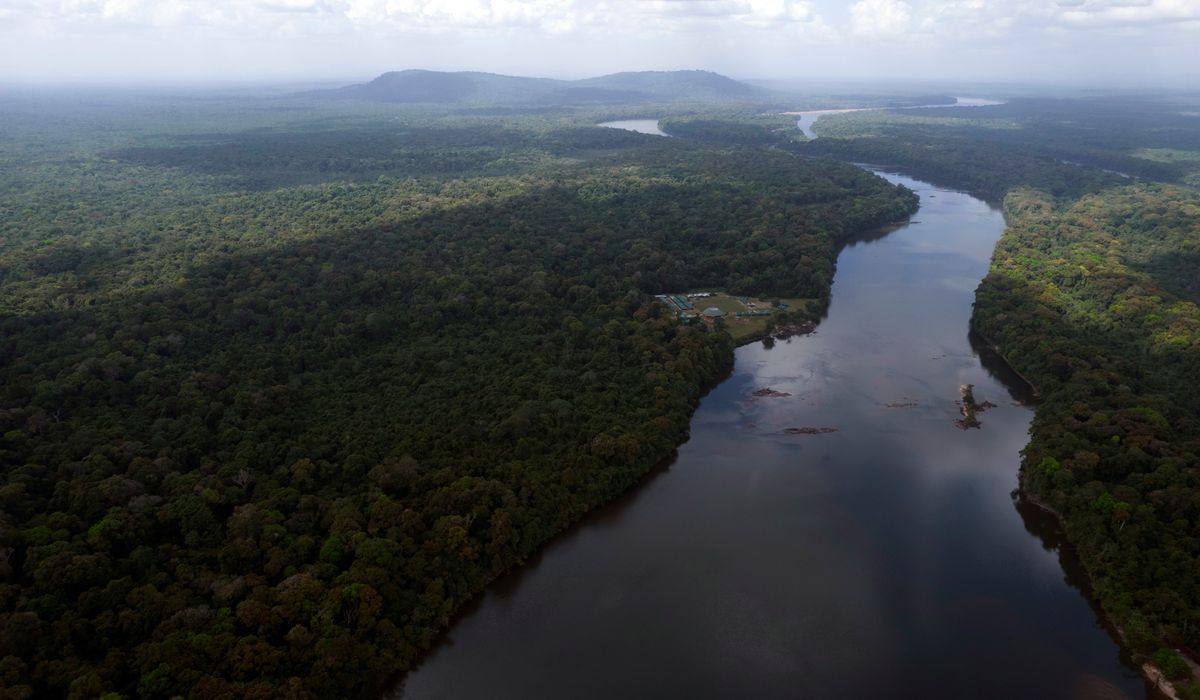
Venezuela’s acting president arrived in the Netherlands to defend a long-standing territorial claim over a mineral- and oil-rich portion of western Guyana before international judges, setting up a high-stakes legal clash with regional and global consequences.
Acting President Delcy Rodriguez landed in the Netherlands as the dispute over western Guyana moves into an intense phase at the International Court of Justice. This case centers on a region long claimed by Venezuela that has become more contested since major oil and mineral discoveries offshore and inland. The hearings are expected to draw attention from governments and companies watching access to energy resources in the region. Observers say the outcome could reshape how resource-rich borders are enforced in South America.
The background is messy and rooted in colonial-era decisions and 20th century diplomacy, but the issue today is straightforward: control of territory and who benefits from its resources. Guyana relies on the integrity of international rulings to protect its borders and hard-earned sovereignty. Venezuela argues it has historical and legal reasons for its claim, and its delegation will press those points at the court. For many onlookers, the stakes are as much about precedent as about oil barrels under the sea.
From a Republican perspective, the core value at play is respect for international law and the security of sovereign borders. The United States and regional partners have an interest in predictable adjudication where claims are resolved through courts, not force or coercion. That matters for American energy firms operating in Guyana and for allies concerned about stability in the hemisphere. Republicans tend to emphasize clear legal outcomes and robust support for neighbors asserting internationally recognized boundaries.
Economic reality has amplified the dispute. Offshore discoveries have transformed Guyana from a quiet, developing nation into a country with substantial energy potential, attracting multinational investment. Those discoveries have also made the contested zone far more valuable, raising the appetite for legal and diplomatic maneuvers. Investors watching the case want assurances that contracts and operations will be safe from sudden territorial shifts. Courts can provide that certainty, if their rulings are honored and enforced.
What happens at the court will matter for both capitals and for third parties with commercial exposure. Guyana hopes a binding decision will cement the borders and allow its industries to expand without fear. Venezuela, pressed by economic crisis and political isolation at home, wants recognition of its claims and the leverage that control of resources would bring. For U.S. policymakers, the preference is for transparent legal process and regional stability that protects investments and deters unilateral actions.
International law does not always deliver tidy, immediate fixes, but it does offer tools for peaceful resolution. The court will sift through treaties, historical records, and arguments from both sides, weighing past agreements against present realities. A ruling could take time and may leave some gray areas, but it will establish a framework that parties and outside states can use to manage the practicalities of resource sharing and governance. Enforcement remains a political question, not just legal.
Political context inside Venezuela complicates matters. The Maduro government and its allies have long used territorial rhetoric to bolster legitimacy at home, and legal victories can be presented as geopolitical wins. That dynamic raises concerns among Republicans about domestic political uses of foreign policy and the need to hold regimes accountable when they flout democratic norms. At the same time, the United States must balance pressure and diplomacy to keep the dispute from escalating beyond courtroom arguments.
Regional actors and energy companies will watch how the court’s reasoning addresses maritime rights, land boundaries, and historical arbitration. If judges favor a strict historical reading, Venezuela might gain leverage; if they emphasize continuity and current governance, Guyana could secure its claims. Either way, the ruling will influence future disputes across the region and set expectations for how resource-rich border claims are treated internationally. The practical outcome will shape investment climates and diplomatic ties for years to come.
The legal fight in the Netherlands is therefore more than a courtroom drama; it tests whether global institutions can adjudicate conflicts that raise high economic and political stakes. For the United States and its allies, ensuring a rules-based outcome that protects sovereign borders and commercial interests is the priority. How governments, companies, and courts respond will determine whether this contest becomes a precedent for peaceful resolution or a reminder of the fragility of regional stability.

