

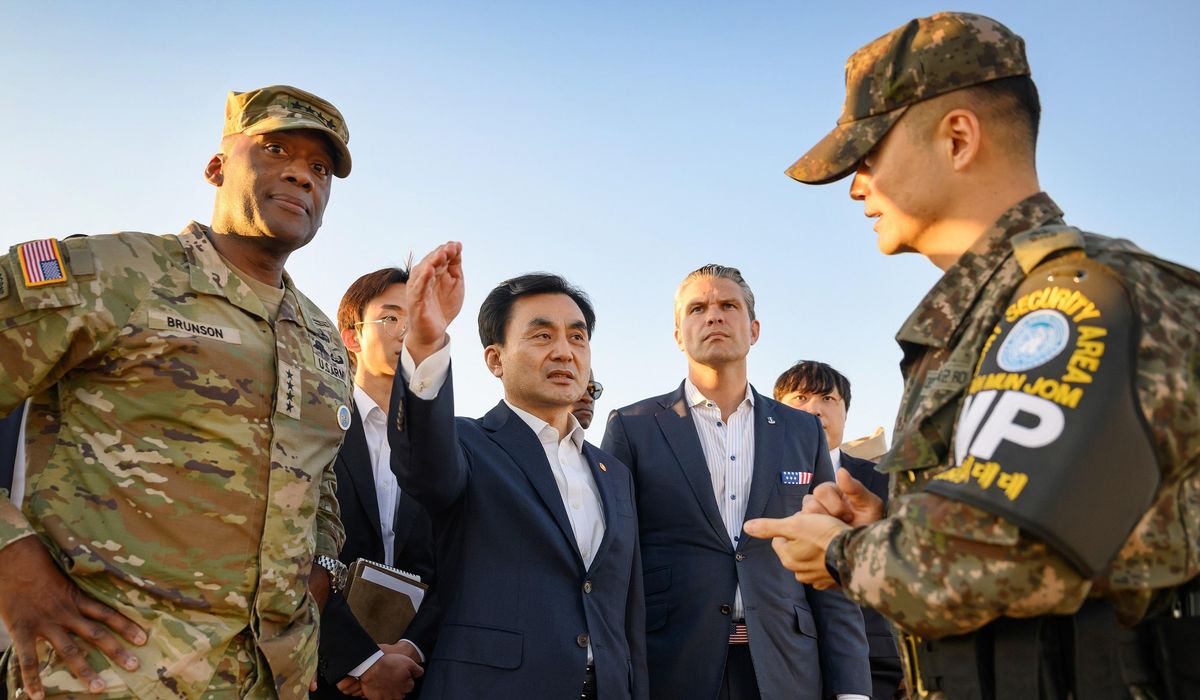
South Korea signaled it may join a U.S.-led effort to escort commercial vessels through the Strait of Hormuz after a South Korean ship was targeted, raising questions about regional security, alliance commitments, and the protection of global trade routes.
South Korean Defense Minister Ahn Gyu-back said Wednesday Seoul may offer support for the U.S.-led effort to guide commercial ships through the Strait of Hormuz after a South Korean vessel came under what officials described as hostile action. The announcement marks a clear shift toward closer operational cooperation with Washington in response to growing threats to merchant shipping in the Persian Gulf. Seoul’s deliberation reflects both immediate safety concerns for its merchant fleet and longer-term calculations about deterrence and alliance solidarity.
The Strait of Hormuz is one of the world’s most vital chokepoints, and any disruption has immediate economic consequences for energy markets and shipping lanes. For a trading nation like South Korea, uninterrupted access to Middle Eastern energy supplies is crucial, so moves to protect commercial traffic are not abstract policy choices but practical necessities. Seoul’s potential participation in escort operations signals that protecting commerce is being prioritized alongside diplomatic measures.
From a Republican perspective, this is a moment to stand firm with allies and to reinforce the norms of free navigation that underpin global commerce. A coordinated, robust presence in the waters off Iran sends a deterrent message to actors who seek to weaponize maritime zones or harass neutral shipping. Effective deterrence requires clear rules of engagement, credible force posture, and a willingness to act in concert with partners that share common interests.
Operationally, escorting merchant vessels is more than presence; it requires intelligence sharing, interoperable command structures, and logistics support to sustain patrols and convoys. South Korea’s contribution would be meaningful if it includes escorts, maritime patrols, or support roles that free up allied assets for higher-risk tasks. The alliance benefits when partners contribute capabilities that match their strategic interests, and Seoul’s maritime industry and navy are well placed to add value.
Domestic politics in Seoul will shape the scope and duration of any commitment, and political leaders will balance public appetite for risk against the imperative to protect seaborne commerce. South Korea must weigh alliance solidarity with concerns about escalation and regional backlash. Still, the calculus tilts toward cooperation when national economic interests and the safety of seafarers are at stake.
International law and diplomatic channels should remain central to any response, but law alone does not always stop provocations. Practical action—escorts, surveillance, and combined patrols—creates the conditions in which diplomacy can succeed. A pragmatic mix of force posture and negotiation presents the best chance to keep maritime routes open without tipping into broader conflict.
For the United States, having partners like South Korea step up relieves pressure on U.S. naval resources and distributes risk more fairly among nations that rely on the same trade flows. It also reinforces the message that the defense of international waters is a shared responsibility, not a unilateral burden. A coalition approach enhances legitimacy and complicates adversaries’ calculations.
Regional dynamics will matter. Iran’s responses, whether rhetorical or kinetic, will test coalition cohesion and rules of engagement. Nearby Gulf states and maritime powers will watch closely and decide whether to align, stay neutral, or respond with their own measures. Predictability, clarity of purpose, and adherence to international norms will help keep coalition actions focused and lawful.
Seoul’s move to consider support for the U.S.-led effort underscores a broader trend: nations increasingly see maritime security as integral to national resilience. Whether short-term escorts or longer-term commitments are ultimately provided, the decision will be judged by its effectiveness at preventing harassment and ensuring the steady flow of commerce. The choice now is whether to act decisively with allies or to leave vital sea lanes exposed to recurring risk.

