

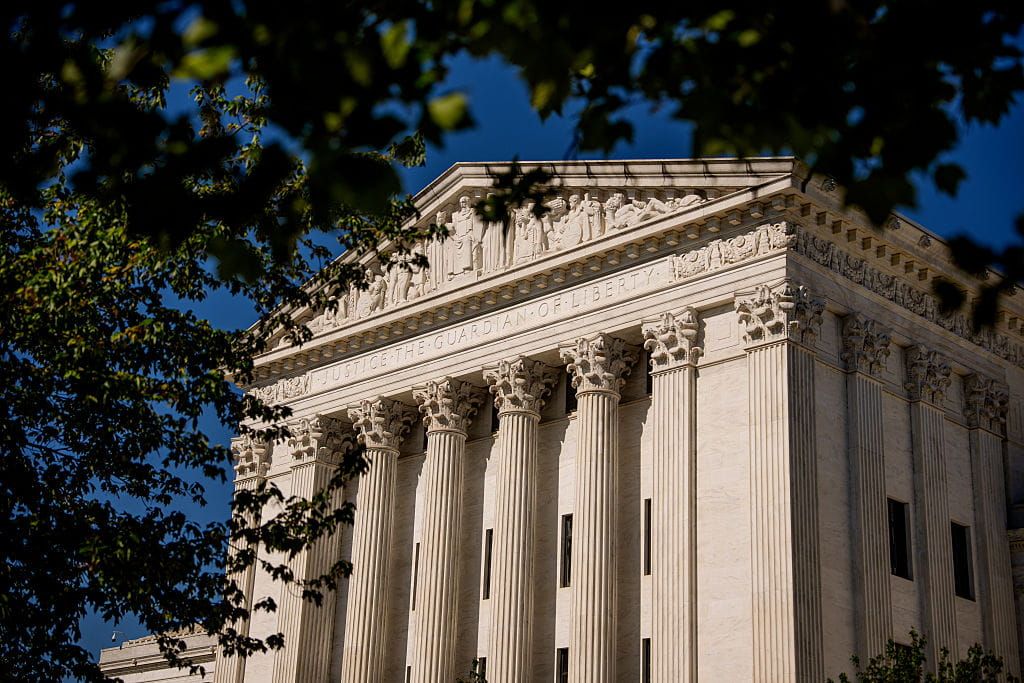
Supreme Court action in Virginia delivered a clear win for fair maps and a setback for Democrats hoping to lock in advantage through redistricting, and the ruling sharpens the stakes for control of state legislatures and Congress. “Democrats are losing the war, and Friday’s decision may seal their fate.” The decision underscores that courts remain a critical check when one party pushes partisan maps too far.
The ruling this week has immediate political consequences inside Virginia and signals broader implications for nationwide redistricting battles. Republicans see the decision as a corrective against blatant partisan mapmaking that distorts voter representation. The court’s move will reverberate into candidate recruitment and strategy for the next election cycle.
For years, Democrats invested heavily in shaping district lines to protect incumbents and expand influence. That approach produced maps that frequently insulated safe seats and diluted opposition votes. The Supreme Court’s intervention stops those tactics from becoming a permanent structural advantage.
Legal experts on the right argue the ruling restores a measure of balance to electoral contests by insisting maps reflect communities, not political fantasies. When courts enforce neutral principles, voters regain the power to choose their representatives rather than the other way around. That principle matters most where one-party dominance tempts mapmakers to lock in outcomes.
Republicans are likely to capitalize on the ruling politically and legally, pressing for transparent, principled redistricting processes in statehouses nationwide. The decision gives them a credible argument to demand independent review and public hearings before lines are redrawn. That could reshape how states approach mapmaking heading into the next census-driven cycle.
Messaging for conservative campaigns is already adjusting, emphasizing fairness, accountability, and the rule of law. Candidates can point to the court’s action as proof that judges will not rubber-stamp partisan overreach. That narrative helps frame Republicans as defenders of equal representation rather than merely beneficiaries of stricter scrutiny.
Voters tired of winners choosing their voters instead of voters choosing winners may respond to promises of open and competitive districts. Competitive districts incentivize accountability and force officeholders to answer to broader constituencies. The court’s ruling strengthens that dynamic by discouraging extreme packing and cracking schemes.
Democrats, predictably, will call the decision a setback and warn of supposed voter suppression whenever maps are challenged. That framing ignores the reality that map fairness benefits all voters regardless of party. The public debate will now hinge on whether mapmaking serves communities or party operatives.
State legislatures will be under pressure to show transparent standards and defensible criteria when drawing lines, or face further legal challenges. Republicans can push for statutes that limit extreme partisan considerations and favor compactness, respect for political subdivisions, and transparency. Those kinds of rules reduce the temptation to entrench power through geometry instead of ideas.
The ruling also matters for federal elections because congressional maps shape who represents entire regions in Washington. More competitive congressional districts could change the math in closely divided chambers and force both parties to work on persuasion over gerrymandered certainty. That shift could produce a healthier, more accountable national politics.
Judges have sent a message that extreme partisan maps are not immune from review, and that precedent will likely be cited in future suits. That precedent empowers voters and challengers to test maps that appear engineered for one party’s advantage. Republicans see this as an opening to press for principled reforms without ceding the field to procedural tricks.
Campaign strategists on the right will be watching how quickly state officials revise maps in response to the ruling and whether new lines survive legal scrutiny. The pace and transparency of those revisions will influence public trust in the process. Where officials move fast and fairly, confidence can be rebuilt; where they dig in, more litigation follows.
Fundraising and candidate planning will shift as well, with parties reallocating resources to winnable, newly competitive districts. Growth in grassroots engagement is likely where fairer maps create genuine choices for voters. That can change turnout patterns and reshape local political landscapes beyond a single election.
The decision is a reminder that the judiciary plays a central role in maintaining the health of American democracy. When partisan mapmaking threatens to erode representational fairness, courts can and should step in. That role protects the basic premise that elections should reflect voters’ will, not the cartographer’s design.
Republican leaders will use the ruling to argue for durable safeguards so the next round of redistricting is governed by clear, impartial rules. The goal is to prevent future abuses and to ensure maps produce accountable officials. If implemented well, those safeguards could reduce the constant legal battles that have come to define modern redistricting.
What happens next in Virginia will be watched closely as a test case for the broader national fight over how electoral maps are drawn. Momentum now favors those who champion fair competition and transparency, and the court’s decision has shifted that momentum in a concrete way. The coming months will show if lawmakers seize the chance to make maps that serve voters instead of parties.

