

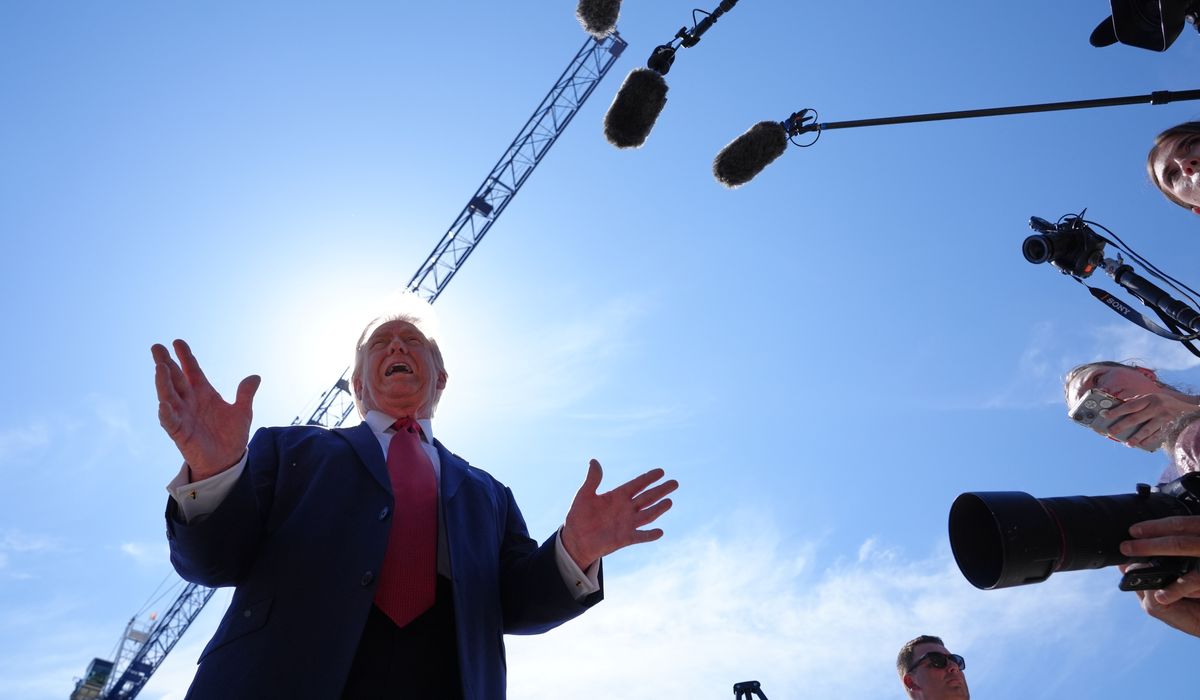
President Trump framed the economic pain of higher prices from conflict in Iran as a tolerable cost compared with preventing Tehran from getting a nuclear weapon, arguing national security must come first.
On Tuesday, President Trump pushed back against the idea that short-term economic discomfort should dictate strategic choices, saying higher prices from the war in Iran are “peanuts” compared with the goal of keeping a nuclear weapon out of the regime’s hands. That line put a simple dollar sign on a difficult judgment: accepting some pain now to avoid a far greater threat later. For many conservatives, the message resonated because national security must be weighed against market fluctuations rather than driven by them.
The argument rests on a clear priority: a hostile nuclear-armed Iran would reshape the Middle East in ways that hit U.S. interests and allies harder than a temporary uptick in fuel or commodity costs. From a Republican viewpoint, deterrence and preventing proliferation are uncompromising goals that protect American lives and leverage. Policymakers who focus only on immediate economic headlines risk missing the strategic picture that slower-moving, existential threats demand action.
Economic fallout is not trivial, and households feel it in gas pumps and grocery bills, but those impacts can be managed if leaders set policies to cushion the blow. Republicans often point to targeted tax relief, streamlined regulations, and energy production incentives as ways to blunt price shocks without surrendering strategic leverage. The point is not to ignore costs but to accept manageable ones when the alternative risks an irreversible shift in global power balances.
There is also a diplomatic angle: showing resolve can strengthen alliances and deter adversaries, which in turn reduces the likelihood of prolonged conflict that would make prices worse over time. Republican policymakers argue that hesitation can embolden rivals and extend crises, making any short-term price increases look modest compared with the long-term costs of unchecked aggression. In this view, strength is the most economical path forward.
Critics will say the administration should minimize harm before taking actions that push prices up, and elected leaders should be accountable for economic pain at the point of impact. That is a reasonable demand, but it assumes national security can be pursued without trade-offs, which is seldom true. The choice President Trump described forces voters and leaders to balance immediate pocketbook concerns against strategic survival and regional stability.
Practical steps to reduce economic strain while maintaining pressure include boosting domestic energy output to stabilize markets, coordinating with allies to share burdens, and employing sanctions that target regime capacity rather than civilian populations. From a conservative perspective, smart policy blends firmness with mitigation, so you can do the hard thing while limiting collateral harm. Those tactics keep the focus on the main objective: preventing a hostile nuclear capability.
Political messaging matters too, and calling price increases “peanuts” was meant to reframe the debate for voters who are sensitive to inflation and living costs. The line is blunt by design, and Republicans often prefer straight talk that forces a choice rather than soothing rhetoric that obscures consequences. In campaign and governance terms, clear priorities help voters understand the stakes and evaluate whether temporary pain is acceptable for long-term security.
Ultimately, the discussion highlights a recurring conservative tension: when to accept short-term economic disruption for strategic gain and how to protect citizens while pursuing national objectives. That tension drives policy decisions and political battles, and it is exactly the kind of judgment Republican leaders say they are prepared to make. The focus remains on keeping an aggressive regional power from obtaining weapons that would change the calculus for the United States and its partners.

