

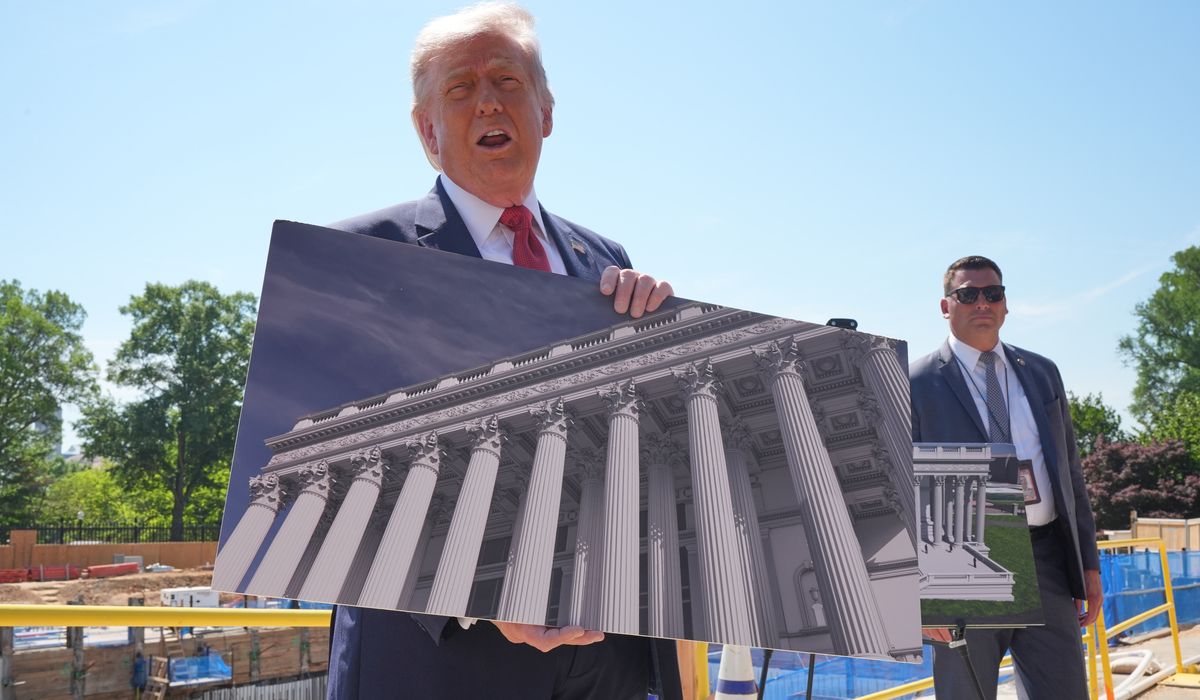
Democrats have seized on “Ballroom Republicans” as a new political attack, turning décor choices into a midterm campaign issue while debates about priorities and governance continue to rage.
The phrase “Ballroom Republicans” has been picked up by Democrats to paint opponents as out of touch elites focused on appearance rather than the nation’s real problems. That label gets used to criticize projects tied to presidential taste, especially when they involve lavish interiors and high-profile design choices. Conservatives see this as an attempt to distract voters from policy debates and economic concerns.
At the center of the argument are the gilded rooms and restored spaces tied to former President Trump, which opponents portray as symbols of excess. Supporters counter that restoring grandeur in the executive mansion reflects respect for national institutions and historical style. Both sides frame the same decisions in starkly different ways, turning aesthetic judgment into political ammunition.
Republicans argue that the focus on décor is a manufactured controversy meant to shift attention away from issues like border security, inflation, and energy independence. They say critics ignore large-scale policy questions and instead rehearse cultural attacks that signal class resentment. For many voters, tangible concerns such as jobs and safety remain the priority, not wallpaper patterns or chandeliers.
The cost arguments often get stretched in campaign messaging, with opponents highlighting price tags as proof of misplaced priorities. What rarely gets as much airtime is the context of funding, procurement rules, and historical precedents for renovations of the White House. Pointing to documents, records, and past administrations shows that renovations and redecorations are normal, though they can become lightning rods in a polarized environment.
There is a political logic to turning interiors into a debate topic: visuals are easy to package into attack ads and social feeds. Democrats aim to simplify their message by branding a whole coalition with a punchy phrase like “Ballroom Republicans.” That tactic can mobilize base voters who already distrust elite institutions, but it also risks alienating swing voters focused on bread-and-butter issues.
From a Republican perspective, the pushback often looks performative. Conservatives see critics cherry-picking images and snippets while ignoring substantive investigations into the policies that actually affect people’s lives. The argument becomes less about gilding and more about whether political opponents will use any tool available to unsettle or distract.
There is a cultural element at play, too, where questions of taste collide with deeper identity politics. To some, ornate rooms signify tradition, national dignity, and continuity with the past. To others, they read as a display of wealth and privilege that contrasts with everyday struggles, and that contrast is what opponents exploit politically.
Campaign strategy feeds back into the coverage cycle, with each side amplifying the other’s framing to rally supporters. Democrats deploy the “Ballroom Republicans” label to draw clear contrasts and energize turnout, while Republicans respond by reframing the debate around priorities and governance. The tussle over images is likely to continue as midterms approach, with both parties sharpening messages to reach undecided voters.
Commentary around the décor debate often misses the procedural details that matter, like who approves changes, how contracts are awarded, and whether expenditures follow existing rules. Those are the factual questions that should guide public oversight, rather than partisan photo ops. Voters deserve clarity on process and accountability, without losing sight of policy outcomes that impact daily life.
The spectacle of interior design politics says something about modern campaigns: symbolism can be as potent as substance when it comes to shaping impressions. But symbolism works best when paired with clear policies that address tangible concerns. Until then, expect the phrase “Ballroom Republicans” to keep circulating as shorthand for a larger cultural and political dispute.

