

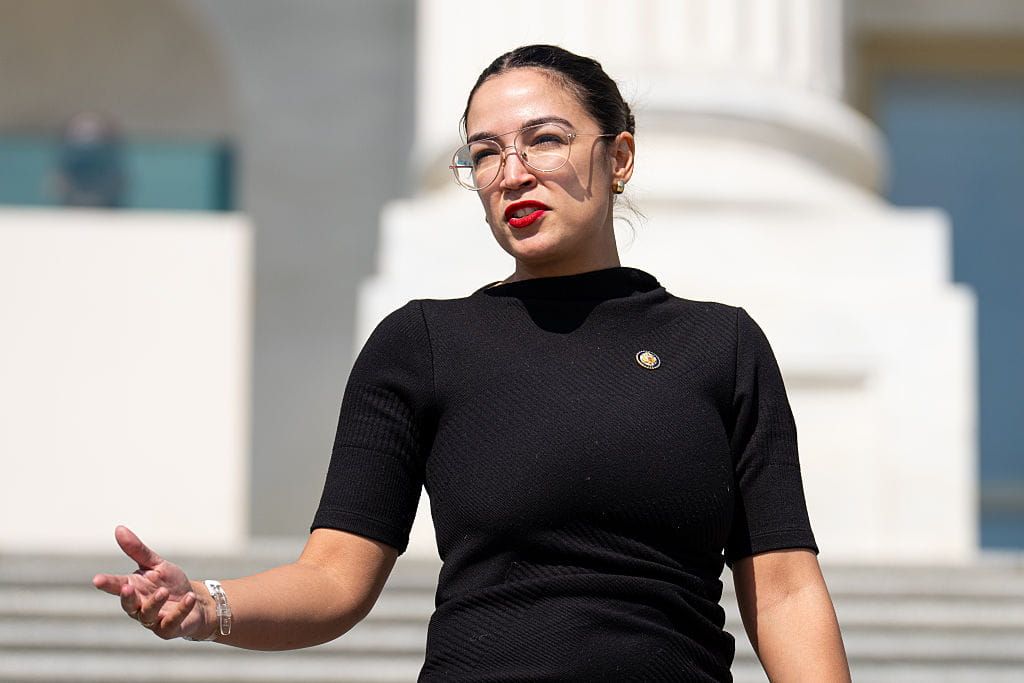
Alexandria Ocasio-Cortez’s recent moves look more like a presidential test run than random happenings, with timing, staffing, and public posture that feed a narrative of careful preparation.
Alexandria Ocasio-Cortez has been upping her public profile in ways that stop short of an official campaign announcement but add up to something more than mere coincidence. Local appearances, high-profile interviews, and strategic fundraising signals suggest a pattern worth watching. Republican observers see this as an attempt to build a national brand and test the waters for higher ambitions while avoiding the full commitment of a formal run.
Her messaging is polished and media-ready, and that alone can shift the conversation. AOC’s social media reach and knack for grabbing headlines let her influence the Democratic primary landscape without being on the ballot. This kind of soft launch lets her gauge donor appetite, voter reaction, and media traction without taking the kind of risks a formal campaign demands.
She’s also been careful with personnel moves, planting allies and staffing decisions that could translate into national infrastructure if needed. That’s a classic pre-campaign maneuver, the sort of behind-the-scenes building that sets the stage long before an announcement. Conservatives watch these shifts as early warning signs that a movement-style candidate might soon take the stage at full volume.
The quote that keeps getting tossed around is, “If she’s not running, there sure are a lot of coincidences.” That line captures why skeptics keep asking whether the silence around an official declaration is strategic. From a Republican perspective, this kind of ambiguity is a political weapon used to dominate headlines and force rivals to react before they’ve had a chance to prepare.
Financial signals matter too. When a politician starts turning small-dollar enthusiasm into a broader fundraising apparatus, it changes the game. AOC’s small-donor strength is real, but scaling that into a viable presidential campaign requires different networks, bigger checks, and more seasoned political operatives. Republicans take note because converting internet fame into an effective national campaign infrastructure is easier said than done.
Her policy posture remains an issue that fuels conservative critique. Progressive positions that play well in primary debates can be a liability in a general election, and Republicans argue that her agenda would be a clear contrast with mainstream voters on issues like spending, national security, and energy policy. For GOP strategists, an AOC presidential tilt would simplify the general election framing because the contrast would be stark and easy to communicate.
There’s also the optics of timing. Appearances at national events, deliberate social media flurries, and careful interactions with major outlets create a steady drumbeat. Republicans see this as choreographed momentum building. When you string those moments together, they form a narrative that can attract media oxygen and create the illusion of inevitability even before a campaign infrastructure is fully in place.
Democrats inside the party are not monolithic about how to respond, and that internal friction can be an advantage for conservatives. If an AOC rise forces Democrats to pick ideological sides, it can sharpen GOP messaging around stability and experience. That internal debate might end up being the biggest gift to Republican campaigners who prefer a clear contrast over a muddled center-left field.
Finally, there is the long game. Whether or not AOC decides to officially enter a presidential race, the moves she is making change the battlefield. They push donors, pundits, and rivals to react and reallocate resources. From a Republican viewpoint, it’s smart to watch these early signals closely and shape arguments that expose the vulnerabilities behind the spectacle rather than simply chasing headlines.

