

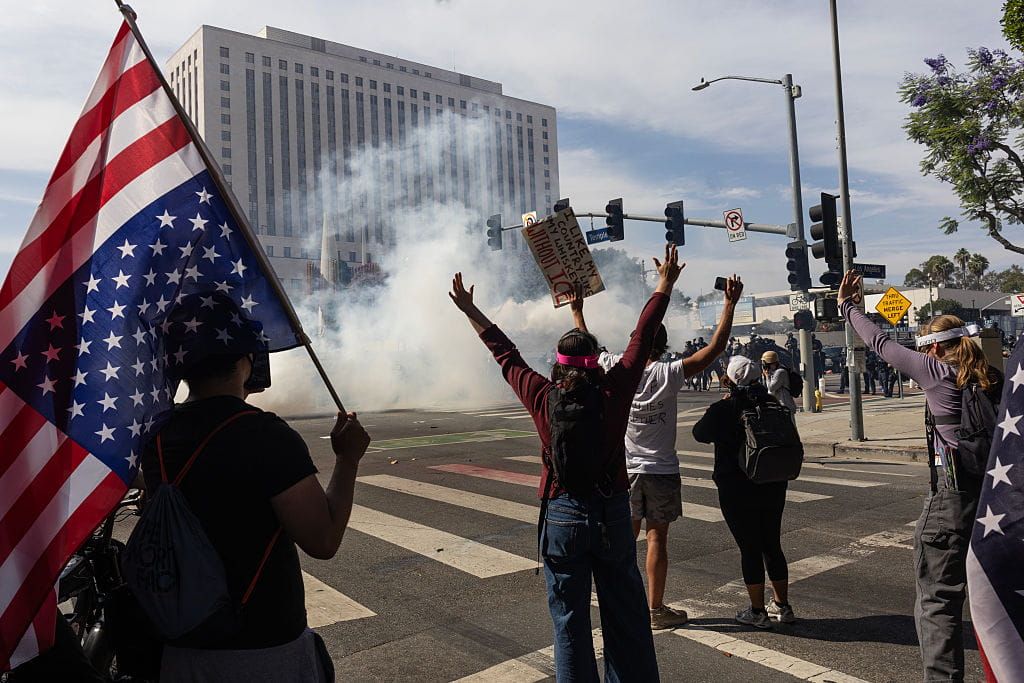
As Americans mark 250 years, a loud faction is choosing to mourn the country instead of join the celebration, insisting the anniversary proves the nation has failed while most citizens keep flying the flag and gathering with family.
There’s a clear cultural tug-of-war playing out around America 250, and the left’s narrative leans hard into gloom. The New Yorker cover titled “Red, White, and Kinda Blue” captured that tone by showing an unusually melancholy George Washington. The illustrator’s aim was obvious: suggest the founders would be disappointed with the present day.
The magazine’s depiction included the exact visual note that stirred people up: “jaw is propped disconsolately on his hand in a melancholy pose with his elbow resting on a bar; he nurses a sad martini; an ashtray full of cigarette butts molders in front of him; in his mouth is a party horn he’s given a desultory puff of ironic celebration; the look in his eye is one of sadness and ennui.” That passage is a vivid encapsulation of the broader tactic — paint the country as irredeemably bleak. For many conservatives, that approach feels less like critique and more like cultural scorched-earth.
Across the capital and beyond, some protests around anniversary events focused on opposing the current administration instead of honoring national heritage. Reports of people cheering for algae to overtake the Reflection Pool instead of celebrating a restored monument made a mocking kind of theater out of dissent. The Freedom250 events hosted by the Trump administration drew refusal from some celebrities and activists, and groups like No Kings staged counter-rallies that turned the weekend into a political battleground.
On the West Coast, commentary questioned even the simple act of rooting for Team USA at the World Cup during the anniversary, linking sports fandom to broader political disagreements. One local voice captured that split plainly: “I’m an American and very proud of the freedoms we have,” Carey Lefkowitz said, then added a caution about maintaining one’s humanity. Other critics framed their boycott of patriotic rituals around opposition to the Iran War, immigration policy, or federal spending priorities.
Ken Langner, for example, said his squad loyalty would go to England because, as a progressive, he believes tax dollars belong to healthcare instead of military action. Those positions are genuine and held sincerely by many, but for a lot of Americans they felt like a refusal to acknowledge shared history. The choice to skip fireworks or flag displays as a form of political protest turns a holiday into a referendum on current officeholders rather than a chance to celebrate national endurance.
Still, polling shows most people aren’t buying into the idea that the anniversary should be a boycott. A Reuters/Ipsos poll found 80% of respondents plan to celebrate Independence Day this year, including 76% of Democrats, 74% of independents, and 91% of Republicans. The same survey reported that 48% plan to attend a cookout, 41% will display an American flag, 34% plan to attend a fireworks show, and 18% will set off fireworks themselves. Small percentages will stage more elaborate protests, but the majority will mark the day with family and longstanding traditions.
That majority matters because the loudest activists do not always represent the mainstream. For every op-ed urging Americans to skip the Fourth, there are millions lighting sparklers, unfurling flags, and having cookouts. Traditions like backyard barbecues, neighborhood fireworks, and flag displays are simple rituals that keep communities connected across partisan lines. They also make visible the continuity of a nation that has overcome wars, economic crises, and political upheaval for a quarter-millennium.
There’s a philosophy underneath this resistance to the doom-saying: pride in place and resilience matter. As Abraham Lincoln famously put it, “I like to see a man proud of the place in which he lives. I like to see a man live so that his place will be proud of him.” That sentiment captures why many conservatives reject the idea that patriotism must be hollow or naïve. Celebrating the nation does not mean ignoring faults, but it does mean acknowledging what has been preserved and built through sacrifice.
The disagreement over America 250 is ultimately a clash about tone and purpose. One side treats the anniversary as a chance to indict the present, to hold up the country as a failed project. The other sees a milestone worth defending, honoring, and using to inspire better civic engagement. Either way, the weekend exposed an ongoing cultural divide about how we talk about America, who gets to define patriotism, and whether national pride is a relic or a renewable resource.
That divide will keep playing out in columns, covers, and rallies, but the facts in the polling are stubborn: most Americans plan to celebrate. The noisy efforts to paint the anniversary blue haven’t erased the steady current of people who will gather, display the flag, and watch fireworks. In the end, the democratic experiment doesn’t hinge on the mood of a magazine cover or a handful of protests, but on millions of ordinary citizens choosing how to spend a summer holiday.

