

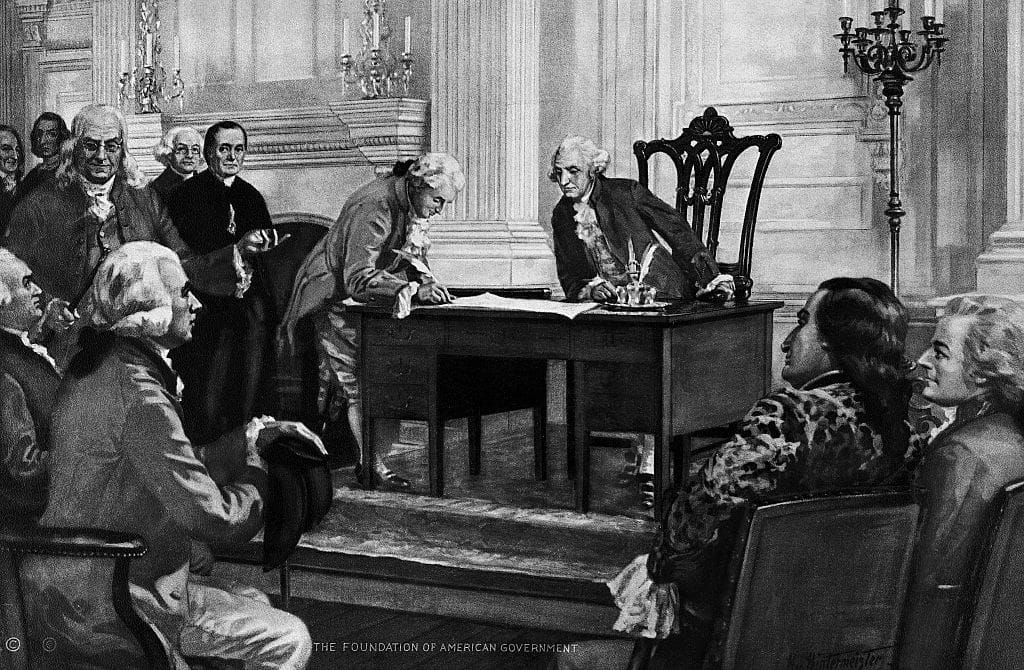
America’s union has been tested and reformed since the start, moving from a weak confederation to a Constitution that balanced national needs with state independence, while the Tenth Amendment remains a key guard against distant, unchecked power.
The first experiment under the Articles of Confederation left the states largely autonomous and the national government toothless, unable to tax, regulate commerce, or enforce laws. Framers quickly realized a stronger framework was necessary for a sprawling, diverse republic to survive the pressures of trade, debt, and foreign threats. That led a group of delegates in 1787 to replace the Articles with a new Constitution that could govern effectively without swallowing the states whole. The debate that followed built the architecture that still defines our federal system.
Patriots who had fought King George III were deeply suspicious of centralized authority, so the new plan walked a tightrope between national capability and local liberty. The Bill of Rights arrived soon after to lock in individual protections and to clarify limits on federal reach. Among those protections, the language that stuck most stubbornly into constitutional argument was terse and purposeful: “The powers not delegated to the United States by the Constitution, nor prohibited by it to the States, are reserved to the States respectively, or to the people.”
That Tenth Amendment is not a nostalgic relic; it is a constitutional check meant to curb distant, unaccountable rule and keep government close to the people. For Republicans, it matters because it preserves space for state policy innovation and local accountability. When federal officials are far removed from local voters, the natural incentives to be responsive erode, and citizens lose the practical ability to influence the rules that shape everyday life. The Tenth Amendment gives voters choices through state policy variation and, when necessary, migration to jurisdictions that reflect their values.
Certain constitutional provisions have, over time, been read broadly and used to justify federal expansion. The Commerce Clause and the General Welfare Clause have been interpreted in ways that empower Washington to reach into many areas once thought local. That judicial stretching allowed federal spending programs to grow and gave national policymakers levers to influence state decisions indirectly. The result has been consistent centralization of power that often sidelines state judgment and experiment.
States operate as laboratories where different approaches can be tested without exposing the whole country to a single failed experiment. When one state tries bold reforms—tax simplification, school choice, regulatory rollback—others watch the results and decide whether to copy, adapt, or avoid those policies. This practical diversity keeps policy honest: bad ideas are exposed and good ones spread. It also preserves a healthy competition among governments for residents’ talents and capital.
Of course, the history of states’ rights includes painful chapters. The label was twisted by segregationists to defend brutal systems and to resist basic civil rights. That misuse invited rightful federal intervention, including landmark acts in the 1960s that enforced voting rights against state obstruction. Federal power has a role when states deny fundamental liberties, but those interventions should be targeted and principled rather than a pretext for wholesale central control.
Showcases like Massachusetts’ health reforms later echoed on the national stage, proving how state-level policy can influence federal debate. Yet that dynamic cuts both ways: when Washington imposes one-size-fits-all mandates, it can crush local ingenuity and entrench programs that the states might otherwise avoid. The conservative case is for restoring the balance so states can pioneer solutions without being boxed in by opaque federal diktats and sprawling entitlement structures.
Today’s political landscape shows why federalism matters: divergent policy choices across states let people live under governments that align with their priorities, and they create pressure points that correct overreach. When federal authority becomes the default tool to solve every dispute, citizens lose their role as primary governors of their communities. Keeping power closer to home encourages accountability, innovation, and the civic habits of self-government that sustain a free republic.
The union that emerged from compromise has proven flexible enough to accommodate difference without collapsing, but it requires constant vigilance. Preserving the proper role of states, honoring the Tenth Amendment’s restraint on federal power, and defending local control are practical steps to keep authority responsive and limited. That is the conservative view of a durable republic—one where fifty states remain essential actors in protecting liberty and testing better ways for Americans to govern themselves.

