

Top Democrats Are Trapped in a Catch 22: competing factions and electoral math force leaders into impossible trade-offs between satisfying a vocal progressive base and winning over swing voters.
The phrase “A party pulling itself apart.” fits because Democrats face two contradictory demands at once, and those demands often cancel each other out. Push hard to appease the left and you alienate moderates; court the center and you energize the base’s anger. That dynamic creates paralysis that helps Republican challengers by default.
On policy, the tension is obvious: ambitious spending agendas and bold cultural proposals energize primary voters but make messaging to suburban and working-class Americans much harder. Voters worried about the economy, public safety, and the border respond to straightforward promises, not ideological purity tests. Democrats keep trying to thread a needle they can’t see, and every compromise becomes ammunition.
Leadership is where the Catch 22 turns into practical damage. Party leaders must manage activists demanding aggressive change while also rallying candidates who need broad appeal in competitive districts. Every flip between extremes looks like weakness, and voters notice when a party spends more time debating itself than defending policies. That perception matters at the ballot box.
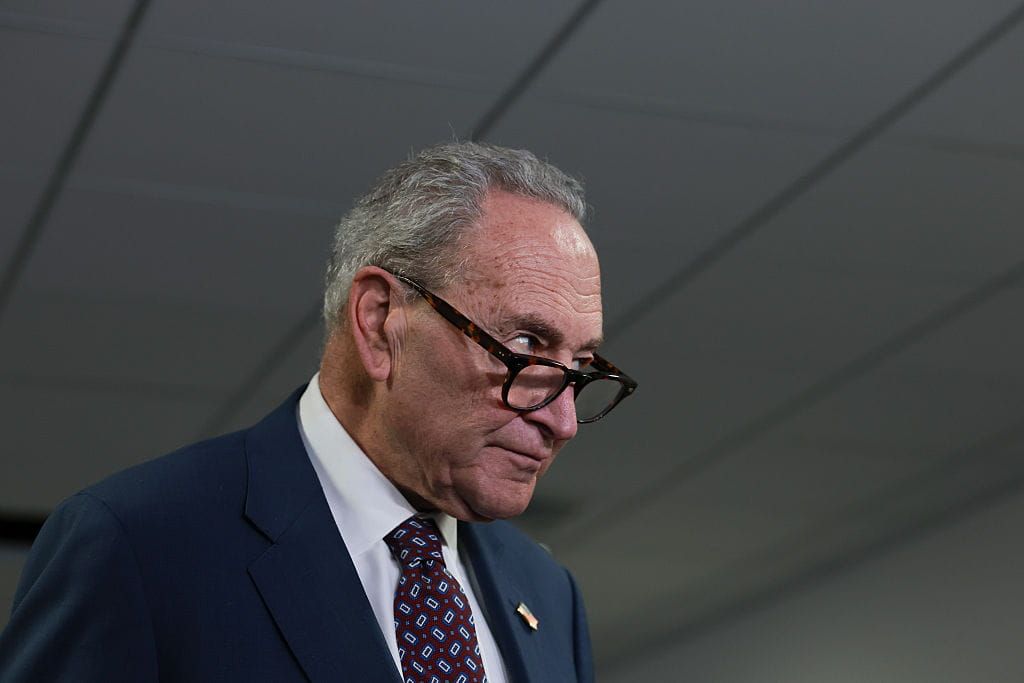
“Chuck Schumer — (Photo by Anna Moneymaker/Getty Images)” captures the reality of visible leaders stuck between factions, expected to sell unity they no longer control. High-profile figures can try to broker peace, but optics count more than intentions when elections are close. When leaders appear indecisive, opponents seize the narrative that Democrats are out of touch.
As of Jul 6, 2026, this conflict hasn’t eased. The calendar amplifies the pressure: campaigning timelines and fundraising cycles punish internal feuds and reward clear, consistent messaging. A party split like this struggles to present a simple alternative to voters, and simplicity is the advantage Republicans can exploit in close races.
Electoral consequences flow from that split. Candidates who adopt progressive platforms in primaries find those same positions weaponized in general election ads. Moderates who pivot to the center face backlash from primary voters and activist groups. Either way, indecision and flip-flopping become fodder for critics and create openings for conservative arguments about competence and clarity of purpose.
Strategically, Democrats could choose to consolidate around a few shared priorities and present a disciplined platform, but that choice costs the vocal elements that help with turnout and fundraising. Or they can keep catering to the base and risk losing moderates who decide elections. Neither path is easy, and each has distinct political trade-offs that the party’s leaders must weigh constantly.
For now, the Catch 22 is self-reinforcing: the more the party tries to placate everyone, the less convincing any single message becomes, and the clearer the advantage for an opponent who promises coherence. That dynamic explains why internal disputes feel less like healthy debate and more like strategic self-sabotage, with consequences that will show up at the polls.

