

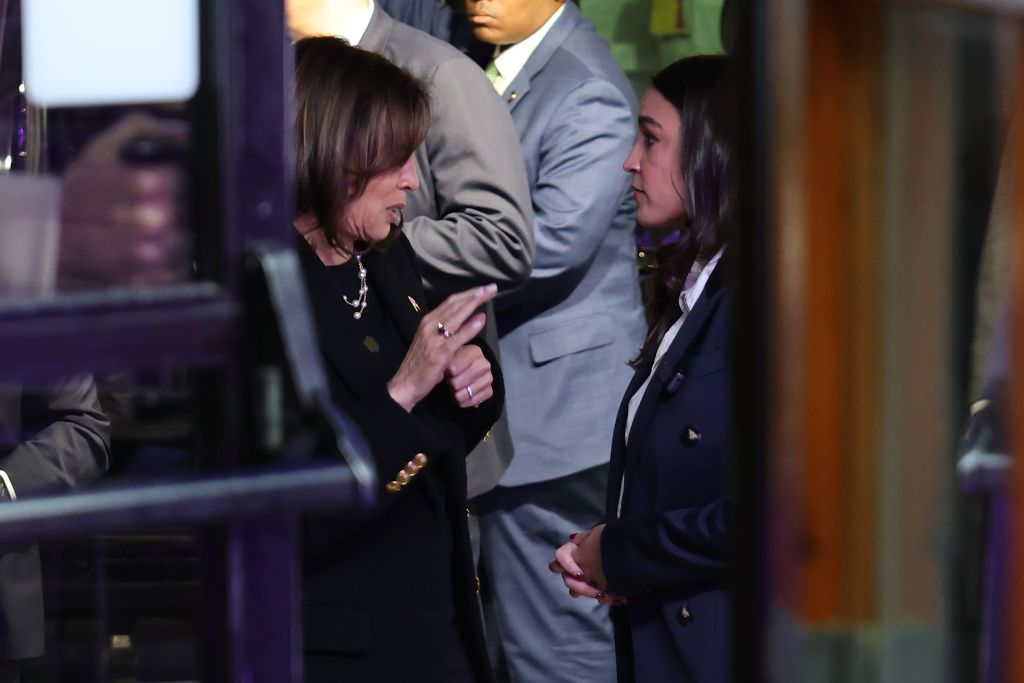
A clear-eyed look at the growing talk that Kamala Harris and Alexandria Ocasio-Cortez could end up on a Democratic 2028 ticket and why Republicans should not treat that as a joke.
Talk of a Harris–AOC ticket used to be a punchline, but the political wind has shifted enough that it’s now a strategic question, not just comedy. Progressives have been organizing, winning primaries, and staking out positions that attract young voters in a way traditional Democrats have not. That changes the math going into 2028 and means the GOP needs a plan beyond laughter.
The left’s momentum is real: grassroots groups, the Democratic Socialists of America, and an energized youth base have reshaped primaries in several cities. That shift elevates untested candidates with strong media personas and activist backing. A ticket that combines Harris’s national profile with AOC’s youth cachet would play to identity politics and the cultural trends driving turnout right now.
There are concrete political advantages here that can’t be dismissed. Both women are women of color, which the Democrats see as a built-in advantage in building diverse coalitions. AOC is especially popular with younger voters, who care less about experience and more about authenticity and outrage. Those factors make a Harris–AOC pairing, for all its apparent weaknesses, potentially effective in mobilizing a core Democratic turnout.
Another practical point Republicans often overlook: parties back people, not résumés. A candidate can be light on governing experience yet heavy on narrative and charisma, and voters will buy the story if it suits their hopes or grievances. The GOP should remember that name recognition and an adept media strategy can paper over inexperience, at least long enough to win a campaign.
There’s also a worrying sign for conservatives in the form of private meetings and network-building. As the piece noted, “Kamala Harris privately called New York City Mayor Zohran Mamdani last week and has been holding lengthy, closed-door meetings with other prominent progressives — including pro-Palestinian activists,” an Axios report revealed. Those conversations are the kind of behind-the-scenes organizing that signals serious intent.
The GOP’s historical blind spot is underestimating how quickly political energy can translate into votes. Think 1992: President George H. W. Bush enjoyed sky-high approval after the Gulf War, peaking at 89% in March 1991, and still trailed by fall. By August 1992 he had slipped to 54%, and Bill Clinton’s charm offensive and retail politicking won the day with a line that became infamous: “How much is a loaf of bread?”
Mocking opponents because they trigger your base’s derision is dangerous. It dulls the discipline needed to craft a winning message and prepare for a campaign where the other side controls the narrative. Republicans should not assume voters will automatically reject a Harris–AOC ticket; instead, they should study what makes such figures appealing and counter those strengths with policy clarity.
The ideological angle matters too. The leftward tilt now being normalized includes policy proposals that would dramatically reshape the economy and social policy. Rent control, expansive social programs, and aggressive regulatory agendas are popular in progressive primaries and can be sold as common-sense solutions to younger and lower-income voters. Republicans need sharper explanations of the long-term costs of those promises.
Personality plays a role. AOC’s media persona — equal parts defiance and familiarity — connects in a way wonky competence does not. Her remark to Fox News, “Could I be president?” followed by “Could I not be president? Maybe, maybe not.” delivered in that same breath, shows a playful ambiguity that keeps her in headlines. That kind of free-floating charisma is hard to neutralize with policy notes alone.
Still, weaknesses exist and should be exploited responsibly. Experience gaps, governance records, and radical policy risk can be highlighted without stooping to caricature. Voters respond to specific contrasts: plans that add up versus promises that don’t. Republicans can win by offering credible alternatives on jobs, inflation, and public safety while exposing the logistical and fiscal holes in grand progressive plans.
It’s also smart politics to sharpen the party’s ground game rather than merely attack personalities. Building a voter coalition that includes disaffected centrists, independents, and working-class swing voters will blunt any identity-based surge. Campaigns that neglect organizing in key suburbs and Rust Belt communities risk repeating past mistakes where overconfidence led to surprise defeats.
Underestimating opponents is a fool’s game. Harris and AOC on one ticket would be unusual, but political history is full of unusual wins. The sensible Republican response is not to sneer but to prepare: refine messages, strengthen turnout operations, and present a clear, attractive alternative that shows why a different path is better for the country. That’s how you turn a political punchline into a political victory for your side.

