

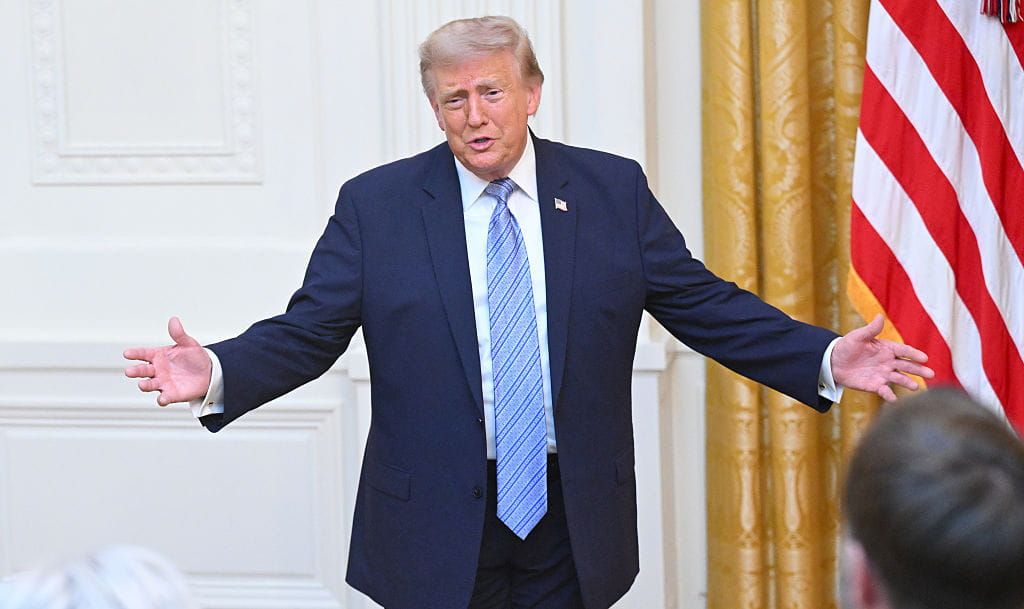
President Trump announced the release of classified assessments that, he says, reveal widespread foreign meddling and internal suppression of information, and he urged investigations and new election-integrity legislation.
President Donald Trump used a national address to argue that American federal elections have been compromised and that the public deserves full disclosure. He said he would publish previously classified CIA and FBI assessments on the White House website and named China as the central foreign threat. The speech centered on data breaches, machine vulnerabilities, and alleged internal cover-ups inside U.S. intelligence agencies.
According to the president, the records make clear why scrutiny is necessary and why investigations must follow. He framed the documents as covering multiple, distinct failures that together amount to a crisis in how elections are protected. He also tied legislative action to the disclosures, urging Congress to act on measures he claims would restore confidence in voting systems.
Trump said plainly, “The documents cover five major areas of concern,” and he described one of those areas as an unprecedented theft of voter information. He alleged that Beijing acquired an enormous trove of U.S. voter files, putting a figure on the breach that underscores how large-scale the problem is. That number, and the claim about foreign efforts to influence or manipulate results, were core elements of his public case.
Beyond data theft, the president accused parts of the intelligence community of concealing reporting from both the White House and the American people. He asserted that important CIA and NSA documents about foreign targeting were removed from briefings and that this withholding materially affected oversight. If true, that would mean elected leaders and voters lacked critical information when evaluating election security.
“Compounding the travesty, the second set of documents we are releasing reveals that members of the Deep State – very, very, famous group of people, in many cases – in our intelligence agency worked to actively suppress and downplay information about the extent of China’s sinister election meddling – covering it up from both the president and the American people like nobody thought was possible.”
The president also read aloud a portion of CIA reporting, saying, “As the documents we are releasing show,” Trump continued, “CIA reporting explicitly stated, and I quote, ‘in mid-2018, the Chinese Communist Party’s policy was to leverage all domestic and foreign elements that were opposed to the US president in an effort to reduce the US president’s votes and make him resign or prevent his reelection.’” That passage was used to argue that the interference was deliberate and strategic over multiple years.
Trump claimed U.S. intelligence had identified not only data exfiltration but also steps taken to influence media coverage and even fabricate ballots. He said FBI intelligence uncovered an attempted scheme to manufacture ballots, and he described the overall vulnerability of electronic voting machines as worse than commonly admitted. Those assertions were offered to justify stronger controls on election technology and access.
He singled out the political stakes, urging accountability and calling for the passage of the SAVE America Act as a legislative response. In his remarks he suggested that opposition to integrity measures amounts to an unwillingness to play by honest rules, contending that the only reason to fight such reforms is that “you want to cheat.” That blunt phrasing framed the debate as one of principle versus concealment.
Reactions within Washington were immediate and polarized, with some officials disputing the claims and others saying the disclosures demand formal inquiry. The speech was timed ahead of major elections and read by many as a political signal as well as a policy argument. Whether Congress or federal agencies launch the promised investigations will test how seriously the allegations are taken across the political spectrum.
Two themes run through the address: a charge that foreign actors, chiefly China, mounted extensive operations targeting U.S. elections, and a charge that parts of the U.S. government minimized or hid those operations. The president argued those twin failures justify transparency, oversight, and legal reform to protect future elections. He positioned the disclosures as an opening move in a broader fight over election security and public trust.

