

The piece outlines how recent diplomacy, infrastructure moves, and US energy expansion are reshaping global oil flows and chokepoints, with Washington playing a central role in a shifting order.
The past months have produced a clear realignment in oil markets driven by politics, projects, and American energy muscle. Deals struck in Washington and pipeline restorations across the Middle East are already altering where crude flows and who controls access. What looked like permanent chokepoints are being challenged by new routes and by expanded US output. For conservatives who favor American leadership, these are not accidents; they are strategic wins.
Iraq’s delegation visited Washington on July 14 and signed major energy agreements with several US companies, including Chevron, ConocoPhillips, and Halliburton. Those contracts cover exploration, development, and production and were valued at about $60 billion by business officials. Baghdad also moved fast to reconnect with neighbors, seeking to turn decades of lost capacity into exportable barrels. This sort of post-conflict economic integration is exactly the outcome many policymakers hoped for.
Iraq and Syria agreed to restore a pipeline that has been closed since 2003, with the US Energy Information Administration estimating potential capacity at 700,000 barrels per day. Energy Secretary Chris Wright said, “There is so much room to drive improvement in Iraq, to raise oil production, to reduce dependencies on hostile neighbors, to bring freedom, prosperity and abundant energy to the nation of Iraq,” before the signing. Restoring infrastructure like this reduces reliance on narrow sea routes and gives producers alternatives for moving crude.
The United Arab Emirates is moving aggressively to bypass maritime choke points by building a new east coast port and container terminal, and Abu Dhabi’s recent exit from OPEC coincided with record output exceeding 5 million barrels per day. Saudi planners are reportedly weighing a roughly 2 million bpd expansion to Red Sea pipeline capacity, a move that could lift some flows to near 7 million bpd through alternate routes. Taken together, analysts project Gulf pipeline capacity could exceed 14 million barrels per day by the end of 2028, reshaping regional logistics.
Even with new infrastructure, vulnerability remains because Iran has demonstrated the ability to strike energy facilities across the region. “The problem isn’t the waterway,” Bob McNally, founder of Rapidan Energy, said in a July 13 interview with CNBC’s Power Lunch. “It’s that Iran can use weapons to attack loading facilities, pumping stations, the end stations, these terminals, and the storage units of these pipelines.” That blunt assessment underlines that building alternative routes is only part of the risk equation.
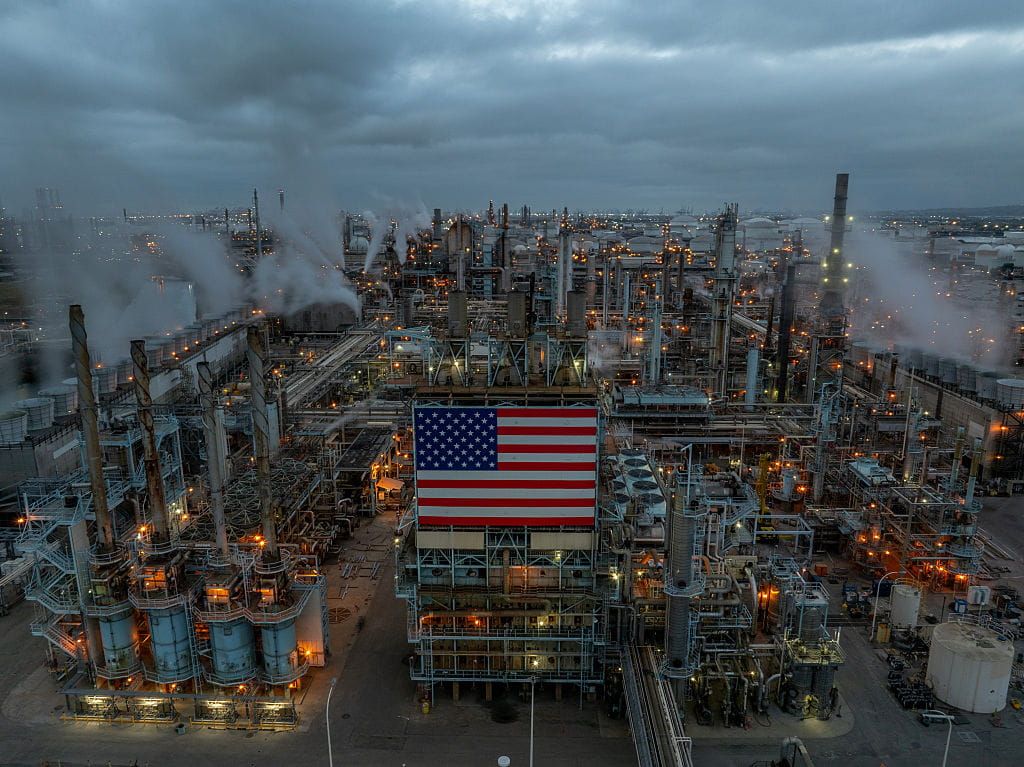
On the home front, the United States has dramatically ramped energy production, approaching almost 14 million barrels per day. Domestic firms are adding capacity, and a new refinery—the first in fifty years—came online to process heavy crude at scale. These steps reduce American exposure to external shocks and give Washington leverage in geopolitical disputes over energy access and pricing. For policymakers who want leverage, domestic output provides bargaining chips.
Washington’s diplomacy extends beyond deals and refineries. A recent military cooperation arrangement with Indonesia grants the US access to airspace and transit rights tied to the Strait of Malacca, the world’s largest oil chokepoint handling about 23 million bpd. That geography matters: roughly 80% of China’s oil imports move through that corridor, so any US role there has strategic implications for global trade and deterrence. Access to key chokepoints shifts balance without firing a shot.
Venezuela’s post-regime-change opening is another factor in the new mix, giving the United States and American firms access to roughly 300 billion barrels of reserves in the region. Caracas’s production rebounded, increasing daily output by more than 1 million barrels from pre-invasion levels of roughly 700,000 bpd. When extra supply comes online from a hemisphere neighbor, markets feel it quickly and trading leverage changes hands in ways friendly to US economic interests.
Beyond pipelines and production, countries are taking steps to reduce single-point dependencies. Ports and terminals on alternative coasts, expanded overland routes, and renewed regional cooperation all aim to blunt the impact of any one disruption. Those moves are pragmatic and defensive, designed to keep oil flowing even if maritime passages are threatened. For a nation that values resilient supply chains, these initiatives matter.
The strategic picture going into the 2028 cycle is therefore complex: an active US energy sector, a flurry of commercial agreements in Washington, and major infrastructure projects in the Gulf and beyond. American influence now touches both the production side and critical transit routes. This is not simply market noise; it is a deliberate reorientation that places the United States and its partners at the center of a new energy map.
Politics will inevitably debate the costs and the human toll of the conflicts tied to this shift, but the operational outcome is already visible in pipelines, ports, refinery capacity, and diplomatic ties. The practical result is a diversification of routes and an expansion of supply that together reduce old dependencies. For those who see strength in American-led order, these developments offer a clearer path to energy security and geopolitical advantage.

