

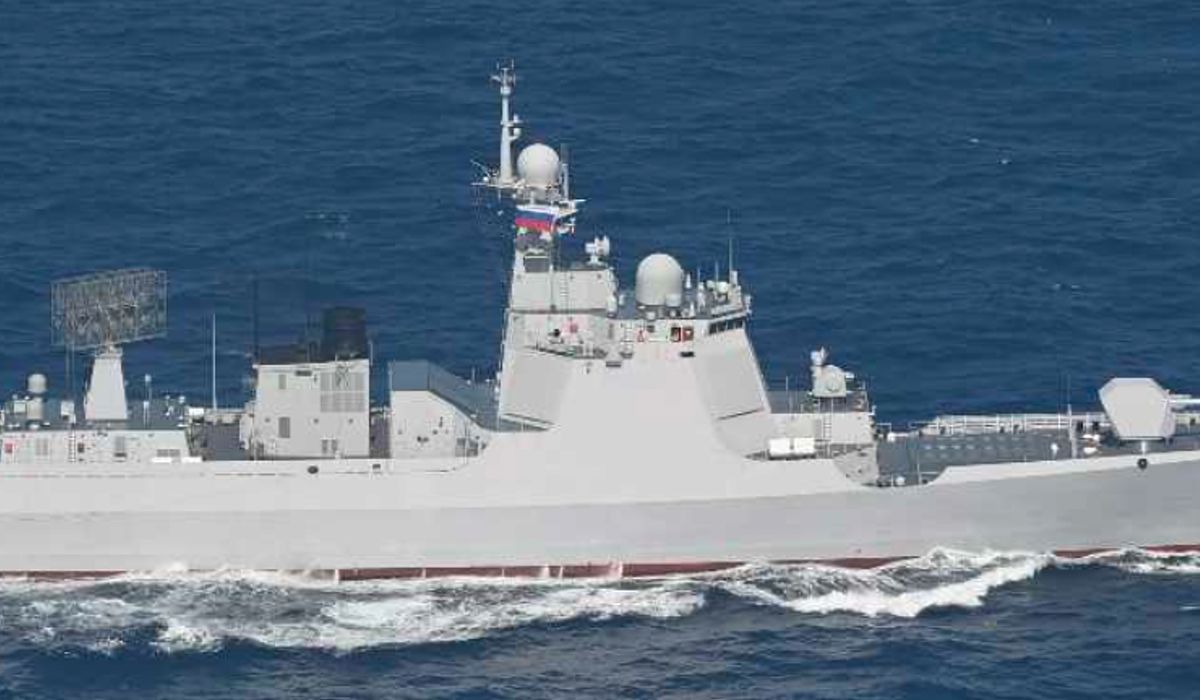
Japan reported concern after a Chinese navy destroyer fired live rounds off a remote Japanese island during joint drills with Russia, a move that has intensified regional unease and raised questions about military signaling in the Pacific.
Japanese officials said the incident took place on Sunday when a Chinese destroyer carried out live-fire drills off a remote Japanese island in the Pacific Ocean during a joint exercise with Russia. Tokyo publicly expressed concern over the operation and said it was watching developments closely, with officials confirming details on Tuesday. The proximity of live-fire activity to Japanese territory is the core factual point driving the response.
The use of live ammunition near Japanese waters complicates an already tense security picture in the region. Naval exercises involving China and Russia have become more frequent, and the involvement of a warship capable of live-fire operations adds a real risk of accidents or miscalculations. For Japan, even routine drills nearby can be perceived as strategic messaging with concrete safety implications for shipping and local communities.
From a security perspective, exercises like this test maritime boundaries and the robustness of monitoring systems. Japan’s Self-Defense Forces maintain surveillance of nearby waters and airspace, and incidents are logged and evaluated for potential escalation. Officials say part of the immediate response is to gather precise coordinates, timing and the type of ordnance used to clarify whether the activity encroached on territorial seas or exclusive economic zones.
The China-Russia naval cooperation underscores a growing willingness by both militaries to operate together far from their home waters. Such joint drills serve several purposes at once: training, signaling to regional rivals, and normalizing bilateral interoperability. For neighbors like Japan, that mix translates into strategic discomfort because it suggests coordinated capability-building against regional defenders.
Tokyo’s reaction is framed by alliance considerations and the need to reassure domestic audiences that territorial integrity is being defended. Republican-minded observers would point to the importance of a strong deterrent posture and close coordination with allies to prevent these kinds of actions from becoming routine. In practical terms, that means increasing patrols, information-sharing and exercises with partners to demonstrate resolve.
International maritime rules exist to reduce the risk of incidents at sea, but when live-fire drills occur close to another nation’s territory they naturally draw diplomatic protests and calls for clarification. Japan’s request for clarification and public expression of concern follow established diplomatic practice, even as the broader strategic debate focuses on how to deter further provocative behavior. Maintaining clear lines of communication is essential to avoid misinterpretation that could lead to a crisis.
Analysts watching the Pacific note that Beijing and Moscow are sending signals about the limits of current deterrence measures, and those signals are not lost on Washington or Tokyo. Strengthening allied readiness is part of a broader policy response, and the episode is likely to prompt fresh discussions on deployments, joint drills and intelligence cooperation. For governments concerned with stability, the priority is preventing routine military activity from becoming a pretext for coercion.
There is also a public messaging element at play: displays of naval power close to another country’s territory are meant to be visible and to influence perceptions at home and abroad. Japan’s economy and civilian population depend on safe sea lanes, and any activity that raises the hazard level will be scrutinized by officials and industry alike. Accurate reporting and timely diplomatic steps help reduce panic and keep the focus on measured responses rather than emotional ones.
As the situation evolves, Tokyo will continue to monitor nearby activity, collect data and consult with partners about deterrence and response options. Officials emphasized the need for clear facts about what took place, where it happened and whether any regulations were breached. The episode highlights the ongoing strategic challenge in the Pacific and the importance of maintaining strong defensive measures and alliances to keep the peace.

