

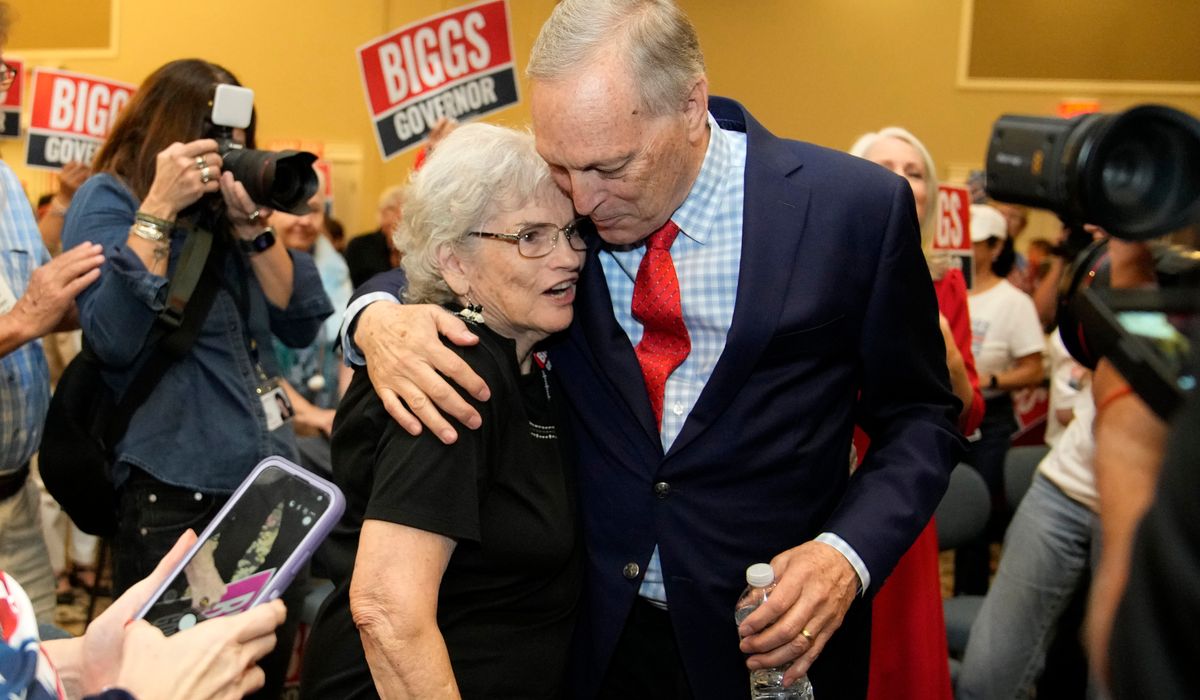
U.S. Rep. Andy Biggs captured the Republican nomination for Arizona governor, marking a clear conservative choice for the state’s next executive leader.
U.S. Rep. Andy Biggs, a fierce ally of President Donald Trump and former head of the House Freedom Caucus, won the Republican nomination for Arizona governor Tuesday. That victory puts a reliable conservative voice at the top of the ticket and reshapes the contest moving into the general election. The result matters for border policy, state governance, and the broader direction of Arizona politics.
Biggs ran on a platform that spoke directly to voters frustrated with federal overreach and lax border enforcement, themes that still drive Republican turnout in Arizona. His supporters point to his record pushing for tougher immigration controls and stricter enforcement of existing laws. Those positions appeal to voters who want tangible, enforceable border security rather than vague promises or bureaucratic fixes.
On regulatory and fiscal issues Biggs emphasized limited government, lower taxes, and rolling back regulations he says hamper small business and family budgets. That message resonates with voters who feel inflation and high costs are a product of too much government intervention. Framing the choice around economic freedom gives Republicans a coherent argument heading into November.
Election integrity and state control of electoral rules were also central themes for the campaign, reflecting ongoing concern among conservative voters about how votes are managed and counted. Biggs has been vocal about reforms that return authority to the state and local levels and reduce opaque bureaucratic procedures. For many Republican primary voters, those promises were as compelling as policy specifics on taxes or education.
As a former leader of the House Freedom Caucus, Biggs brings a track record of standing for constitutional limits and aggressive oversight of federal power, a reputation that energized the conservative base. That pedigree helped him consolidate support among activists and grassroots organizers who prioritize principle-driven leadership. It also sets the tone for how he might approach the governorship, favoring strict adherence to state sovereignty and conservative legal frameworks.
Biggs’ alignment with President Trump strengthened his standing among a key slice of the electorate that remains loyal to Trump-era priorities. For Republican voters who want continuity with that approach, Biggs represents a candidate who will carry those priorities into state government. That alignment can be a strategic asset in turnout-driven races where base enthusiasm determines outcomes.
Critics will point to his combative style and the national controversies that have followed Trump-aligned figures, arguing Arizona needs a more moderate or consensus-driven governor. Supporters counter that bold, unapologetic conservatism is exactly what’s needed to push back on federal encroachment and restore practical governance at the state level. The general election will give voters the opportunity to weigh those competing visions for Arizona’s future.
Looking ahead, the campaign will hinge on mobilizing suburban and rural voters, defending conservative policy wins, and delivering a message that connects day-to-day issues to broader principles of liberty and accountability. Biggs’ immediate task will be to broaden appeal beyond the primary base while keeping core supporters engaged and energized. The outcome will have implications beyond Arizona, signaling how conservative movement politics translate into state-level power this cycle.

