

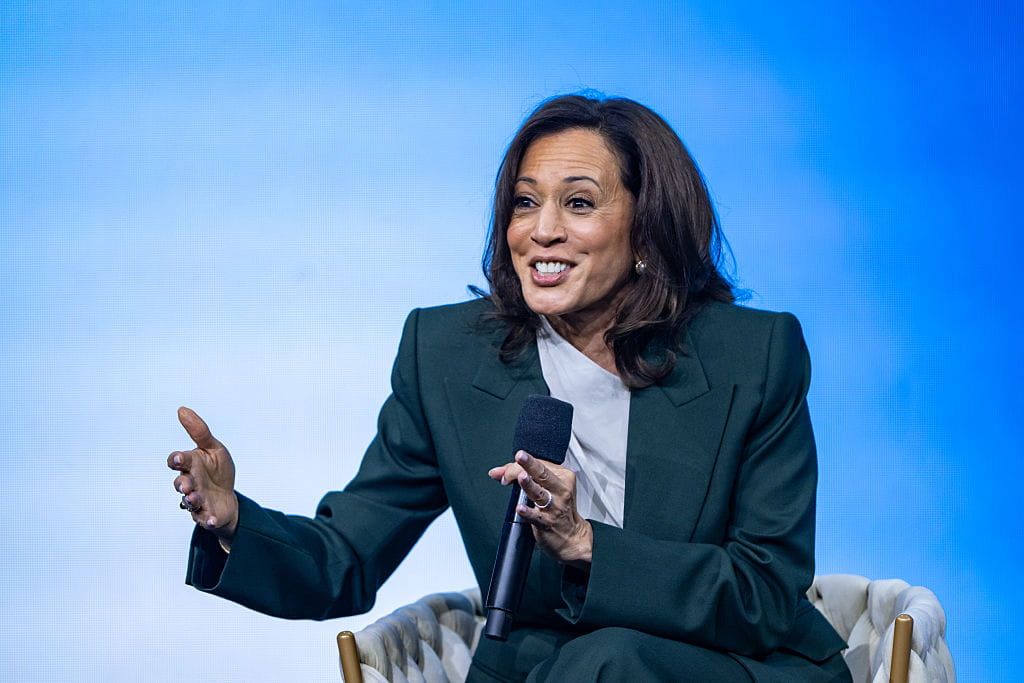
Democrats are quietly freaking out about Kamala Harris mulling another White House run in 2028, and the party faces a messy choice between revisiting a recent, costly loss or pretending it never happened.
Inside Democratic circles, Harris is already a problem waiting to happen, with senior officials and big donors uneasy about her potential comeback. She arrives with heavy baggage: a 2024 defeat to Donald Trump and a campaign that reportedly spent $2 billion in 107 days, a record that has not aged well inside the party. That reality forces Democrats to weigh whether her name recognition is worth the renewed scrutiny and infighting it would bring.
New York Magazine captured the mood plainly: “[M]ake no mistake: Kamala Harris is very much looking like a presidential contender-in-waiting.” The same piece added, “It is a prospect that has filled many senior Democratic officials and big-money donors with dread.” Those are not flattering lines; they reflect a party that would rather avoid relitigating a brutal national repudiation.
One supporter who recently spoke with Harris summed up her mindset bluntly: “Her mindset is that I should have won, and I am going to do it my way because my way would have won, and it was all these consultants that were telling me to take this position or that position, and it was their fault.” That statement explains why donors fear another run: it signals zero acceptance of responsibility and a readiness to fight the same battles again. For Republicans watching, Harris’s certainty looks like a political gift if she insists on another national campaign.
The Democratic bench is crowded and competitive, which makes Harris’s potential entry a throwback to the chaos of 2024. Names floated as possible contenders include Gavin Newsom, JB Pritzker, Josh Shapiro, Andy Beshear, Wes Moore, Gretchen Whitmer, Chris Murphy, Rafael Warnock, Ruben Gallego, Alexandria Ocasio-Cortez, Rahm Emanuel, and Pete Buttigieg. That roster shows the party has options, but it also highlights a growing tension: who yields the stage to a candidate who already failed twice?
Harris’s chief advantage is simple and stubborn: familiarity. Having been the 2024 nominee, she leads many prospective rivals in name recognition and polling, with Real Clear Politics averages showing her ahead of the pack by more than 10 points. Even so, that lead masks a deeper weakness: her average support remains below 30%, which is not a mandate so much as a vulnerability. Recognition without enthusiasm can turn a frontrunner into an easy target.
If Harris runs, the media and the opposition will make her the center of attention from day one, forcing Democrats to either savage one of their own or look away while a doomed candidacy unfolds. Either choice risks splitting the party; attacking a black woman who carries symbolic weight invites charges of bias, while ignoring obvious weaknesses invites accusations of cowardice. For Republican strategists, that dilemma is an invitation to press advantages relentlessly.
Democratic donors are already whispering about the nightmare scenario: another primary that weakens the eventual nominee and hands momentum to the GOP. One Democratic strategist, Alex Hoffman, put it in stark terms in the New York piece: “I hope she runs … because then she will lose and we will never have to hear from her again. She will never win an election at a national scale. Never.” Harsh as it is, that quote crystallizes a sentiment many party insiders won’t say aloud in public.
Practical politics will dictate the next moves. Harris’s team insists she is showing up only where invited for now, and her public appearances remain sparse and scattered. That posture keeps her options open while other Democrats test the waters, but it also prolongs the uncertainty that donors hate. The longer the suspense, the harder it is for the party to coalesce around a credible alternative.
For Republicans, the calculation is straightforward: keep spotlighting Harris’s 2024 collapse and the decisions that led to it, and let Democratic divisions do the rest. Her return would force uncomfortable conversations about competence, electability, and strategic judgment, conversations Democrats would prefer to avoid. Whether Harris runs or not, the episode exposes fault lines in a party still reeling from its recent loss and desperate for a ticket that actually wins at the national level.

