

House Republicans narrowly passed a $95 billion budget framework that directs large sums to defense, farming relief, and election security, setting up a tense fight as the measure moves to the Senate and sparking sharp objections from a few GOP members and unified Democratic opposition.
The House approved the $95 billion framework by a 216-214 vote, advancing a plan that funnels significant new resources into the military, agricultural aid, and election security grants. That slim margin reflects real division even inside the Republican Conference, but it also shows a clear choice: prioritize national security, rural relief, and election integrity. The package is meant to be a tool Congress can use if fiscal or national crises demand it this fall.
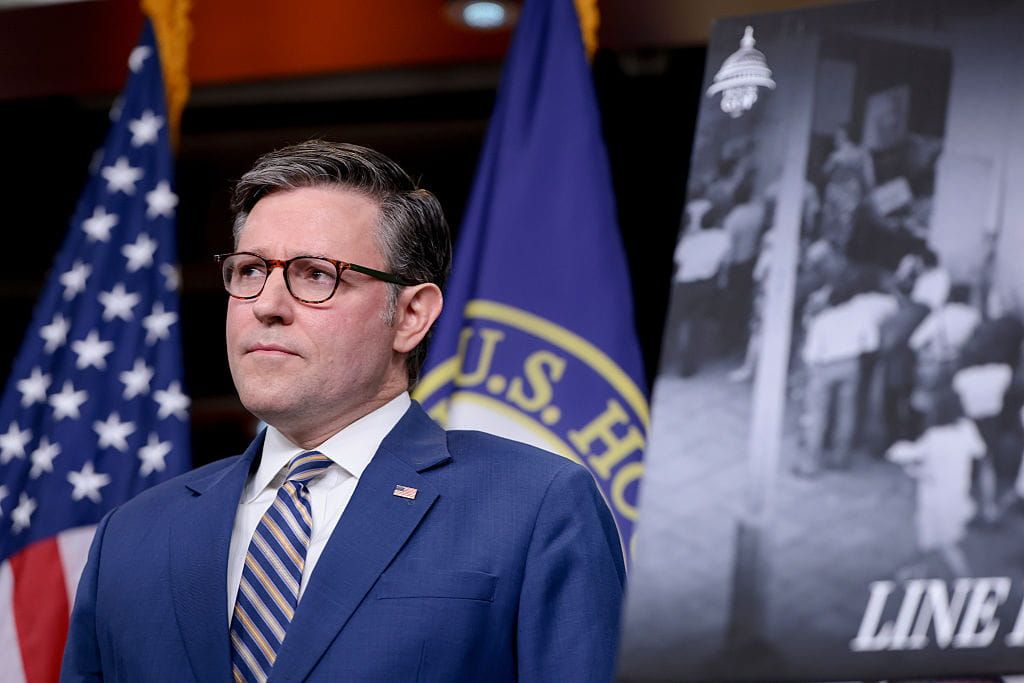
“Republicans support our troops, our farmers, and election security. We’re the only team in Washington that does,” Johnson told reporters after the vote. Those lines capture the message leadership carried to the floor: spending targeted where conservative priorities are visible and defensible. For many rank-and-file Republicans, backing the framework was a statement that national defense and the battered farm sector deserve urgent attention.
Under the framework, at least $73 billion is slated for defense and intelligence programs, about $12 billion would support agricultural aid, and a minimum of $10 billion would fund state election security grants. The defense tilt reflects concerns as the conflict in Iran approaches its sixth month, while the agricultural money responds to higher fuel and fertilizer costs that have pinched producers. The election grants are designed to encourage stronger voter ID and other state-level integrity measures that Republicans say restore public confidence.
Senate Majority Leader John Thune warned the upper chamber may hold the House measure so Republicans can “pull that budget resolution passed by the House and use it to fund government” later if needed. “It’s a possibility that if necessary we could pull that budget resolution passed by the House and use it to fund government. I hope that’s not necessary,” Thune said, signaling a tactical pause rather than a rejection. Holding the framework in reserve gives Senate Republicans leverage to avert a shutdown while negotiating broader fiscal terms.
The final tally belied internal friction: Reps. Thomas Massie of Kentucky, Warren Davidson of Ohio, and Kevin Kiley of California opposed the plan, joining every House Democrat to sink the margin to just two votes above the majority. “It’s a slush fund for the unauthorized Iran war with a payoff to farmers who are suffering from fuel and fertilizer price hikes due to the war, as well as from Trump’s trade policies,” Massie said, voicing the constitutional and fiscal concerns that animated his no vote. Those dissents underline a persistent liberty-minded strain within the GOP that fears open-ended war spending and earmarked relief without offsets.
Democrats seized the moment to cast the package as political theater, arguing the spending does nothing to lower costs for everyday Americans. “Republicans are putting forward a nearly $100 billion budget bill. But get this: not a single dollar, not one, will go toward lowering the costs that people face,” House Democratic Caucus Chair Pete Aguilar said in a statement. Republicans counter that shoring up defense, stabilizing rural economies, and protecting ballot integrity are long-term investments that matter to voters who want safety, economic stability, and fair elections.
President Trump weighed in from the center of the debate, pressing his election-integrity priorities and urging unity. “I am watching the vote very closely, and hope Republicans can UNIFY to secure Elections against all forms of Foreign Country Interference, and Illegal Alien voting,” he said, framing the spending as directly tied to safeguarding the next presidential contest. That presidential focus makes the package politically charged and raises the stakes for senators who must balance party loyalty, constituent concerns, and procedural limits.
Beyond politics, practical pressure points are already emerging: some Senate Republicans want even more for agriculture and defense, while others worry about the optics and fiscal trade-offs ahead of a tough election cycle. Leadership will have to thread a narrow needle, keeping hardliners from derailing a stopgap option while convincing moderates the plan won’t become an open-ended spending precedent. The job in the upper chamber will be to translate the House’s message into a vote that holds together under public scrutiny.
The resolution now sits in the Senate where it may be shelved, reshaped, or repurposed as lawmakers head into a recess and into more fraught budget talks. Johnson’s narrow win in the House cleared an initial hurdle, but the framework’s fate will depend on whether Republicans can maintain unity, fend off Democratic attacks, and demonstrate that targeted spending on security and farms is both prudent and politically defensible. The coming weeks will test whether tactical patience in the Senate turns into policy success or another flashpoint for intra-party division.

