

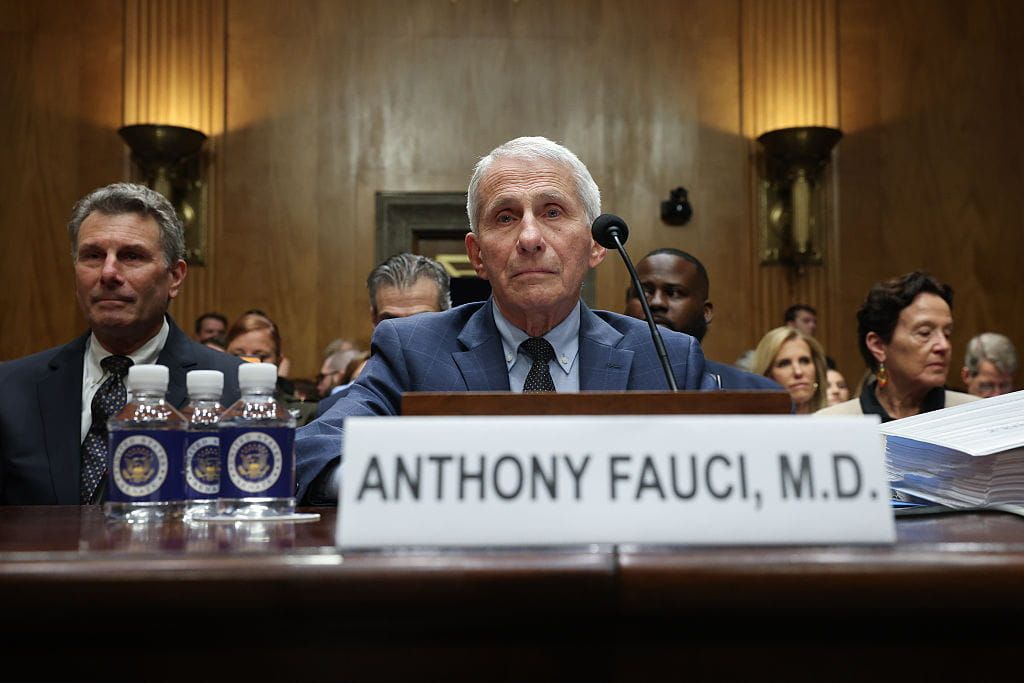
Anthony Fauci’s Senate appearance and his private diary have reignited debate about the pandemic’s origins and accountability, as he repeatedly invoked the Fifth Amendment while written entries suggest early doubts about a natural origin and an intense focus on his public profile during the crisis.
At a tense Senate hearing, Dr. Anthony Fauci invoked the Fifth Amendment 111 times when pressed about COVID-19’s origins, gain-of-function research, and the federal response. The relentlessness of those refusals, paired with a diary that paints a different picture than his public statements, left many Republicans and observers demanding answers. Senator Rand Paul challenged Fauci’s claim to Fifth Amendment protection and publicly rejected it, reminding him that it’s “against the law to obstruct an investigation of Congress.”
The legal wrinkle here is notable: in Brown v. Walker, Justice Henry Billings Brown wrote that “if the witness has already received a pardon, he cannot longer set up his [Fifth Amendment] privilege, since he stands, with respect to such offense, as if it had never been committed.” Former President Joe Biden issued Fauci a preemptive pardon, which complicates the legal posture Fauci used to avoid testimony while theoretically protecting him from prosecution for truthful answers. Still, the refusal to testify undercuts transparency at a moment when accountability matters most to the public.
The diary itself is the clearest source of friction. Entries from early 2020 suggest Fauci privately entertained theories that differ sharply from his later public line. On January 26, 2020, he wrote that “the first [coronavirus] infection was in early December and was not connected to the market.” “Now we know the market was not the source, it was the amplifier,” he added, which contrasts with the dominant public narrative at the time.
Further entries deepen the stray between private notes and public pronouncements. Fauci recorded that on February 1 he met with 12 scientists and found that only two believed the illness was natural; “[t]he rest felt that deliberate insertion was possible.” That kind of internal skepticism, if accurate, warrants a full airing given the stakes and the consequences of decisions made under uncertain origins.
Later in 2020, Fauci publicly told National Geographic that “If you look at the evolution of the virus in bats and what’s out there now, [the scientific evidence] is very, very strongly leaning toward

