

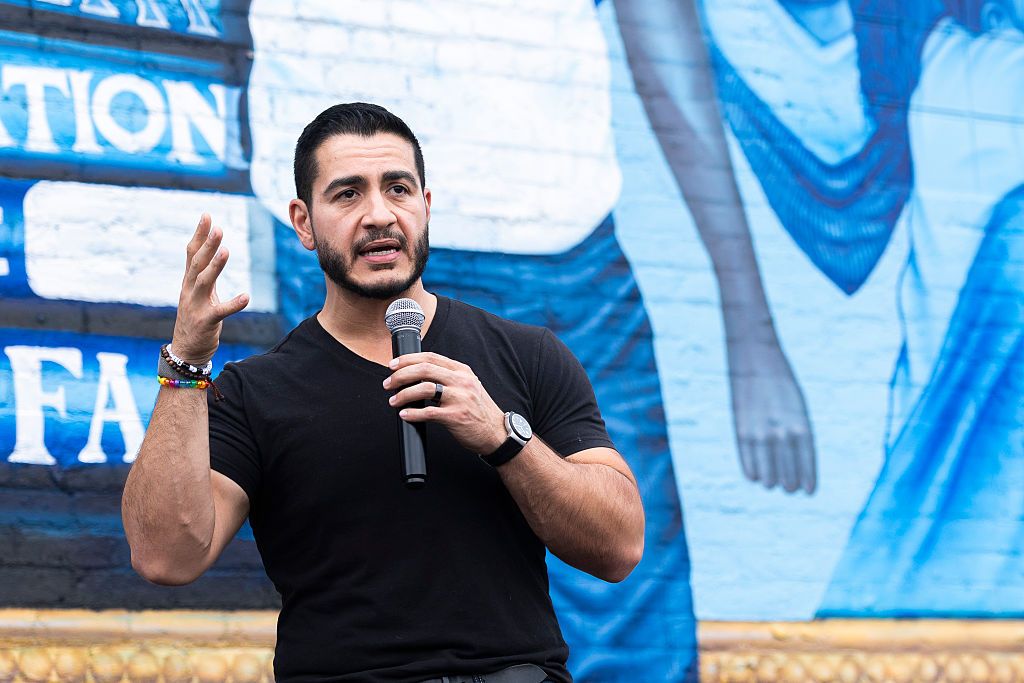
Michigan Democrats cast a pivotal Senate primary vote on Aug. 4, 2026, in a tight contest that pits establishment favorite Haley Stevens against progressive insurgent Abdul El-Sayed, and the result could reverberate well beyond the state.
The open-seat fight in Michigan has turned into a raw, direction-defining moment for the Democratic coalition. Stevens represents the party’s familiar wing while El-Sayed carries a more aggressive progressive label and could become the first Muslim U.S. senator if he wins.
El-Sayed’s allies and associations are central to the worry inside Democratic circles. His connection to influential left-wing voices has critics warning that his candidacy would push the party further from swing voters and into a more radical posture.
One especially damaging association is with Hasan Piker, whose past inflammatory comments include the line “America deserved 9/11.” That quote has been repeatedly cited by opponents as evidence of the extreme company El-Sayed keeps and the kind of rhetoric that would be attached to a Michigan Democratic nominee.
The matchup is razor thin in recent surveys, with each campaign claiming momentum and polls trading narrow leads. Democrats remember what happened in Maine, when 72% of Maine Democrats backed Graham Platner before he was forced from the race, and that memory feeds both fear and hope about how primary voters will behave here.
Debate over Israel has become a headline issue in the campaign, and Stevens has leaned into it as a wedge she believes will help her in key communities. Michigan has an estimated Arab American population of more than 300,000 and Dearborn is known as the first U.S. city with an Arab American majority, yet Stevens criticized El-Sayed directly on social media, writing, “Everyone in America understands you want to blame all of your problems on Jewish Americans.”
Top Democrats have been cautious in how they weigh in, a sign of political calculation more than unity. Senate leaders have offered guarded support for Stevens, but public endorsements have been muted, which critics say exposes weakness at the top of the party and a reluctance to confront a factional fight head on.
El-Sayed has not softened his posture toward party elites and has aimed verbal fire at their leaders. “If you want your politics dictated to you by AIPAC (American Israel Public Affairs Committee) or Chuck Schumer, then I’m not your guy.” He also said, “If you’re Chuck Schumer, I’m pretty damn dangerous,” and admitted he had “very little interest” in meeting with the Senate leader, underlining the intra-party rupture.
Veteran Democrats have voiced alarm in blunt terms, and conservative commentators see that as confirmation of a broader shift. “I am not going to be in the same party with Hasan Piker,” James Carville said, adding, “I think that a majority — an overwhelming majority — of Democrats agree with me. But this idea that we’re going to seize the means of production and this –– just go look at the DSA platform.” Meanwhile, other Democrats such as John Fetterman have blamed progressive leaders, arguing Sanders “keeps pushing these communists and these . . . awful anti-American people,” after a recent primary debacle in another state.
El-Sayed frames himself in pragmatic language too, describing his stance as “a capitalist who understands capitalism,” yet his platform and associations tilt toward DSA-adjacent priorities in the eyes of many voters. He has advocated ending aid to Israel, championed Medicare for All, previously supported defunding police proposals, and is publicly aligned with figures like Piker, Bernie Sanders, and Alexandria Ocasio-Cortez.
Haley Stevens is portrayed by critics inside and outside the party as the safe, establishment option, a candidate El-Sayed dismisses as “a suit with a large AIPAC bank account.” On the Republican side, Mike Rogers remains the likely general election nominee, and Republicans view this primary as a clear opportunity if Democrats nominate a more openly radical figure.

