

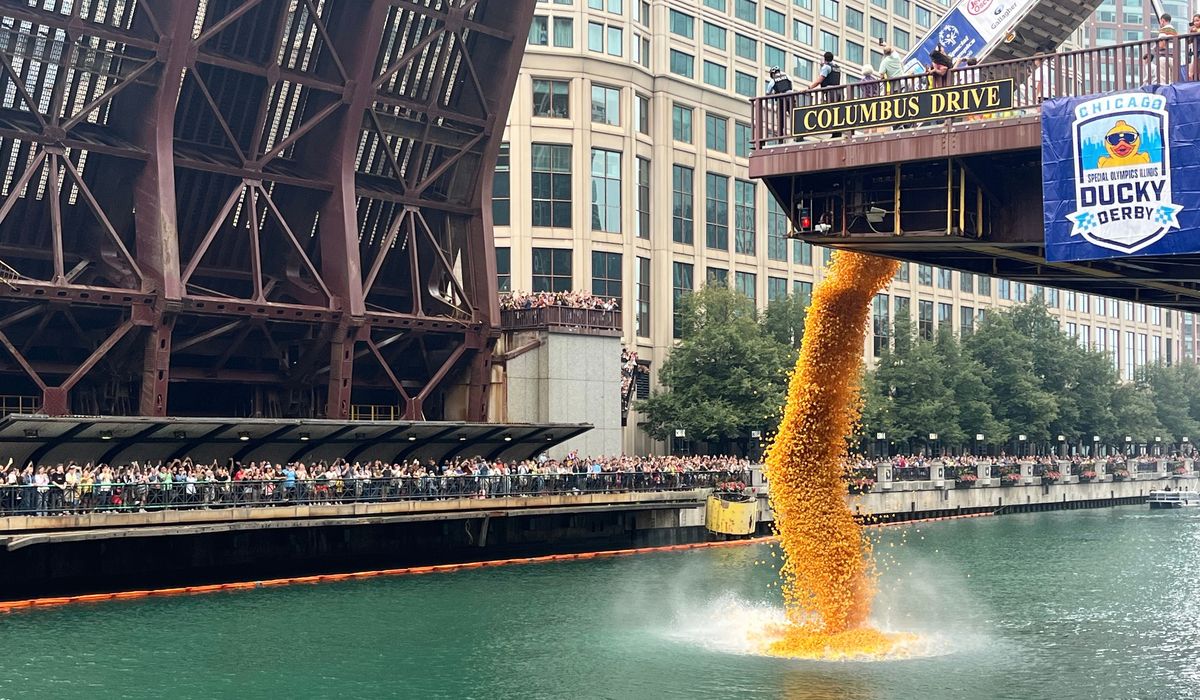
The city watched as 90,000 tiny yellow racers were dumped from a truck on the Columbus Drive bridge, plunged into the Chicago River on Thursday, and then drifted downstream in the annual Chicago Ducky Derby.
The scene on the Columbus Drive bridge felt like a block party with a twist, as a massive cascade of rubber ducks slid out of their carrier and hit the water together. Spectators leaned over railings and packed nearby sidewalks, cameras ready for the slow, strangely mesmerizing shuffle of bright plastic bobbing along. The dump was quick and theatrical, then everyone waited to see which little floater would cross whatever imaginary line organizers set as a finish.
Organizers treated the release like a ritual, coordinating trucks, volunteers, and safety crews so the moment would be dramatic but orderly. River patrols and event staff kept a close eye on the flock, guiding any strays away from hazards and making sure the ducks stayed on course. The derby format is intentionally leisurely, encouraging family spectatorship rather than cutthroat competition, and that relaxed pace was exactly what people came for on Thursday.
Onlookers of all ages reacted the same way: a mix of laughter, cheering, and pointed fingers as clusters of ducks jostled each other and drifted downstream. Kids pressed against railings to follow a single duck for as long as they could, while adults traded photos and compared who had the best vantage point. Despite the oddity of the spectacle, the atmosphere was simple and communal, a city event that turned a river into a slow-motion racetrack.
Behind the playful image, volunteers moved quickly to collect the rubber contestants once the race drifted past key markers, scooping them up for sorting and storage. Event staff emphasized cleanup and reuse so the ducks would not linger in the water beyond the derby or pose a problem for wildlife. The recycling of the ducks and the organized retrieval made the operation feel efficient, with teams working methodically rather than frantically after the initial splash.
The timing of the drop was another part of the choreography; officials coordinated with river conditions and city crews to ensure the ducks would float safely without disrupting local traffic on or under the bridges. Weather and current are always part of the equation for any event on the Chicago River, and Thursday’s conditions allowed the herd to move along at that characteristic slow clip. That pace is part of the charm, turning a simple drop into a communal countdown and a photo-ready moment for people standing along the route.
For many attendees, the Ducky Derby is less about who wins and more about the shared experience of watching something whimsical unfold against a very urban backdrop. The juxtaposition of 90,000 tiny, identical toys sliding past skyscrapers and under bridges gives the river a momentary personality, one that feels playful and oddly calming. By the time volunteers gathered the last of the flock and the crowds dispersed, the event had delivered exactly what it promised: a short, bright interruption to the ordinary river scene.

