

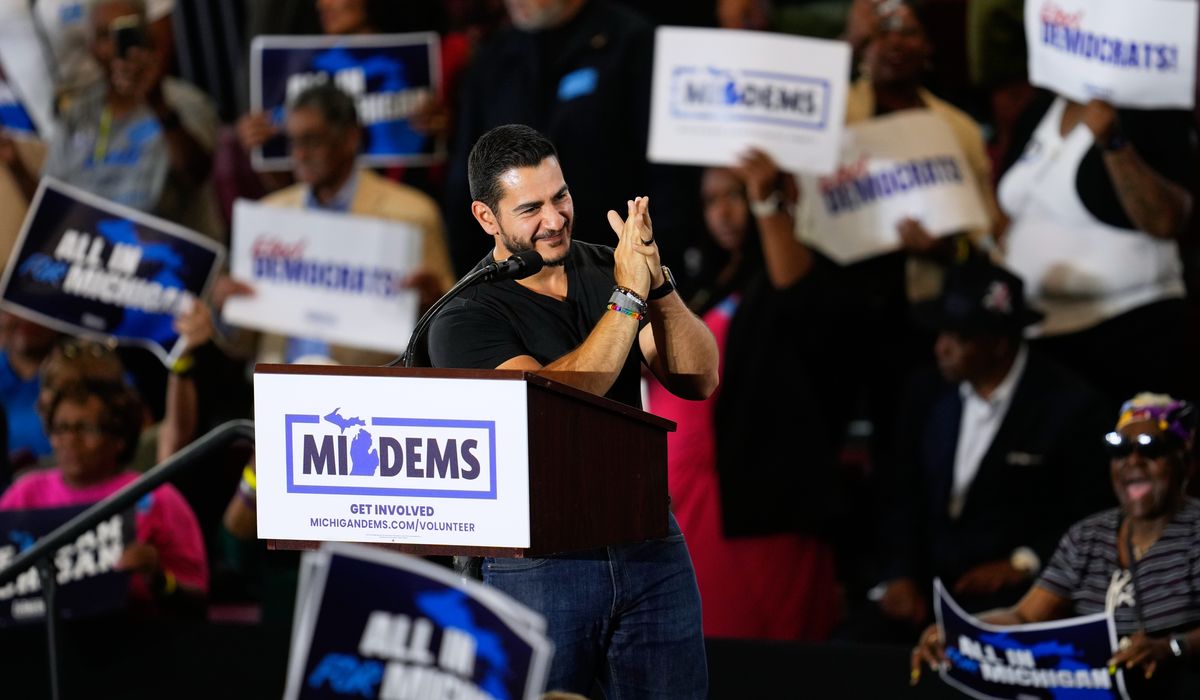
Michigan Democratic Senate nominee Abdul El-Sayed moved quickly into general-election mode Sunday, stressing party unity after a bruising primary win over Rep. Haley Stevens that laid bare sharp divisions within the Democratic base.
El-Sayed’s public pivot toward unity is predictable after an ugly primary fight, but the wounds are still visible. Voters saw a contest that pulled Democrats in different directions, and healing those splits will be harder than a few unity photos and talking points.
The primary exposed a real tension between the party’s progressive wing and its moderate elected officials, and that tension is now a live problem for the general election. When a nominee needs buy-in from the whole party, grievances about tactics, messaging, and priorities don’t evaporate overnight.
From a Republican viewpoint, unity rhetoric is easy to offer and hard to prove. Opponents will watch whether El-Sayed actually brings former rivals into active support or simply asks for public silence while internal gripes fester behind closed doors.
Campaigns that begin with internal conflict tend to bleed resources and focus, and Republicans will press that advantage. They will push the contrast between a party sorting itself out and a GOP that tries to present a clear, steady message on issues voters care about.
Michigan remains a battleground where swing voters and suburban independents decide tight races, so closing the gap with them matters more than pleasing any single faction. Republicans are likely to emphasize practical pocketbook issues and contrast that with the Democratic nominee’s record and positions.
Fundraising and ground organization are where primary damage can become decisive. Money that could have been pooled for outreach and ad buys was spent settling intra-party scores, and rebuilding a unified donor network takes time the general election clock does not offer.
Beyond cash, volunteers and trusted local endorsers are critical. If local leaders and key constituencies remain lukewarm after the primary, turnout models that Democrats rely on could underperform—an opening Republicans will eagerly test.
El-Sayed’s strategy now must balance loyalty to the voters who backed him in the primary with outreach to moderates and independents turned off by intra-party fighting. That’s a narrow lane: lean too far left and swing voters retreat, move too center and the energized base might sit out.
The broader picture is plain: a bruising primary leaves scars that can determine the direction of the general election unless they are addressed quickly and substantively. Republicans will keep the pressure on, looking for opportunities to turn Democratic disunity into decisive margins at the ballot box.

