

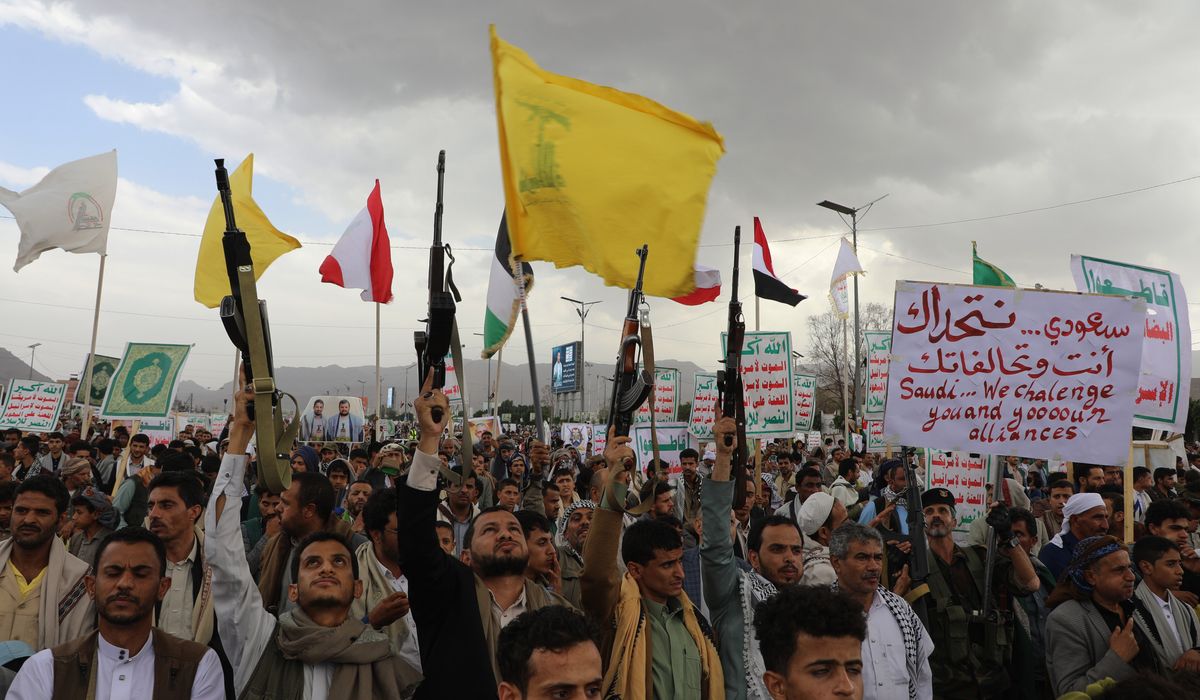
Iranian-backed Houthi rebels launched renewed attacks Tuesday against government-controlled areas in Yemen, a sharp uptick in violence that risks reigniting the civil war and stoking fears of broader instability across the region.
The fresh strikes hit multiple government-held districts and towns, sending residents scrambling and forcing local authorities to respond. Patterns of harassment and escalation have returned after a period of relative quiet, undermining fragile calm. These developments have alarmed humanitarian groups watching an already fragile situation.
The Houthi movement, which receives backing from Iran, has long been a central actor in Yemen’s conflict and remains capable of mounting coordinated operations. Their ability to strike across frontlines keeps pressure on the internationally recognized government and on local power brokers. Analysts say that outside support and internal organization allow them to sustain sharper bursts of violence when they choose.
Attacks on populated areas have immediate human costs, with civilian homes, markets, and services exposed to harm. People in affected neighborhoods are reporting damage, sudden evacuations, and a return of fear that had eased only slightly in recent months. Even brief episodes of fighting deepen displacement and disrupt rescue and relief efforts.
Humanitarian agencies warn that renewed fighting complicates relief deliveries to people already dependent on aid for food, shelter, and medical care. Clinics and aid distribution points become harder to reach when frontlines shift or when transport risks increase. The cumulative effect is a deeper squeeze on an economy and health system stretched to the breaking point.
Beyond immediate human suffering, the violence raises wider strategic concerns. Renewed clashes can spill across borders, inflame tensions with neighboring states, and imperil maritime lanes that are vital for global trade. Regional capitals are watching closely because a prolonged flare up could draw in external actors and widen the scope of conflict.
Efforts to negotiate local truces and limited ceasefires have repeatedly faced setbacks in Yemen, and talks that might reduce violence are vulnerable to sudden collapse. Mediators and diplomats who had been nudging parties toward de-escalation now face an uphill task to restore trust and halt new operations. Without credible enforcement and incentives, fragile arrangements rarely hold.
International institutions and relief organizations have issued calls for restraint and for unimpeded access to civilians in need, stressing the humanitarian imperative. Those appeals aim to protect supply lines and to keep hospitals and shelters operational during spikes in violence. Even so, rhetoric rarely translates immediately into safe passage on the ground.
Government forces and allied local militias have mounted countermeasures in some areas, trying to push back against Houthi advances or contain outbreaks of fighting. Security officials report heightened patrols and occasional tactical operations to defend key towns and infrastructure. Those responses can reduce the immediate threat but also risk escalating clashes if not paired with containment strategies.
Economically, renewed conflict threatens to deepen shortages and stunt any tentative recovery in commerce and public services. Markets that survived earlier waves of violence may once again face interruption of supplies, higher prices, and shrinking livelihood options for ordinary families. Infrastructure damage also raises repair costs that local authorities are ill equipped to pay.
Observers say the near term will be shaped by whether outside backers step up support or pressure their proxies to stand down, and by the ability of local leaders to compartmentalize fighting. Shifts in regional politics and changes in external aid flows will alter incentives for continued combat or restraint. For Yemen’s civilians, however, the immediate metric remains safety and access to basic services.
At the moment, relief organizations are adjusting contingency plans and preparing for new waves of displacement if the attacks persist or spread. Medical teams and supply hubs are being repositioned where possible to reach vulnerable populations, but logistical constraints and security risks limit rapid movement. The coming days will be important for whether the violence remains episodic or escalates into a broader confrontation.

