

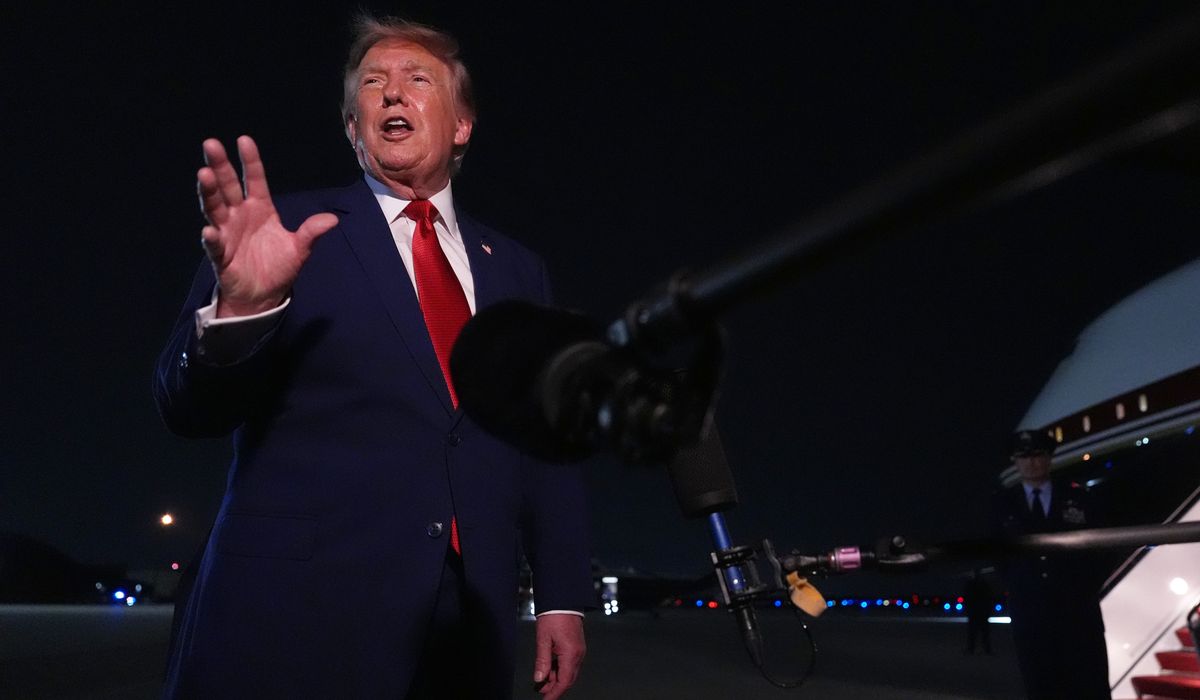
President Trump said Wednesday that Iran is reeling from a pivot away from military action toward economic pressure, and he will keep a U.S. naval blockade on Iranian ports for the foreseeable future.
President Trump framed the move as a smart alternative to open war, arguing that economic tools can force change without American soldiers on the ground. He emphasized that squeezing Tehran’s finances hits the regime where it hurts, while avoiding costly military entanglements. The administration says this approach keeps pressure steady and predictable.
The naval presence around Iran’s ports is meant to choke off revenue streams that bankroll aggression and proxy warfare. By maintaining a blockade, U.S. forces aim to disrupt oil exports and other trade that sustain the regime’s operations and influence across the region. Supporters argue naval enforcement is a precise, controllable lever that Congress and the president can sustain without committing to a larger conflict.
From a Republican perspective, this strategy balances strength with prudence: protect American interests, hold Tehran accountable, and minimize U.S. casualties. It also signals to allies and adversaries that the United States will not tolerate hostile behavior but will choose measured, effective responses. That clarity can deter escalation while keeping options open for diplomacy under pressure.
Critics say blockades risk miscalculation or unintended harm to civilians, but proponents counter that targeted interdiction and sanctions disproportionately affect ruling elites and financial networks. Enforcement focuses on shipments tied to the regime’s export revenue rather than humanitarian goods, and commands stress compliance with international rules to avoid legal exposure. The objective is to curtail the regime’s ability to fund destabilizing activities.
The move to emphasize economic pressure reflects lessons learned from past interventions that bogged down U.S. forces and budgets. Republicans pushing this line point to the value of applying persistent, escalating pressure that forces bargaining from a weaker position. Keeping sea lanes monitored and chokepoints controlled gives the U.S. leverage without committing to full-scale war.
Operationally, sailors and commanders will patrol strategic waterways, inspect suspect cargoes, and enforce sanctions protocols in coordination with partner navies. That interoperability spreads the burden and legitimizes enforcement actions through multilateral participation when possible. The presence also reassures allies concerned about regional security and commercial shipping safety.
Maintaining a long-term posture around Iranian ports aims to reshape Tehran’s calculations by making the economic costs of bad behavior immediate and unavoidable. When export revenues fall and access to global markets tightens, domestic pressure on the regime increases. The hope among policymakers is that sustained pressure drives policy changes or creates openings for diplomatic negotiation from strength.
Republican leaders tout this as a responsible way to defend U.S. interests and regional stability while conserving military resources. They argue it keeps America’s options flexible and puts the onus on Tehran to alter its conduct. For voters who favor firmness without full-scale war, the approach offers a middle path that stresses results over rhetoric.

