

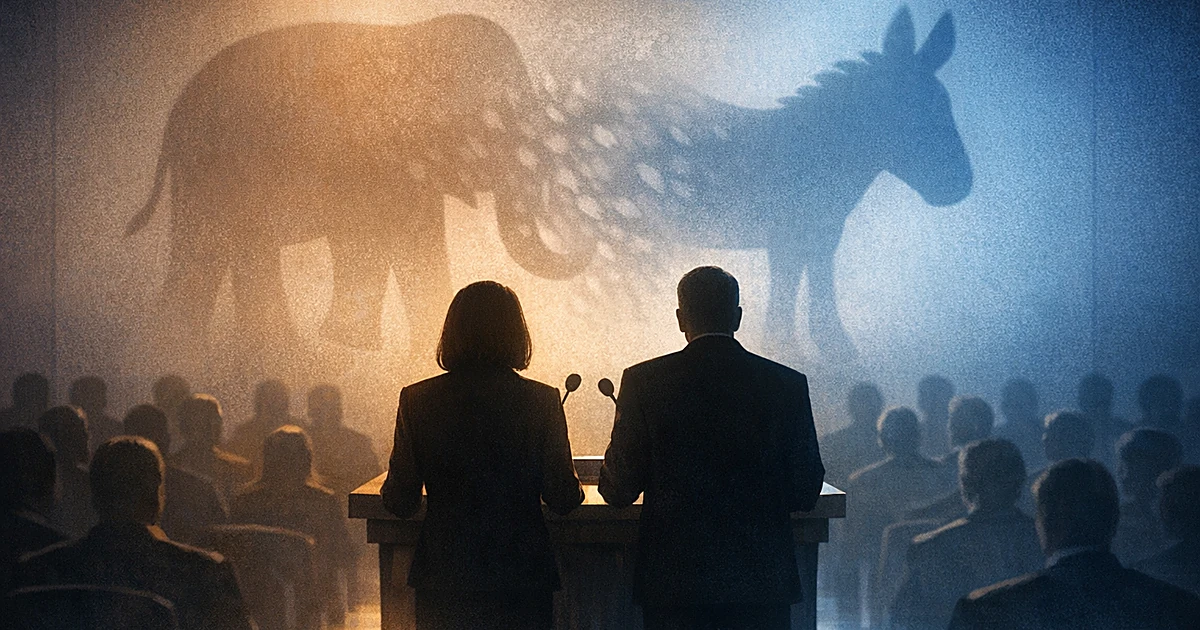
Katie Hobbs has chosen former Mesa mayor John Giles as her running mate, a move framed as bipartisan but rooted in political necessity. Giles served as Mesa mayor from 2014 to 2025 and switched his registration on May 17 before voting in the Democratic primary. The pick highlights Hobbs’s vulnerability in a state that swung toward Trump in 2024.
Hobbs announced John Giles as her lieutenant governor pick, and the choice drew immediate attention because he spent decades as a registered Republican before changing to independent. Giles endorsed Vice President Kamala Harris in 2024 and has been an outspoken critic of President Trump, signaling a clear departure from his old party. The timing and trajectory of his shift have turned what was billed as outreach into an obvious political play.
This is the first year Arizona law allows gubernatorial candidates to select running mates, and Hobbs used that new power to try to broaden her appeal. She faces Rep. Andy Biggs, who is backed by Trump and by conservative groups, and the matchup has national implications. For an incumbent widely seen as the most vulnerable Democratic governor, the Giles pick is less about reaching the center and more about survival.
Giles framed his exit from the GOP as practical rather than purely ideological in his public remarks. He said he no longer believed internal reform would succeed and cast his move as a response to what he called extreme elements blocking governance. That narrative fits neatly into Hobbs’s argument about putting Arizona first, but the backstory is worth watching closely.
“I was a lifelong Republican before becoming an independent because extremists shouldn’t stand in the way of getting things done.”
Giles also acknowledged the limits of his reform effort in blunt terms, saying he had abandoned a crusade inside his former party. The timeline matters: he changed his registration just months before joining a Democratic ticket, a sequence that looks less like a gradual realignment and more like a strategic switch. Voters tend to notice that kind of political timing.
“A few months ago, I realized that it was time to give up that crusade.”
Hobbs leaned into the bipartisan pitch when unveiling her choice, arguing she wanted someone who would prioritize Arizonans over party. When asked about potential pushback from Democratic base voters, she replied, “It shouldn’t be a surprise.” That response signals she expects some friction but believes the tradeoff is worth it for the voters she needs.
Hobbs eked out victory in 2022 by just 0.7 percentage points, a razor-thin margin that depended on pulling moderate Republicans and independents into a winning coalition. Now the landscape looks tougher: Trump carried Arizona by 5.5 percentage points in 2024, shifting the baseline for statewide races. Running the same playbook against a stronger Republican environment invites risk.
Biggs has positioned himself as a Trump-aligned standard-bearer, running ads that accuse Hobbs of steering the state “the way of California.” He emphasizes border security, lower taxes, and cutting regulations, themes that resonate with many Arizona voters. Biggs named former state senator Sine Kerr as his running mate; she currently holds a federal Farm Service Agency post under the Trump administration.
The Cook Political Report currently rates the governor’s race “Leans Democratic,” and polling shows Hobbs with single-digit leads in some surveys. But in a state Trump won by more than five points just last cycle, those narrow margins are warning signs rather than comfort. A Democratic incumbent talking like a Republican on key issues is a sign of political pressure.
Hobbs’s campaign messaging has emphasized tougher action on illegal immigration and plans to lower taxes, signaling an effort to pick up conservative-leaning voters. Those are traditionally Republican issues, and her shift in rhetoric underscores how competitive Arizona has become. When a Democratic governor adopts that language, it reflects where swing voters are placing their priorities.
Giles’s record as a center-right mayor in Mesa, Arizona’s third-largest city east of Phoenix, gave him credibility with moderate conservatives and independents. Whether that résumé converts into ticket strength in a statewide race that Trump won remains unclear. The pick reads to many as a conversion rather than a bridge: he supported the Democratic presidential nominee, changed registration to participate in a Democratic primary, and now sits on a Democratic ticket.
National Democratic fractures and internal fights make cross-party gestures more complicated, as factions pull in different directions and some challengers push the party leftward. At the same time, Senate recruitment struggles and intra-party disputes have narrowed the party’s path in multiple states. For Hobbs, Arizona’s governor’s race is now part of a broader story about party strategy and survival.
“Whether you’re a Democrat, Independent, or Republican, if you believe in protecting our freedoms and putting Arizona first, we’re ready to fight for you.”
That line is polished political messaging, aimed at grabbing votes across partisan lines without addressing deeper questions about loyalty and principle. Voters must decide whether they see an authentic attempt at bipartisanship or a tactical move from a vulnerable incumbent. The choice in November will test whether borrowing credibility from the other side actually moves the needle at the ballot box.

