

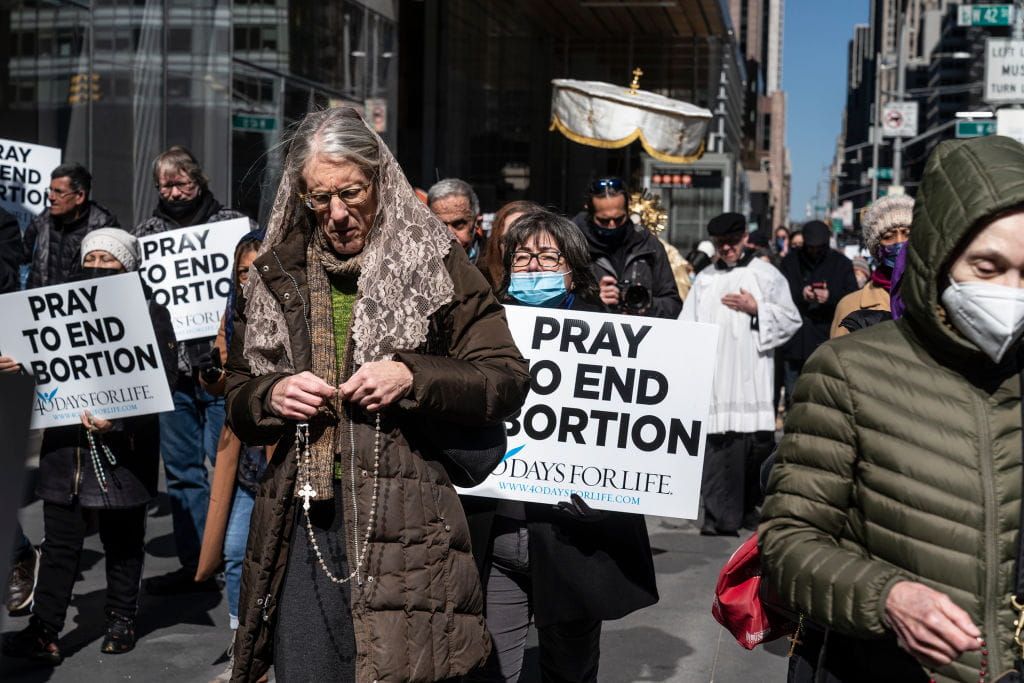
New Jersey’s new law on “interference with reproductive health care services” has raised alarms about whether ordinary prayer, counseling, or peaceful presence outside clinics could be treated as criminal or civil wrongdoing under vague language that targets intimidation and coercion.
The measure, enacted as bill S2260/A2218 and signed Aug. 20 by Gov. Mikie Sherrill, defines “interference” in sweeping terms that include a “threat of force” that “intimidates, threatens, or coerces, or attempts to intimidate, threaten, or coerce” anyone seeking, providing, volunteering, or assisting with “reproductive health care.” The phrasing reaches beyond overt violence and could be interpreted to cover conduct that some would call prayerful presence or conversation. Critics say the ambiguity invites enforcement decisions that depend heavily on subjective impressions at the scene.
First Amendment defenders and pro-life groups reacted quickly, arguing the law risks chilling protected speech and religious practice near clinics. New Jersey Right to Life Executive Director Marie Tasy warned the law could easily be used to misconstrue “peaceful sidewalk counseling, prayer, holding signs, or simply offering help and alternatives outside a facility” as threatening or intimidating conduct. “[The law leaves] pro-life advocates open to criminal charges that are difficult to disprove and [chills] constitutionally protected expression,” Tasy said in a statement.
Those concerns are not abstract. Over the years, peaceful demonstrators and counselors have faced arrests or federal scrutiny for activities outside reproductive-health facilities, raising hard questions about where the line is drawn. The mid-1990s Freedom of Access to Clinic Entrances statute provides a cautionary parallel with its prohibition on certain conduct described as “intentionally injuring, intimidating, or interfering with, or attempting to injure, intimidate, or interfere, any person by force… from obtaining or providing reproductive health services.” That law was invoked in high-profile cases that left a lot of people wondering how enforcement decisions were made.
One such case involved Mark Houck, who was praying with his 12-year-old son outside a Planned Parenthood when an exchange with a clinic volunteer escalated. The family says the situation led to a federal raid roughly a year later, and dozens of agents from President Joe Biden’s Justice Department arrested Houck at his home, reportedly at gunpoint. The scene became a touchpoint for critics who argue the federal response was an overreach against nonviolent religious expression.
Houck fought the charges and was ultimately acquitted, later suing the FBI and the Justice Department for malicious and retaliatory prosecution, false arrest, abuse of process, and assault. The family has said the stress of the raid contributed to serious personal harms, including miscarriages and lasting trauma for their children, a narrative covered by religious and conservative outlets in the aftermath. Houck eventually secured a seven-figure settlement, but the episode remains a cautionary tale about how enforcement actions can ripple across families and communities.
Legally, the debate centers on two competing facts: abortion is not established as a constitutional right in statutory text, but freedom of religion and speech are express protections under the First Amendment. The state has legitimate authority to punish actual threats, harassment, and violence, yet critics argue New Jersey’s statutory language is unmoored enough from clear, objective standards that peaceful religious acts could be swept in. That tension makes the law fertile ground for costly litigation and selective enforcement.
Republican-leaning observers see this as part of a broader trend where vague statutes and aggressive enforcement risk silencing dissenting voices, especially religious ones, under the guise of protecting access. The practical question left hanging for many is straightforward and urgent: how far will New Jersey go to silence peaceful pro-lifers?

