

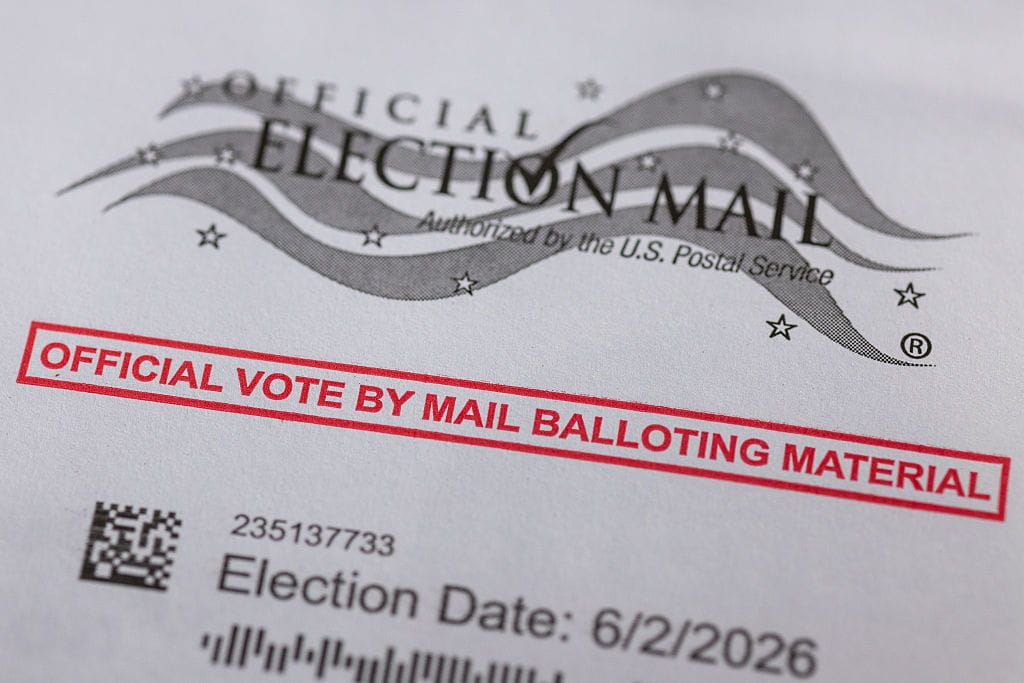
SCOTUS Delivers First Stage Win for Trump on Mail-In Ballots — a narrow legal victory that resets the battle over how ballots are counted and who gets to decide those rules.
Aug 25, 2026. The Supreme Court handed former President Trump a procedural victory in a case tied to mail-in ballots, and conservatives see it as an important check on lower-court overreach. The decision does not settle the underlying disputes, but it does shift momentum into the legal process that will follow.
The ruling stops short of endorsing sweeping changes to voting rules, but it removes an immediate roadblock that had threatened to leave key questions unresolved before the next major electoral contests. For Republicans, that matters because it keeps the dispute in the courts where precedent and statutes drive outcomes rather than last-minute political arbiters. Courts deciding legal questions about ballots is preferable to bureaucrats or state officials rewriting rules on the fly.
“Clearing the initial hurdle in a much longer race.” That exact line captures the mood: this was a first-stage win, not a final triumph. Winning a procedural fight at the Supreme Court often means getting a fair hearing for core claims, and conservatives argue that equal treatment under the law must apply to every campaign and every candidate.
What the decision really did was reaffirm the mechanics of judicial review and the need for careful, record-based decisions rather than headline-driven rulings. It reminded the country that legal disputes about elections require rigorous fact-finding and respect for state law. That principle benefits the rule of law and prevents ad hoc changes that disproportionately affect one side.
The conservative legal view emphasizes that mail-in ballot rules should be clear, consistent, and rooted in state legislatures, not in last-minute judicial improvisation. When procedures are ambiguous or changed without a full legislative process, it creates room for confusion and potential abuse. A fair system depends on rules adopted through the democratic process and enforced neutrally by the courts.
Republicans welcomed the ruling because it undercuts efforts to normalize broad, emergency-style changes to voting procedures without proper legal footing. The party argues this is about protecting legitimate elections from unpredictable rule shifts that can encourage fraud or undermine confidence. Standing up for electoral integrity is not about denying votes; it is about making sure every legal vote counts and every illegal vote is excluded.
The political implications are obvious: a decision like this narrows the path for strategies that rely on flexible, last-minute interpretations of voting rules. Campaigns must now plan under clearer expectations, and state legislatures retain their central role. That restores an element of predictability voters and officials alike desperately need.
Expect more litigation to follow, because procedural wins at the Supreme Court often lead to remands for further fact-finding and lower-court analysis. The case will be dissected in district courts and appellate panels, and each step matters for how election law doctrine evolves. Republicans say that careful, sequential adjudication is preferable to sudden policy shifts imposed from the bench.
This ruling also highlights the crucial role of conservative jurists in defending textualist and originalist principles when it comes to election law. These judges prioritize what legislatures wrote rather than what temporary circumstances might suggest. Their approach is designed to preserve the integrity of established rules and limit unpredictable reinterpretation.
Public confidence in elections requires both transparency and adherence to law, and this decision nudges the system back toward that balance. While opponents will label the ruling as partisan, conservatives see it as a defense of institutional norms that protect all Americans. The dispute over mail-in ballots is far from over, but this Supreme Court action makes clear that the next stages will play out through legal channels and established procedures.
For those watching national politics, the takeaway is simple: this was a procedural victory with substantive consequences. It places contested questions squarely into a legal framework that respects state authority and the separation of powers. As further proceedings unfold, both sides will have their day in court, and the law will be the final arbiter rather than shifting political winds.

